Web on Demand vs MarsX (formerly MarsAi)
When comparing Web on Demand vs MarsX (formerly MarsAi), which AI Web Apps tool shines brighter? We look at pricing, alternatives, upvotes, features, reviews, and more.
Between Web on Demand and MarsX (formerly MarsAi), which one is superior?
When we put Web on Demand and MarsX (formerly MarsAi) side by side, both being AI-powered web apps tools, MarsX (formerly MarsAi) is the clear winner in terms of upvotes. The upvote count for MarsX (formerly MarsAi) is 9, and for Web on Demand it's 6.
Not your cup of tea? Upvote your preferred tool and stir things up!
Web on Demand


What is Web on Demand?
Web on Demand is a no-code web apps builder for agencies, freelancers, and resellers who need client sites without PHP backends or plugin stacks. It combines drag-and-drop layouts, spreadsheet-style database editing, e-commerce tools, and an AI generator for blogs, product descriptions, and SEO metadata. Sites run on HTML and CSS, and edits happen on the live page through embedded controls instead of a separate admin dashboard.
Where WordPress or Webflow charge monthly subscriptions and hide editing behind a backend, Web on Demand sells one-time licenses starting at $1,000 and lets you click text on the published page to change it. That fits white-label workflows where clients expect to update copy themselves. The trade-off is the upfront license cost and the HTML/CSS skills needed for fully custom layouts.
Freelancers, design studios, and ISP partners use it to ship e-commerce stores, landing pages, and branded website storefronts. The AI generator helps teams draft SEO-friendly blog posts and product copy without hiring a writer for every SKU. Resellers on the Storefront plan can earn a 20% share of client hosting fees sold through their store.
MarsX (formerly MarsAi)
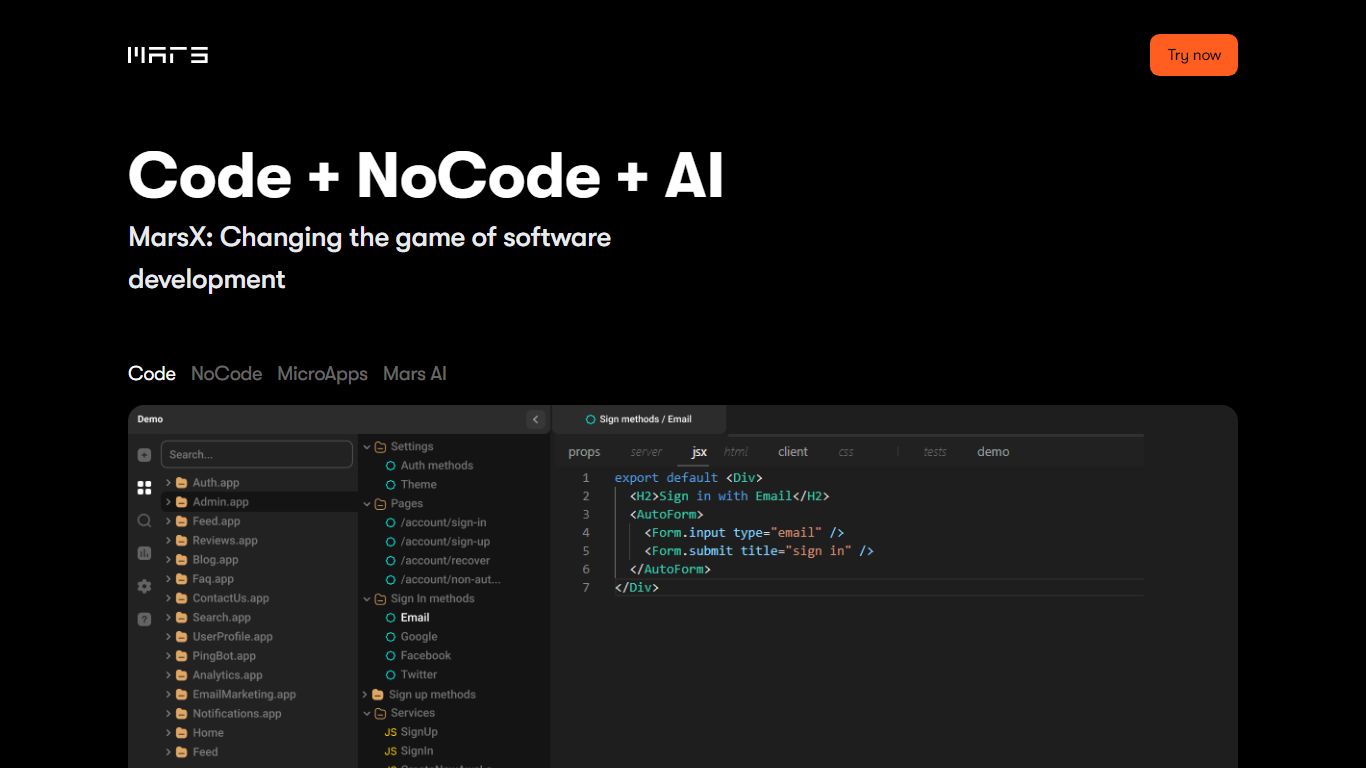
What is MarsX (formerly MarsAi)?
MarsX combines no-code assembly, full JavaScript coding, and reusable MicroApps inside one web IDE. Teams start from prebuilt modules like marketplaces, social networks, or streaming portals, then switch to code mode when they outgrow drag-and-drop limits without rebuilding from scratch.
Bubble-style builders force a rewrite once you hit custom logic. MarsX keeps the same database and UI when you move from no-code to the Mars IDE, so a marketplace launched without code can gain bespoke checkout rules later in TypeScript. MicroApps bundle database, backend, web and mobile frontends, admin pages, and analytics instead of handing you a single-purpose library.
Founder John Rush positions MarsX for startups, agencies, and freelancers who want to ship in months rather than quarters. The engine is free and open source under Apache 2.0, while individual MicroApps may carry their own pricing. Access runs through a private beta waitlist at marsx.dev/waitlist.
Web on Demand Upvotes
MarsX (formerly MarsAi) Upvotes
Web on Demand Top Features
Basic license costs $1,000 as a one-time payment with no recurring platform subscription
AI generator drafts full blog posts from a short prompt and suggests keywords plus meta descriptions from a page title
Edit content on the live site with embedded controls instead of logging into a backend admin panel
Import e-commerce inventory from Google Sheets or Microsoft Excel in one click
Supports 64 languages with LTR and RTL layouts on published sites
Hosting runs on AWS with HTTPS encryption included on every business plan
MarsX (formerly MarsAi) Top Features
1000+ reusable MicroApps covering marketplaces, social networks, streaming, and more
Mars engine open sourced on GitHub under the Apache 2.0 license
Mars IDE with JavaScript or TypeScript, Git, and switchable no-code or code views
Self-host on Windows, Linux, or Mars cloud with no vendor lock-in
Private beta access through the marsx.dev waitlist for developers and non-developers
Showcase list of 300+ shipped products including Unicorn Platform and DevHunt
Web on Demand Category
- Web Apps
MarsX (formerly MarsAi) Category
- Web Apps
Web on Demand Pricing Type
- Paid
MarsX (formerly MarsAi) Pricing Type
- Freemium