Web on Demand vs Visus
In the clash of Web on Demand vs Visus, which AI Web Apps tool emerges victorious? We assess reviews, pricing, alternatives, features, upvotes, and more.
When we put Web on Demand and Visus head to head, which one emerges as the victor?
Let's take a closer look at Web on Demand and Visus, both of which are AI-driven web apps tools, and see what sets them apart. Neither tool takes the lead, as they both have the same upvote count. Since other aitools.fyi users could decide the winner, the ball is in your court now to cast your vote and help us determine the winner.
Does the result make you go "hmm"? Cast your vote and turn that frown upside down!
Web on Demand
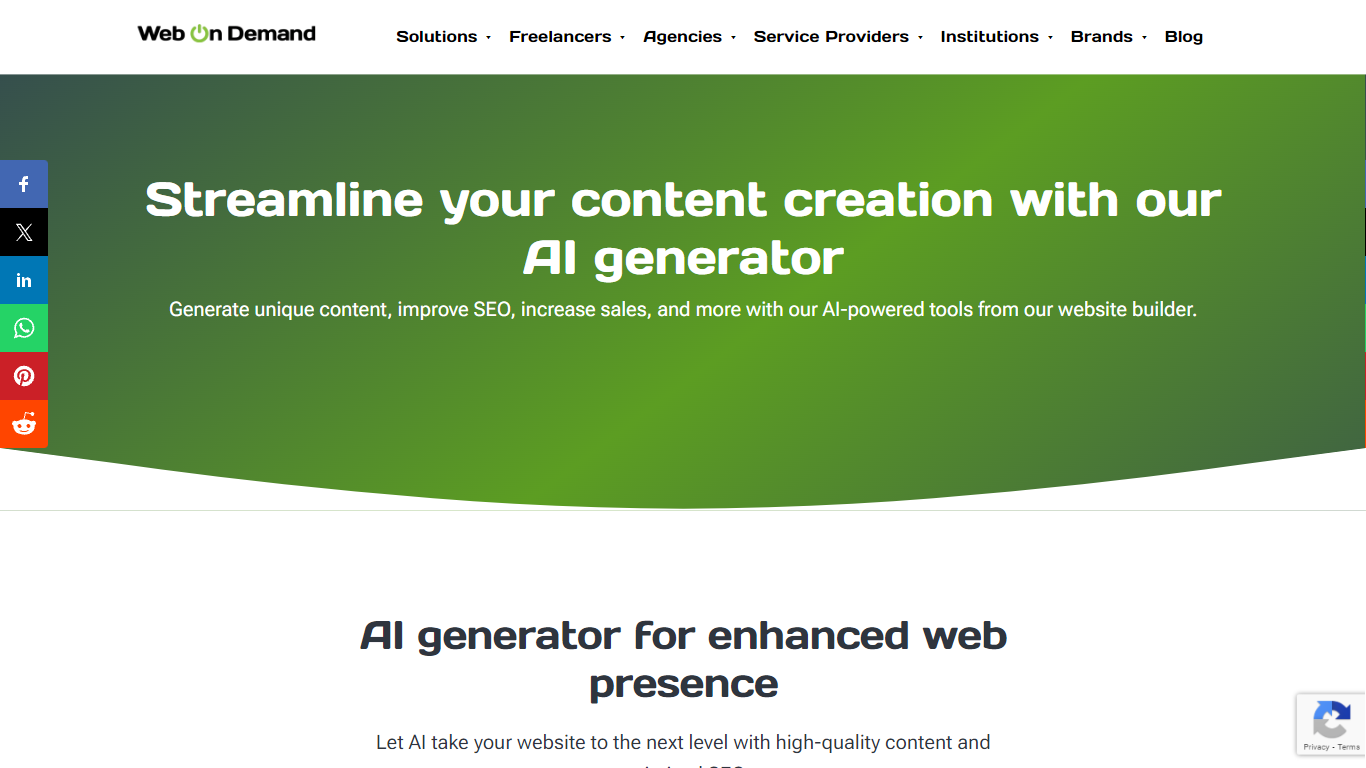

What is Web on Demand?
Web on Demand is a no-code web apps builder for agencies, freelancers, and resellers who need client sites without PHP backends or plugin stacks. It combines drag-and-drop layouts, spreadsheet-style database editing, e-commerce tools, and an AI generator for blogs, product descriptions, and SEO metadata. Sites run on HTML and CSS, and edits happen on the live page through embedded controls instead of a separate admin dashboard.
Where WordPress or Webflow charge monthly subscriptions and hide editing behind a backend, Web on Demand sells one-time licenses starting at $1,000 and lets you click text on the published page to change it. That fits white-label workflows where clients expect to update copy themselves. The trade-off is the upfront license cost and the HTML/CSS skills needed for fully custom layouts.
Freelancers, design studios, and ISP partners use it to ship e-commerce stores, landing pages, and branded website storefronts. The AI generator helps teams draft SEO-friendly blog posts and product copy without hiring a writer for every SKU. Resellers on the Storefront plan can earn a 20% share of client hosting fees sold through their store.
Visus

What is Visus?
Visus lets teams train a private ChatGPT-style assistant on their own documents and query it in plain language. You upload folders and files, tune sensitivity and accuracy settings, then ask questions and get answers pulled only from that training material.
Where a general chatbot will mix in outside knowledge, Visus restricts replies to content your users are authorized to see. Permission changes sync immediately, so someone who loses access to a folder should not get answers sourced from it. That makes it closer to an internal knowledge search layer than a blank-slate writing assistant.
Teams connect Google Drive, Confluence, Notion, Slack, Microsoft Teams, Discord, or a Chrome extension so the assistant sits inside existing workflows. The free tier caps you at one AI instance and 1,500 messages per month, while paid plans raise member limits and unlock unlimited instances.
Web on Demand Upvotes
Visus Upvotes
Web on Demand Top Features
Basic license costs $1,000 as a one-time payment with no recurring platform subscription
AI generator drafts full blog posts from a short prompt and suggests keywords plus meta descriptions from a page title
Edit content on the live site with embedded controls instead of logging into a backend admin panel
Import e-commerce inventory from Google Sheets or Microsoft Excel in one click
Supports 64 languages with LTR and RTL layouts on published sites
Hosting runs on AWS with HTTPS encryption included on every business plan
Visus Top Features
Free tier includes 1 AI instance and 1,500 messages per month for one member
Answers restricted to uploaded training documents, not general web knowledge
Integrations with Google Drive, Confluence, Notion, Slack, Teams, and Discord
AES 256 encryption with permission checks before surfacing document content
Standard plan at $20 per member per month unlocks unlimited AI instances
Business plan at $50 per member adds roles, permissions, and up to 100 members
Web on Demand Category
- Web Apps
Visus Category
- Web Apps
Web on Demand Pricing Type
- Paid
Visus Pricing Type
- Freemium