Whimsical AI vs SciSpace (formerly Typeset)
In the face-off between Whimsical AI vs SciSpace (formerly Typeset), which AI Summarizer tool takes the crown? We scrutinize features, alternatives, upvotes, reviews, pricing, and more.
In a face-off between Whimsical AI and SciSpace (formerly Typeset), which one takes the crown?
If we were to analyze Whimsical AI and SciSpace (formerly Typeset), both of which are AI-powered summarizer tools, what would we find? SciSpace (formerly Typeset) is the clear winner in terms of upvotes. The number of upvotes for SciSpace (formerly Typeset) stands at 24, and for Whimsical AI it's 7.
You don't agree with the result? Cast your vote to help us decide!
Whimsical AI
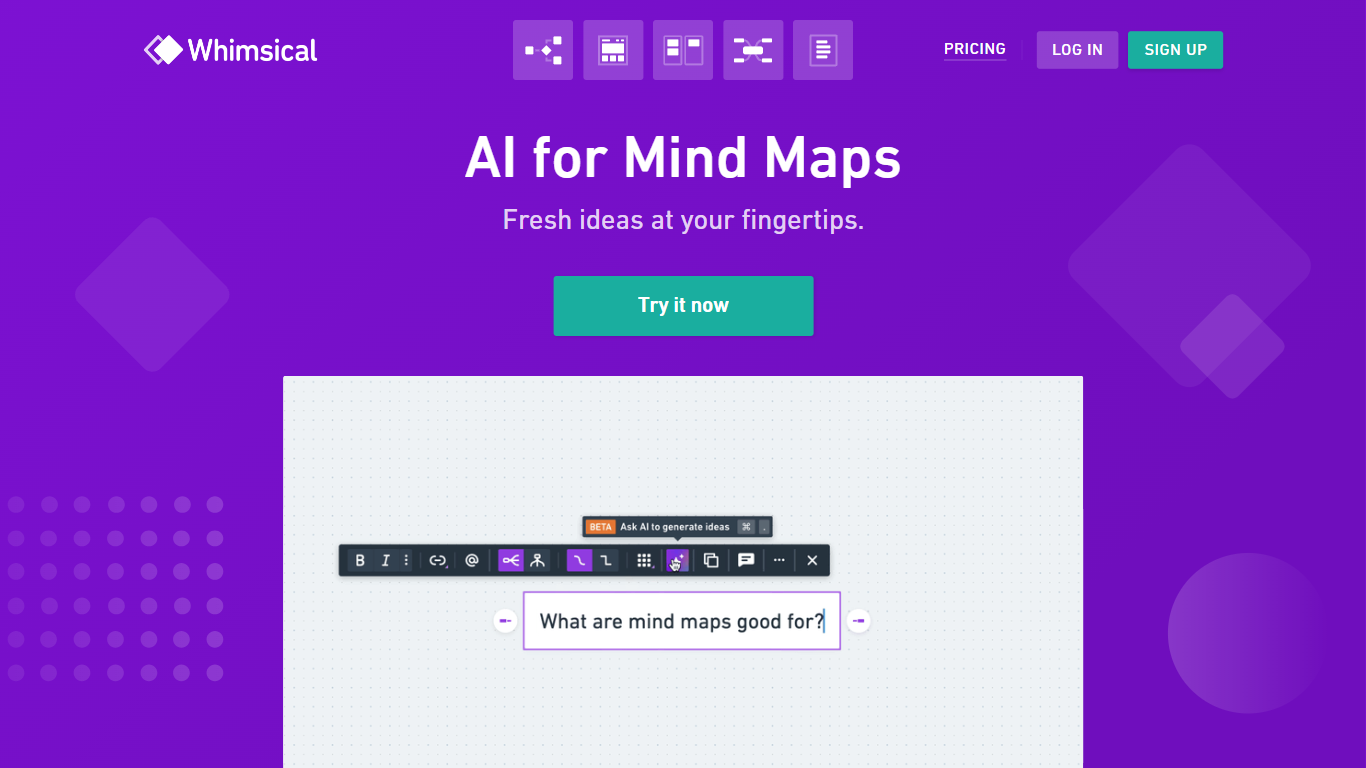

What is Whimsical AI?
Whimsical AI turns a text prompt into editable mind maps inside Whimsical's diagram canvas, powered by Claude. You enter an idea, generate a branched map in seconds, and refine it like any other Whimsical board, flowchart, or wireframe. The page also positions Whimsical AI for summarizing information and brainstorming before you refine a solution.
Standalone chat tools spit out bullet lists you still have to redraw by hand. Whimsical AI keeps output in a visual workspace your team already uses for boards, flowcharts, and wireframes, so maps stay editable and shareable instead of trapped in a text thread.
The free AI mind map generator sits inside Whimsical's broader product suite with real-time collaboration, templates, and integrations for ChatGPT and Claude. Paid plans add more AI credits, longer version history, larger uploads, and admin controls for teams that outgrow the free workspace limits.
Whimsical AI fits product managers, designers, and facilitators who need fast mind maps during workshops, planning sessions, or research synthesis. It also suits individuals who want structured brainstorming without rebuilding diagrams manually after each prompt.
SciSpace (formerly Typeset)
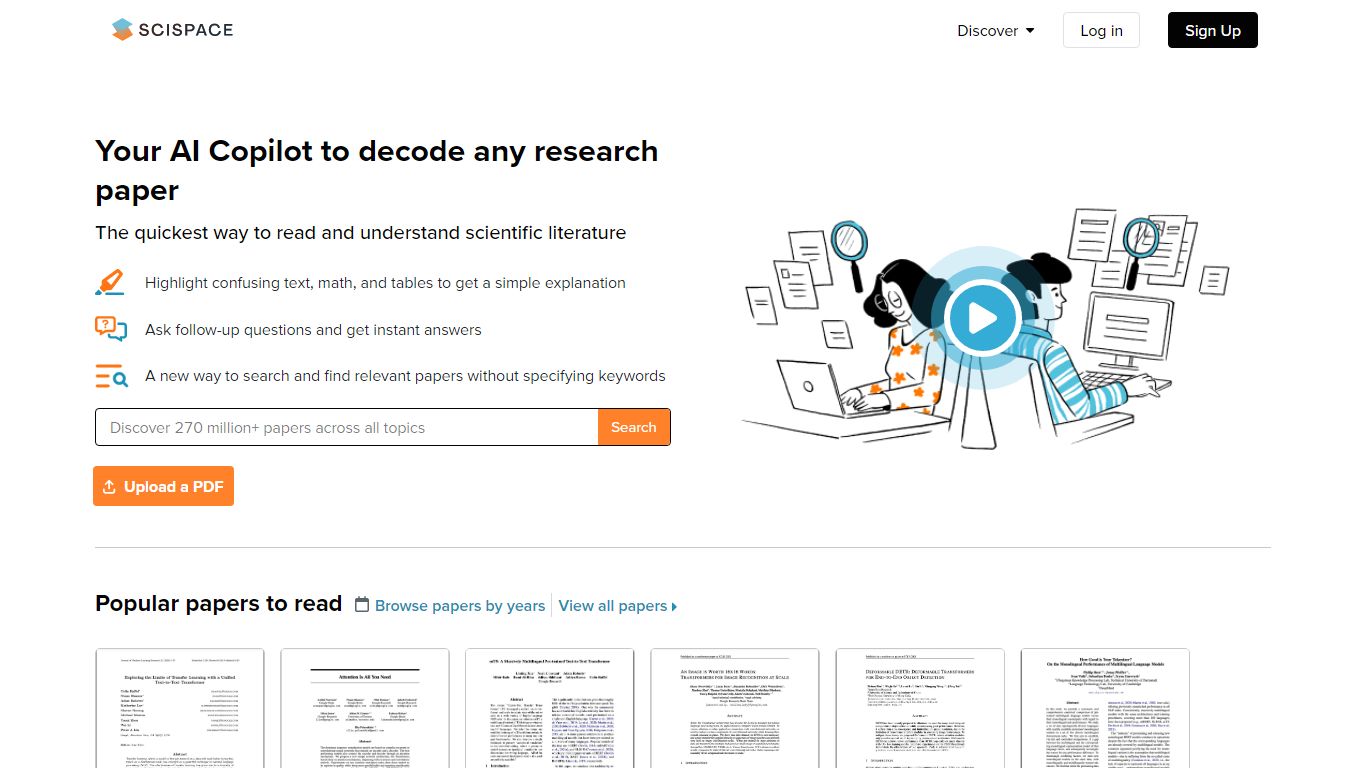
What is SciSpace (formerly Typeset)?
SciSpace, formerly Typeset, is a research workspace where you search a large academic paper index, chat with PDFs, and draft literature reviews with cited sources. The typeset.io URL now lands on scispace.com, which bundles an AI agent, literature review search, paraphraser, citation generator, data extraction, and AI detection in one interface.
General AI chat tools answer from the open web. SciSpace centers the workflow on papers: you can run systematic reviews across 280M+ indexed works, highlight passages for explanations, and move from reading into AI Writer drafts with references. Biomedical Agent, enterprise recruiting, and Chrome or mobile apps extend the same stack for labs and R&D teams.
Graduate students, PhD researchers, and pharma or biotech analysts use SciSpace to screen literature faster, unpack dense PDFs, and produce summaries or manuscripts with traceable citations. The platform reports adoption by 9.6 million researchers and lists SOC 2 compliance on its site.
Whimsical AI Upvotes
SciSpace (formerly Typeset) Upvotes
Whimsical AI Top Features
Text prompts generate fully editable AI mind maps powered by Claude
Free plan includes 20 AI credits per workspace according to pricing FAQs
Pro plan costs $10 per month per editor with 90-day version history
Business plan costs $20 per month per editor with SSO and SCIM
Generated maps open on Whimsical boards alongside flowcharts and wireframes
Integrations let ChatGPT and Claude users turn ideas into Whimsical visuals
Annual billing saves 17% on paid Whimsical plans
SciSpace (formerly Typeset) Top Features
Search and review literature across 280M+ indexed research papers
Chat with PDF highlights for plain-language explanations of dense sections
SciSpace Agent plus Biomedical Agent for guided research tasks
Built-in paraphraser, citation generator, AI detector, and data extraction tools
AI Writer and templates for drafting papers with cited sources
Chrome extension and mobile app for reading outside the browser tab
Premium plans with a 24-hour money-back guarantee on subscriptions
Whimsical AI Category
- Summarizer
SciSpace (formerly Typeset) Category
- Summarizer
Whimsical AI Pricing Type
- Freemium
SciSpace (formerly Typeset) Pricing Type
- Freemium