LowTech AI vs SciSpace (formerly Typeset)
Al comparar LowTech AI vs SciSpace (formerly Typeset), ¿cuál herramienta AI Summarizer brilla con más intensidad? Examinamos precios, alternativas, votos positivos, características, opiniones, y más.
Entre LowTech AI y SciSpace (formerly Typeset), ¿cuál es superior?
Cuando ponemos LowTech AI y SciSpace (formerly Typeset) uno al lado del otro, ambas siendo herramientas impulsadas por inteligencia artificial en la categoría de summarizer, Con más votos positivos, SciSpace (formerly Typeset) es la opción preferida. SciSpace (formerly Typeset) ha recibido 24 votos positivos de usuarios de aitools.fyi, mientras que LowTech AI ha recibido 6 votos positivos.
¿No es lo tuyo? ¡Vota por tu herramienta preferida y agita las cosas!
LowTech AI
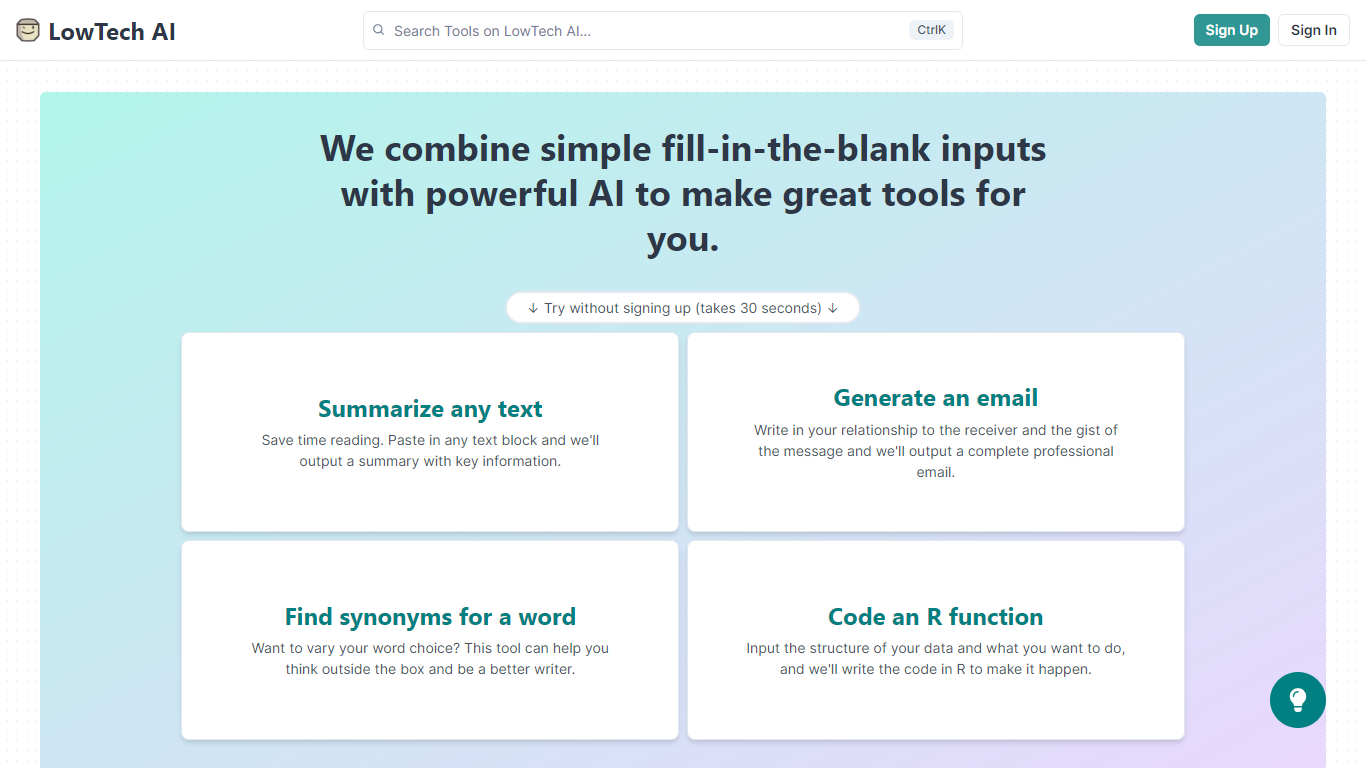

¿Qué es LowTech AI?
LowTech AI is a platform of ready-made AI tools built around fill-in-the-blank prompts. Instead of learning how to write prompts from scratch, you pick a tool, answer a few guided questions, and get a result. Popular starting points include text summarizers, professional email generators, and R code helpers, and you can try them without signing up.
Each tool is a templated prompt connected to language models. The site hosts a large library of community and team-built tools across categories like writing, teaching, research, coding, and sales. You can browse by category, search by keyword, and sort by usage, saves, or recency.
Anyone can build a custom tool through a guided creation flow. You write a prompt with input placeholders like {{Input Name}}, add a title and simple instructions, assign categories, and publish at a custom URL under your username. Existing tools can also be forked and improved.
Sharing is built to be frictionless. Recipients can open a shared link and run a tool immediately without creating an account. Tools can also be grouped into bundles for specific workflows like college counseling, financial analysis, or blog writing. The platform publishes research articles through its blog and researcher fellowship program.
SciSpace (formerly Typeset)
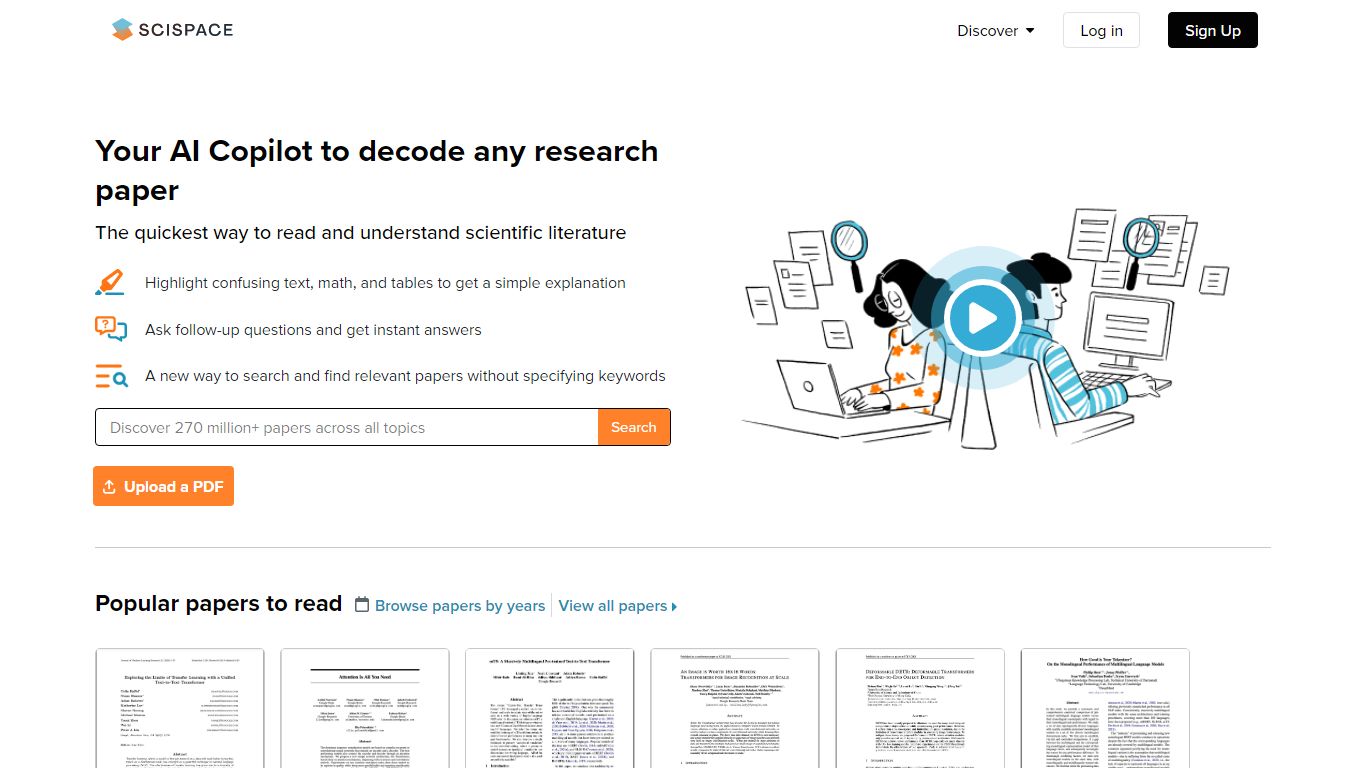
¿Qué es SciSpace (formerly Typeset)?
SciSpace, anteriormente Typeset, es un espacio de trabajo para investigación donde puedes buscar en un gran índice de artículos académicos, chatear con PDFs y redactar revisiones bibliográficas con fuentes citadas. La URL typeset.io ahora redirige a scispace.com, que integra un agente de IA, búsqueda para revisiones bibliográficas, parafraseador, generador de citas, extracción de datos y detección de IA en una sola interfaz.
Las herramientas generales de chat de IA responden desde la web abierta. SciSpace centra el flujo de trabajo en los artículos: puedes realizar revisiones sistemáticas en más de 280 millones de trabajos indexados, resaltar pasajes para obtener explicaciones y pasar de la lectura a borradores en AI Writer con referencias. El Agente Biomédico, reclutamiento empresarial y las aplicaciones para Chrome o móviles extienden la misma plataforma para laboratorios y equipos de I+D.
Estudiantes de posgrado, investigadores de doctorado y analistas de farmacéutica o biotecnología usan SciSpace para revisar literatura más rápido, desglosar PDFs complejos y producir resúmenes o manuscritos con citas rastreables. La plataforma reporta adopción por 9.6 millones de investigadores y menciona cumplimiento SOC 2 en su sitio.
LowTech AI Votos positivos
SciSpace (formerly Typeset) Votos positivos
LowTech AI Características principales
Fill-in-the-blank forms replace open-ended chat boxes for every tool
Try featured tools without signing up, including summarizers and email writers
Browse hundreds of community tools with category filters and keyword search
Create custom tools with templated prompts and your own shareable URL
Group related tools into bundles for teams, students, or specific workflows
SciSpace (formerly Typeset) Características principales
Buscar y revisar literatura en más de 280M artículos de investigación indexados
Chat con destacados de PDF para explicaciones en lenguaje sencillo de secciones densas
SciSpace Agent plus Biomedical Agent para tareas de investigación guiadas
Paráfrasis integrada, generador de citas, detector de IA y herramientas de extracción de datos
AI Writer y plantillas para redactar artículos con fuentes citadas
Extensión de Chrome y aplicación móvil para leer fuera de la pestaña del navegador
Planes premium con garantía de devolución de dinero en 24 horas en suscripciones
LowTech AI Categoría
- Summarizer
SciSpace (formerly Typeset) Categoría
- Summarizer
LowTech AI Tipo de tarificación
- Freemium
SciSpace (formerly Typeset) Tipo de tarificación
- Freemium