SnapGPT 对比 SciSpace (formerly Typeset)

在比较 SnapGPT 和 SciSpace (formerly Typeset) 时,哪个 AI Summarizer 工具更出色?我们看看定价、替代品、赞成票、功能、评论等等。

在 SnapGPT 和 SciSpace (formerly Typeset) 的比较中,哪一个脱颖而出?

当我们将SnapGPT和SciSpace (formerly Typeset)并排放置时,这两个都是AI驱动的summarizer工具, 赞成票数有利于SciSpace (formerly Typeset),使其成为明显的赢家。 SciSpace (formerly Typeset)的赞成票数为 24,而 SnapGPT 的赞成票数为 6。

不是你的菜?投票支持您喜欢的工具,搅动事情!

SnapGPT

SnapGPT

什么是 SnapGPT?

SnapGPT 是一款浏览器作业助手,能够读取屏幕上的问题并在不切换标签页的情况下提供 AI 答案。安装 Chrome 或 Firefox 扩展程序,点击一次测验或作业表,即可获得基于截图的答案及逐步解析。学生在使用 Canvas、Quizlet、Blackboard 和 Google Forms 时,可以在当前页面内快速获得帮助。

通用聊天机器人需要你将问题复制到另一个窗口。SnapGPT 以隐藏叠加层形式运行在当前标签页,支持隐蔽模式和地址栏答案,方便低调使用。其自动驾驶模式可以自动完成整个测验,Plus 版解锁无限截图,工作流程不同于独立的 AI 聊天网站。

免费套餐每天包含 5 次截图答案和 5 条聊天消息。Plus 版每月 7.49 美元(按年计费)提供无限请求、推理模型、抽认卡和自动驾驶功能。

SciSpace (formerly Typeset)
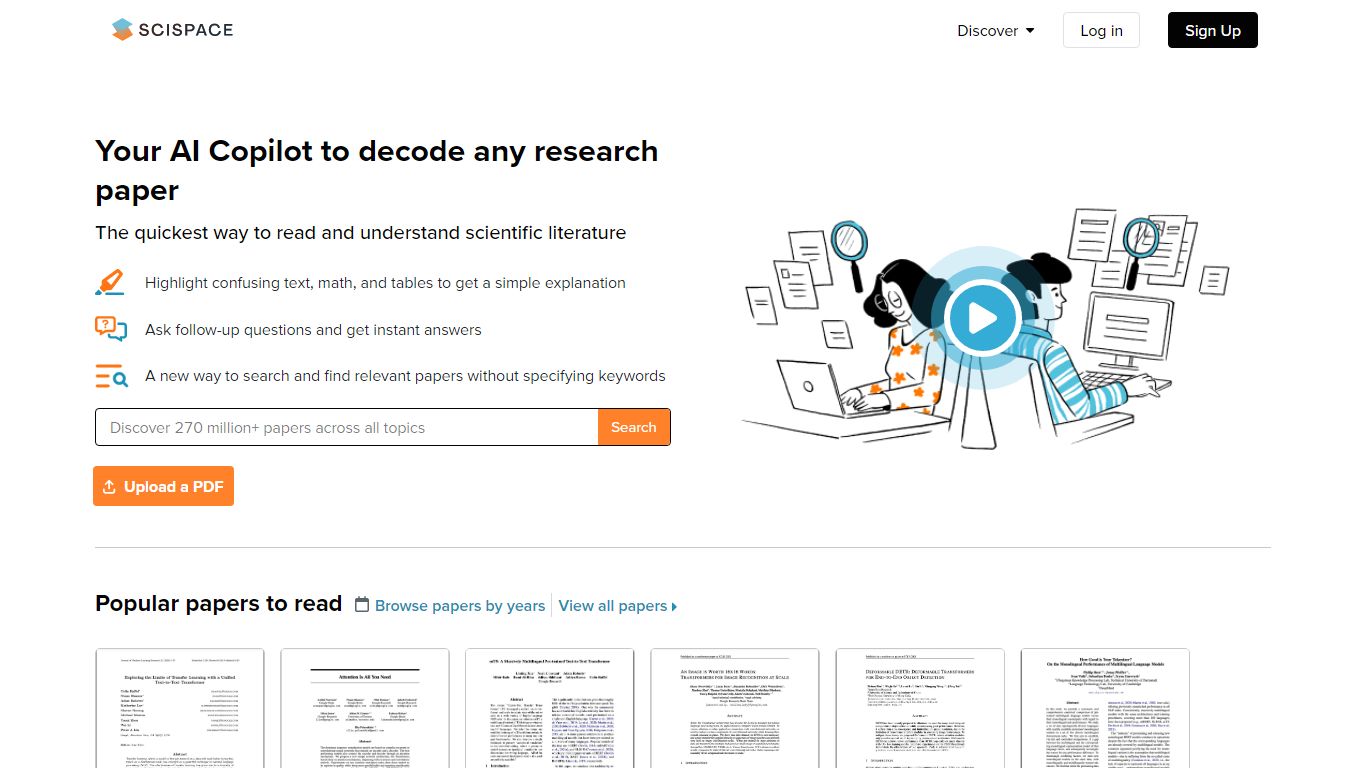
SciSpace (formerly Typeset)

什么是 SciSpace (formerly Typeset)?

SciSpace,前身为 Typeset,是一个研究工作空间,您可以在这里搜索大量学术论文索引,与 PDF 互动聊天,并撰写带有引用来源的文献综述。typeset.io 网址现已跳转至 scispace.com,整合了 AI 代理、文献综述搜索、释义工具、引用生成器、数据提取和 AI 检测于一个界面中。

通用 AI 聊天工具从开放网络获取答案。SciSpace 将工作流程聚焦于论文:您可以在超过 280M+ 索引作品中进行系统综述,突出显示段落以获取解释,并从阅读直接进入带有参考文献的 AI Writer 草稿。生物医学代理、企业招聘以及 Chrome 或移动应用扩展了同一套工具,服务于实验室和研发团队。

研究生、博士研究人员以及制药或生物技术分析师使用 SciSpace 更快筛选文献,解析密集的 PDF,并生成带有可追溯引用的摘要或手稿。该平台报告有 960 万研究人员采用,并在其网站上列出 SOC 2 合规性。

SnapGPT 赞同数

6

SciSpace (formerly Typeset) 赞同数

24🏆

SnapGPT 顶级功能

  • 截取屏幕上的任何问题,即时获得AI答案

  • Chrome和Firefox扩展以及iPhone TestFlight测试版应用

  • 自动驾驶模式自动点击并解决整个测验

  • 免费层每天包括5个截图答案和5条聊天消息

  • Plus计划每月7.49美元,按年计费,提供无限制访问

  • SmartScan处理自由回答和论文题目,提供流式答案

  • 适用于Canvas、Quizlet、Blackboard、Khan Academy和Google Forms

SciSpace (formerly Typeset) 顶级功能

  • 搜索并浏览超过280M+篇索引研究论文

  • 通过PDF高亮聊天,提供密集部分的通俗解释

  • SciSpace Agent和Biomedical Agent辅助指导研究任务

  • 内置释义器、引用生成器、AI检测器和数据提取工具

  • AI写作助手和模板,帮助撰写带引用的论文

  • Chrome扩展和移动应用,支持浏览器标签外阅读

  • 高级套餐订阅享有24小时退款保证

SnapGPT 类别

    Summarizer

SciSpace (formerly Typeset) 类别

    Summarizer

SnapGPT 定价类型

    Freemium

SciSpace (formerly Typeset) 定价类型

    Freemium

SnapGPT 使用的技术

Ant Design
jQuery
WordPress
Cloudflare
Google Cloud
Google Analytics
Google Tag Manager
Google Fonts
Ruby
Telegram
Styled Components
Tailwind CSS

SciSpace (formerly Typeset) 使用的技术

Next.js
Google Analytics
Google Tag Manager
Facebook Pixel
Python
Ruby
Discord
Webpack
Tailwind CSS

SnapGPT 标签

Homework Helper
Screenshot Answers
Browser Extension
Quiz Solver
Flashcard Generator
Study Sets
Autopilot Mode
Text Generation

SciSpace (formerly Typeset) 标签

Paper Discovery
Chat with PDF
Research Agent
Citation Tools
Academic Writing
Paper Search
Biomedical Research
Content Summary

SnapGPT 平均评分

无可用评分

SciSpace (formerly Typeset) 平均评分

4.00

SnapGPT 评论

无可用评论

SciSpace (formerly Typeset) 评论

Sara Sara
The simulation model validated experimental J-V and external quantum efficiency (EQE) to demonstrate an improvement in perovskite (PSK) solar cell (PSC) efficiency. The effect of interface properties at the electron transport layer (ETL)/PSK and PSK/hole transport layer (HTL) was investigated using the Solar Cell Capacitance Simulator (SCAPS). The interfaces between ETL, PSK, and HTL were identified as critical factors in determining high open-circuit voltage (Voc) and FF. In this study, the impact of two types of interfaces, ETL/PSK and PSK/HTL, were investigated. Lowering the defect density at both interfaces to 102 cm−2 reduced interface recombination and increased Voc and FF.The absorber layer defect density and n/i interface of perovskite solar cells were investigated using the Solar Cell Capacitance Simulator-1D (SCAPS-1D) at various cell thicknesses. The planar p-i-n structure was defined as PEDOT:PSS/Perovskite/CdS, and its performance was calculated. With a defect density of <1014 cm−3 and an absorber layer thickness of >400 nm, power conversion efficiency can exceed 25%. The study assumed a 0.6 eV Gaussian defect energy level beneath the perovskite's conduction band, which has a characteristic energy of 0.1 eV. These conditions produced the same result on the n/i interface. These findings place constraints on numerical simulations of the correlation between defect mechanism and performance
By Rishit