Amadeus Code vs SpeechGPT
Explore the showdown between Amadeus Code vs SpeechGPT and find out which AI Audio Generation tool wins. We analyze upvotes, features, reviews, pricing, alternatives, and more.
When comparing Amadeus Code and SpeechGPT, which one rises above the other?
When we contrast Amadeus Code with SpeechGPT, both of which are exceptional AI-operated audio generation tools, and place them side by side, we can spot several crucial similarities and divergences. Both tools have received the same number of upvotes from aitools.fyi users. Be a part of the decision-making process. Your vote could determine the winner.
Does the result make you go "hmm"? Cast your vote and turn that frown upside down!
Amadeus Code

What is Amadeus Code?
Amadeus Code is an audio generation company that builds music AI on in-house training data the team owns. Its homepage groups products for creating MIDI songwriting ideas, generating royalty-free tracks, browsing rights-cleared libraries, and supplying API datasets to developers who need cleared audio for commercial builds.
The portfolio leans on rights safety rather than open-web scraping. FUJIYAMA AI SOUND and Evoke Music both stress training without unauthorized third-party works, and MusicTGA-HR ships 24-bit/48 kHz WAV stems, multitrack MIDI, and NeuroSync-generated datasets through an API. That focus on cleared data is the main split from generic music generators that cannot document training provenance.
Creators, YouTube producers, retailers, and enterprise teams are the stated audiences. MusicTGA targets DAW workflows, Evoke Music covers YouTube and in-store playback, and OTOKAI pushes music into wellbeing experiences. The company is headquartered in Japan and offers API tokens from the main site.
SpeechGPT
What is SpeechGPT?
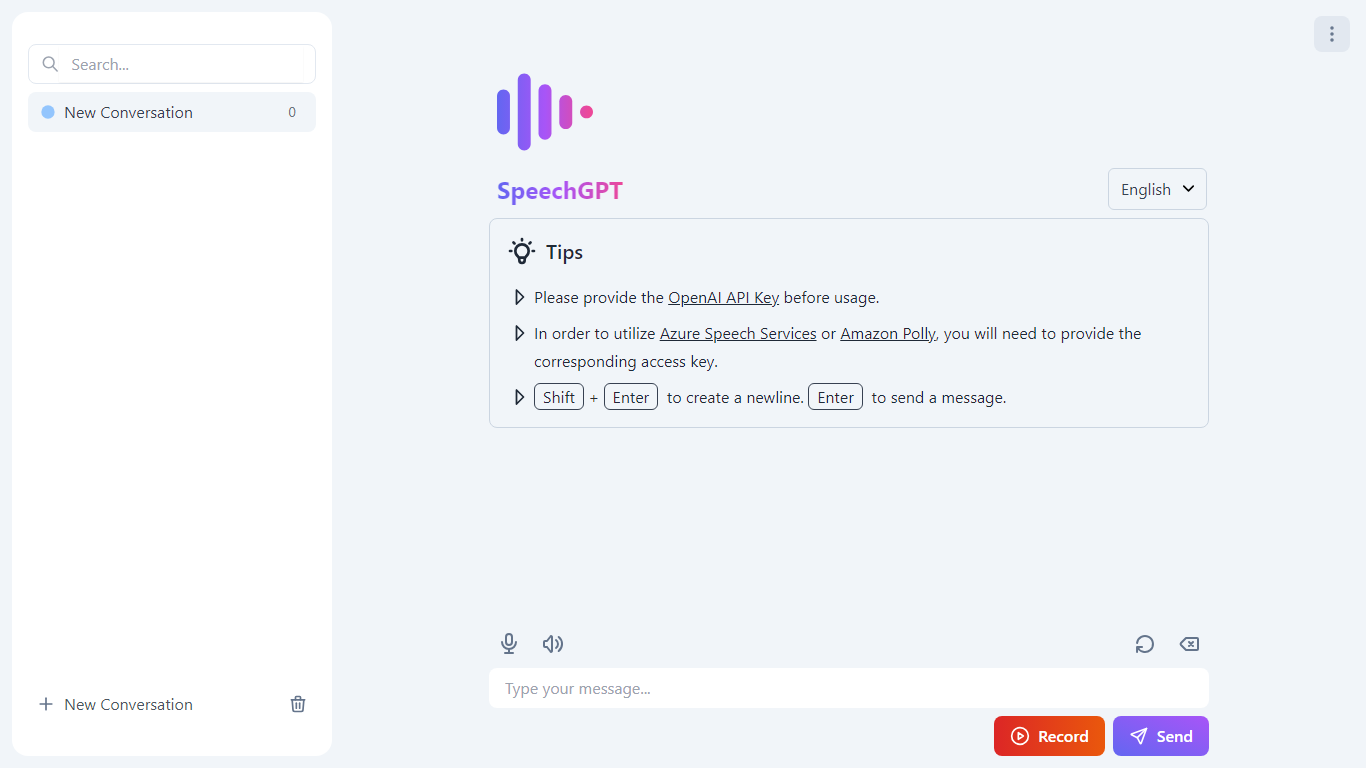
SpeechGPT lets you hold voice conversations in the browser using your own OpenAI API key. You type or record messages, send them through a chat interface, and hear spoken replies without installing desktop software.
Unlike hosted TTS services that bundle model costs into a subscription, SpeechGPT runs in the browser and bills you only through the OpenAI, Azure Speech Services, or Amazon Polly accounts you connect. That makes it a lightweight option for developers and language learners who already have API access and want a simple voice chat front end.
The interface supports English, Spanish, and Chinese UI labels, includes a record button for speech input, and stores session data locally in the browser. It suits developers testing voice chat flows, language learners practicing spoken prompts, and anyone who wants a minimal ChatGPT voice client on mobile or desktop.
Amadeus Code Upvotes
SpeechGPT Upvotes
Amadeus Code Top Features
MusicTGA exports MIDI chord, melody, and rhythm ideas you can finish inside a DAW
FUJIYAMA AI SOUND generates royalty-free tracks with a rights guarantee certificate at download
MusicTGA-HR API delivers 24-bit/48 kHz WAV stems across 6 stem groups for developers
Evoke Music library covers YouTube, Shorts, retail spaces, and spatial audio use cases
10,000+ music classification categories designed by human curators on the HR platform
CONNECT platform manages composer copyrights and master rights for licensing workflows
SpeechGPT Top Features
Chat interface accepts typed messages or recorded speech input with Enter to send
Requires your OpenAI API key in settings before the app will run conversations
Optional Azure Speech Services or Amazon Polly access keys for alternate text-to-speech backends
UI available in English, Spanish, and Chinese from the in-app language selector
Shift plus Enter inserts a newline without sending the message
Runs as a web app on Vercel with no separate desktop install required
Amadeus Code Category
- Audio Generation
SpeechGPT Category
- Audio Generation
Amadeus Code Pricing Type
- Freemium
SpeechGPT Pricing Type
- Free