Atmo AI vs Datagen
In the battle of Atmo AI vs Datagen, which AI Data Science tool comes out on top? We compare reviews, pricing, alternatives, upvotes, features, and more.
Between Atmo AI and Datagen, which one is superior?
Upon comparing Atmo AI with Datagen, which are both AI-powered data science tools, The upvote count is neck and neck for both Atmo AI and Datagen. Be a part of the decision-making process. Your vote could determine the winner.
Think we got it wrong? Cast your vote and show us who's boss!
Atmo AI

What is Atmo AI?
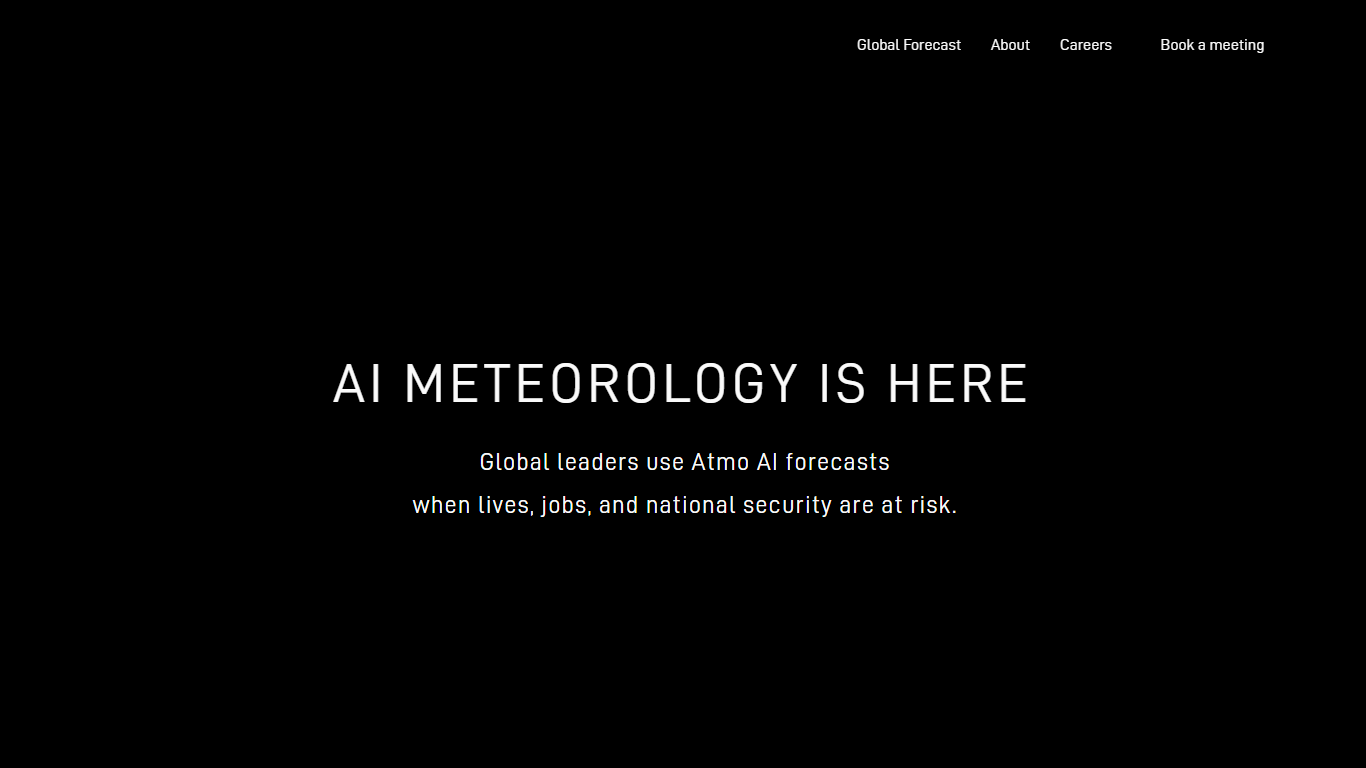
Atmo AI builds deep learning weather forecasting systems for governments, militaries, and large enterprises that need sharper predictions than legacy numerical models deliver. The company ingests real-time data from satellites, ground stations, radars, and ocean buoys, then runs neural network models that cover nowcasts out to 14-day medium-range outlooks. It sits in the data science stack for organizations where a missed storm or wind shift has operational consequences, not just a ruined picnic.
Where traditional numerical weather prediction leans on supercomputers and fixed grid resolutions, Atmo claims forecasts up to 40,000 times faster and up to 50% more accurate on major variables, with grids as fine as 1 km by 1 km for microclimate detail. That resolution gap matters for launch sites, island nations, and defense bases where a county-level forecast hides the local wind shear. The trade-off is access: Atmo sells custom deployments, not a consumer app you open for tomorrow's rain.
National weather agencies, defense commands, and enterprise risk teams use Atmo when they need site-specific forecasts backed by live production contracts. Deployments cited on Atmo's site include the U.S. Air Force, U.S. Navy, the Philippines national government, Cape Canaveral launch operations, and Tuvalu's national forecasting rollout.
Datagen
What is Datagen?
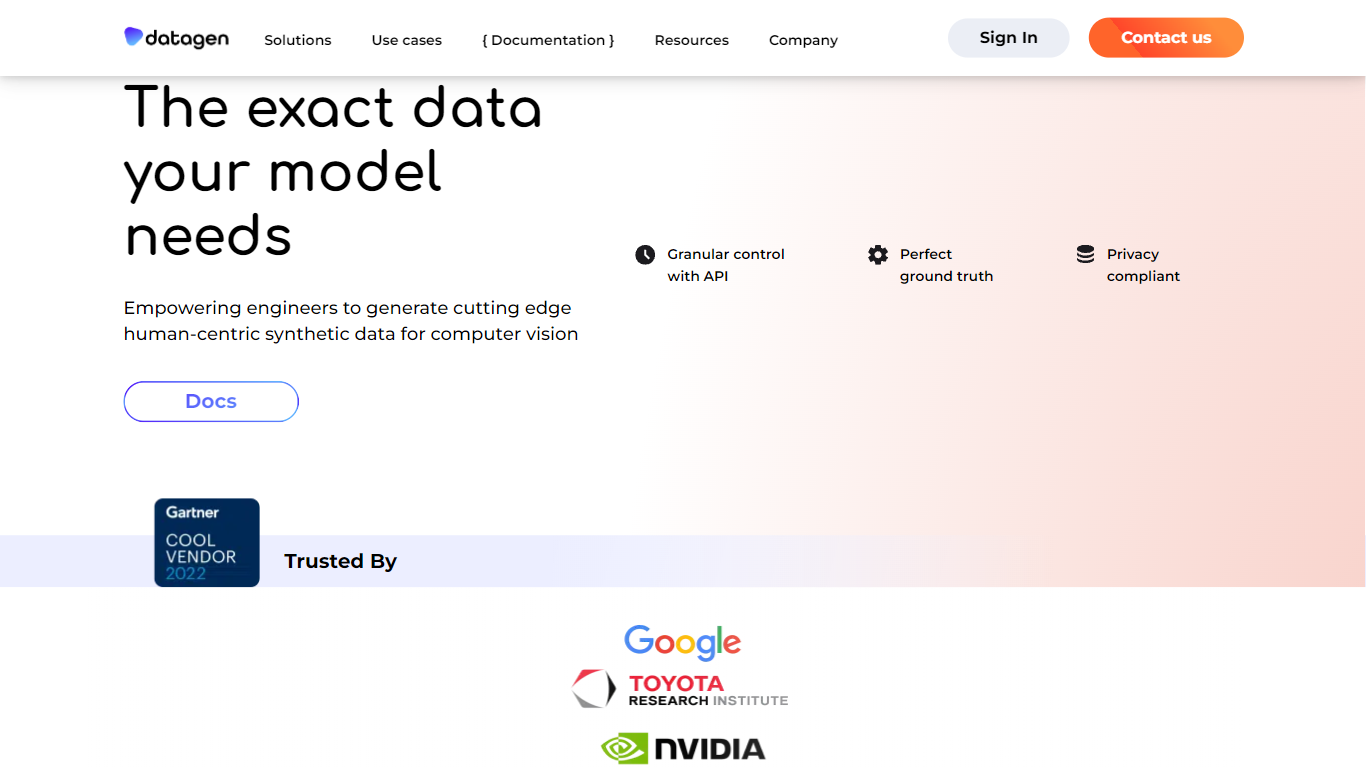
Datagen was a data science platform for generating synthetic visual datasets used to train computer vision models. The Tel Aviv company built a self-serve simulator that rendered photorealistic 2D and 3D imagery with granular control over scenes, lighting, and human-centric scenarios. Fortune 500 teams used it for AR, VR, in-cabin vehicle safety, robotics, and IoT security workflows.
Where most annotation vendors sell labeled real-world photos, Datagen focused on procedurally generated 3D scenes you could tune without collecting new camera footage. That trade-off cut dataset build time from days to hours for teams that needed rare poses, lighting, or edge cases real cameras rarely capture.
Datagen ceased operations in 2024 after generative AI reduced demand for its rule-based synthetic data stack. The datagen.tech domain now returns Cloudflare DNS resolution errors, and public reporting confirms the shutdown despite about $20 million remaining in the bank after $72 million in total funding.
Atmo AI Upvotes
Datagen Upvotes
Atmo AI Top Features
Pulls real-time weather data from satellites, ground stations, radars, and ocean buoys worldwide
Delivers forecasts up to 40,000 times faster than traditional numerical weather models
Reports up to 50% higher accuracy on major variables from 24-hour nowcasts to 14-day outlooks
Resolves microclimates with grid detail down to 1 km by 1 km
Runs live production deployments for the U.S. Air Force, Navy, and Philippines national government
Datagen Top Features
Self-serve platform generated photorealistic 2D and 3D synthetic imagery for CV training
Granular scene controls covered lighting, object placement, and human-centric scenarios
Raised $72 million total, including a $50 million Series B round in March 2022
Targeted AR, VR, robotics, in-cabin safety, and IoT security use cases
Founded in 2018 in Tel Aviv by Technion graduates Ofir Chakon and Gil Elbaz
Atmo AI Category
- Data Science
Datagen Category
- Data Science
Atmo AI Pricing Type
- Paid
Datagen Pricing Type
- Paid