AudioDoc vs MusicLM
In the contest of AudioDoc vs MusicLM, which AI tool is the champion? We evaluate pricing, alternatives, upvotes, features, reviews, and more.
If you had to choose between AudioDoc and MusicLM, which one would you go for?
When we examine AudioDoc and MusicLM, both of which are AI-enabled tools, what unique characteristics do we discover? Both tools have received the same number of upvotes from aitools.fyi users. The power is in your hands! Cast your vote and have a say in deciding the winner.
Want to flip the script? Upvote your favorite tool and change the game!
AudioDoc

What is AudioDoc?
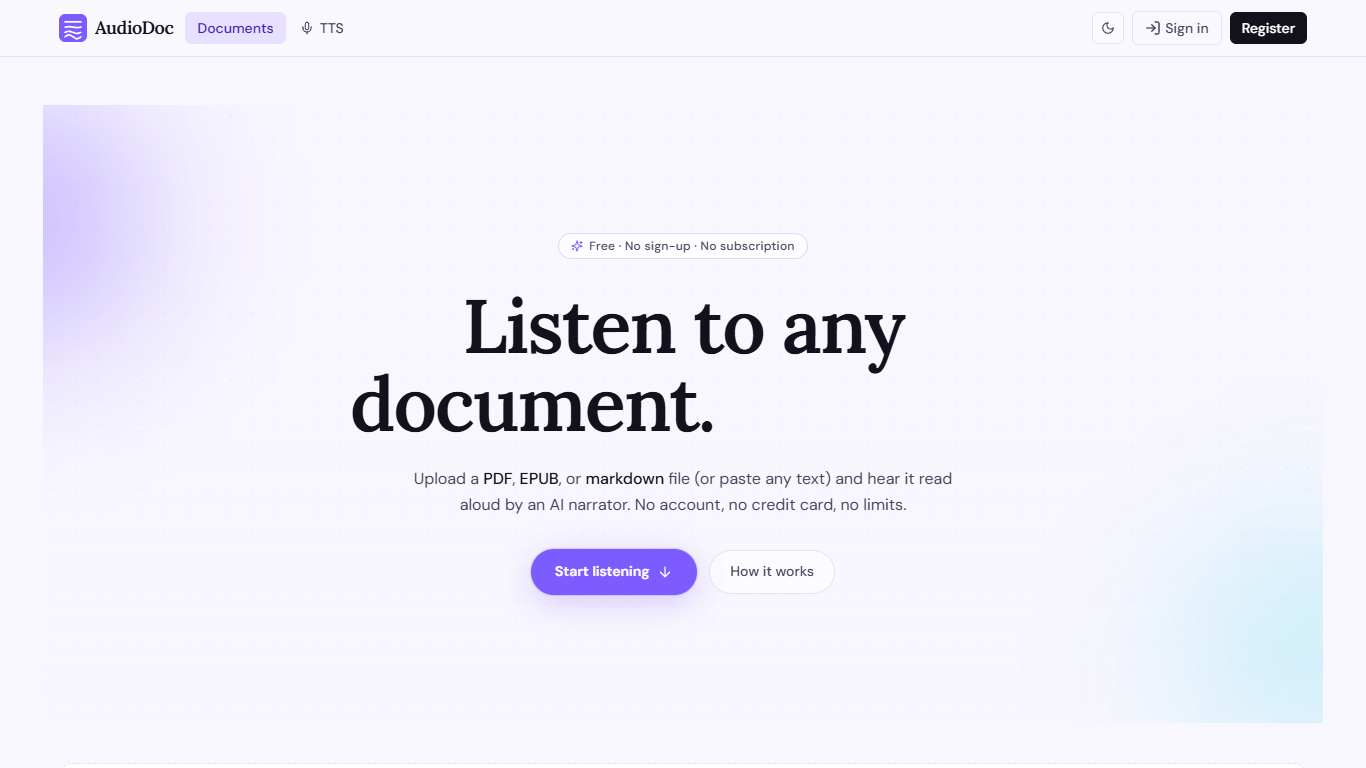
AudioDoc turns documents and pasted text into listenable audio in your browser. Upload a PDF, EPUB, or markdown file, or drop raw text into the TTS studio, and hear it read by natural narrators. There is no account requirement, no subscription, and no credit card gate to start.
The document library streams long files chapter by chapter as audio is generated, so you are not waiting on a full book conversion before playback begins. A separate TTS studio handles quick paste-and-listen jobs with downloadable clips and no watermarks.
It fits commuters who want articles read aloud, students reviewing coursework, writers proofreading drafts by ear, and anyone who needs hands-free or accessibility-friendly access to written material. Guest sessions last 24 hours; a free registered account keeps your library and listening progress beyond that window.
MusicLM
What is MusicLM?
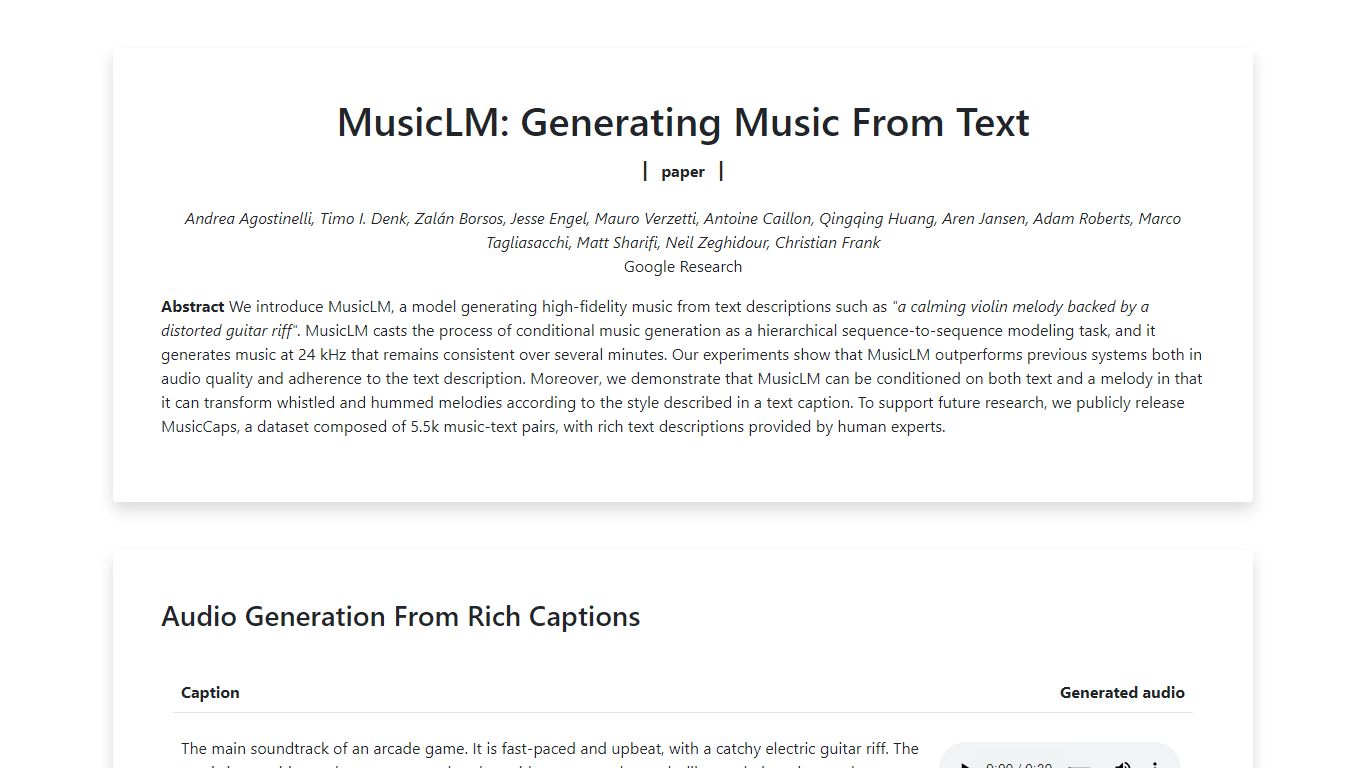
MusicLM is a Google Research audio generation model that creates music from text captions at 24 kHz. The public examples page hosts sample clips for prompts like arcade soundtracks, reggaeton-EDM fusions, and relaxing jazz, plus longer story-mode generations that shift styles across timed segments. Google released the MusicCaps dataset of 5,500 music-text pairs alongside the paper.
Unlike consumer apps that ship one prompt box, MusicLM was published as a research demo with pre-generated samples rather than a login product. Its headline trick is joint text-and-melody conditioning: you can hum or whistle a tune and have the model re-render it in a new genre described in text. Story mode chains multiple captions so the music evolves across sections.
MusicLM matters as the research foundation behind Google's later Lyria music models, but this page is for listening to published examples, not creating new tracks interactively. Researchers and musicians study it for long-form consistency, painting-to-music conditioning, and melody transfer results documented in the 2023 paper.
AudioDoc Upvotes
MusicLM Upvotes
AudioDoc Top Features
Upload PDF, EPUB, or markdown and stream audio chapter by chapter
Paste up to 1,000 words in the TTS studio for instant playback
American, British, Japanese, and Chinese narrator voices included
Download generated audio files with no watermarks
Start as a guest with no sign-up or credit card
Remembers your spot and works in mobile browsers without an app
MusicLM Top Features
Generates music at 24 kHz from rich text captions
Story mode chains multiple text prompts across timed segments
Text-and-melody conditioning transforms hummed or whistled tunes into new styles
Painting caption conditioning pairs artwork descriptions with generated audio
Long-generation examples cover melodic techno, swing, and relaxing jazz
MusicCaps dataset includes 5,500 expert-written music-text pairs
AudioDoc Category
- Text to Speech (TTS)
MusicLM Category
- Audio Generation
AudioDoc Pricing Type
- Free
MusicLM Pricing Type
- Free