Auth0 vs Emdash
Dive into the comparison of Auth0 vs Emdash and discover which AI Web Apps tool stands out. We examine alternatives, upvotes, features, reviews, pricing, and beyond.
In a comparison between Auth0 and Emdash, which one comes out on top?
When we compare Auth0 and Emdash, two exceptional web apps tools powered by artificial intelligence, and place them side by side, several key similarities and differences come to light. With more upvotes, Emdash is the preferred choice. Emdash has garnered 9 upvotes, and Auth0 has garnered 6 upvotes.
Disagree with the result? Upvote your favorite tool and help it win!
Auth0

What is Auth0?
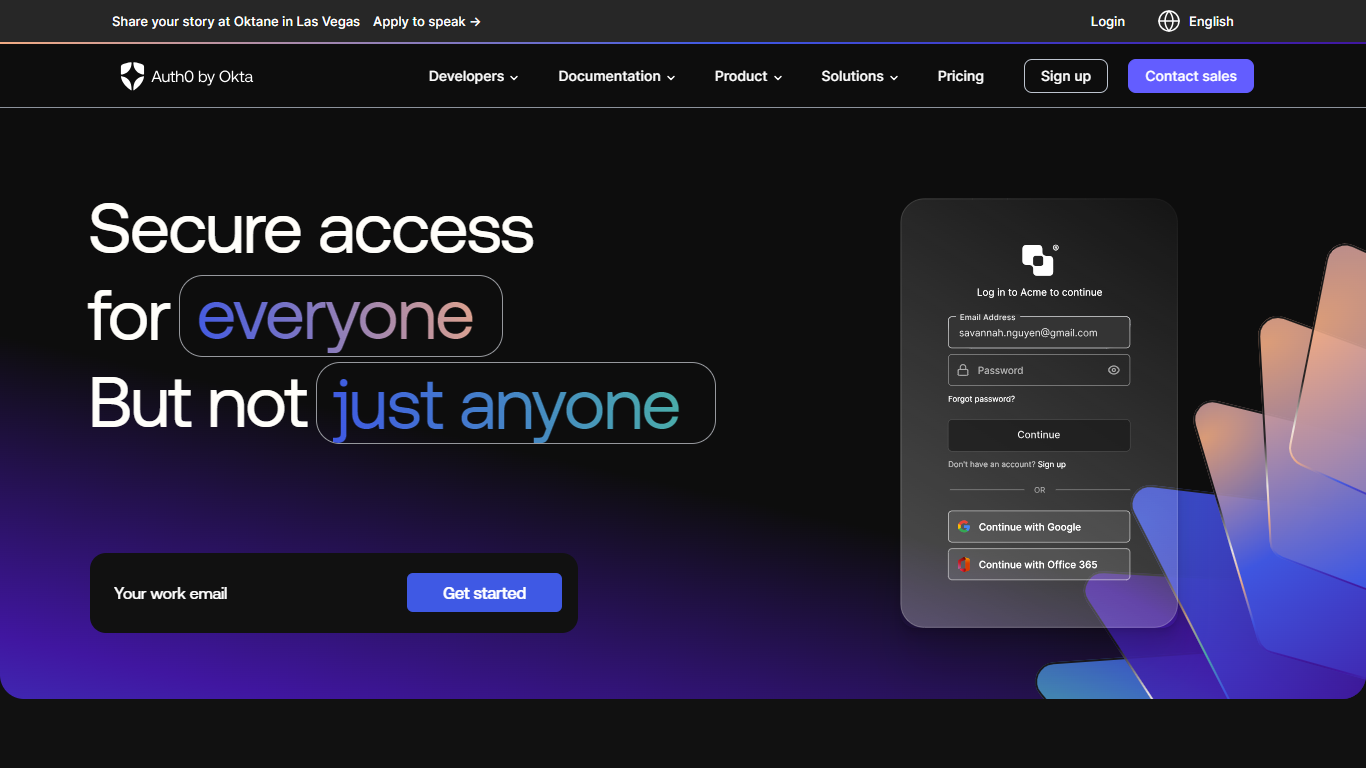
Auth0 is a customer identity and access management platform from Okta. It handles authentication and authorization for web, mobile, and API applications so development teams can add login, SSO, and access controls without building identity infrastructure from scratch.
The platform covers B2C consumer apps, B2B SaaS products, and internal tools. Developers integrate via SDKs and quickstarts for stacks like React, Next.js, iOS, Android, Java, .NET, and Python. Auth0 also ships dedicated tooling for securing AI agents, including user authentication before agent access, Token Vault for scoped API credentials, and fine-grained authorization for RAG pipelines.
Auth0 reports blocking 3 billion-plus attacks monthly across Okta and Auth0 platforms, 99.99% uptime, and 10 billion-plus authentications per month. Customers listed on the site include Siemens, Signify, Zapier, Wyndham Hotels, and the City of Los Angeles.
Emdash
What is Emdash?
Emdash is a free open-source desktop environment for running multiple coding agents in parallel on macOS, Windows, and Linux. Each task gets its own Git worktree with a branch, terminal, chat thread, and diff review panel, so you can fix CI, rewrite auth, and review a pull request at the same time without branch collisions.
Terminal-only agent workflows force you to context-switch between repos and tabs. Emdash pulls issue context from Linear, Jira, GitHub, Notion, and Asana, previews localhost apps in a built-in browser, and schedules recurring automations like weekly bug sweeps. It supports 25+ agents including Claude Code, Codex, Cursor, and Amp with no vendor lock-in.
The app is YC W26 backed, MIT-licensed on GitHub with 5,395 stars, and reports over 1 million downloads. You bring your own agent API keys; Emdash handles worktree isolation, prompt libraries, MCP server sync, and remote SSH execution on your servers or VMs.
Auth0 Upvotes
Emdash Upvotes
Auth0 Top Features
Universal Login and Embedded Login flows with branding controls for web and mobile apps
Single sign-on across enterprise federation, social logins, and username-password setups
Multifactor authentication with adaptive MFA that triggers only on risky login attempts
Passwordless authentication and breached password detection to reduce credential risk
Token Vault for AI agents to request short-lived tokens instead of storing third-party API keys
Fine-grained authorization APIs for access control in B2B SaaS and RAG document retrieval
Machine-to-machine authentication for APIs, background jobs, and IoT device communication
Actions and Forms extensibility to customize signup, login, and identity workflows without new backend code
30-plus SDKs and quickstarts to integrate Auth0 into common languages and frameworks in minutes
Emdash Top Features
Runs 25+ coding agents including Claude Code, Codex, Cursor, and Amp without lock-in
Each parallel task uses an isolated Git worktree with its own branch and terminal
Pulls issues from Linear, Jira, GitHub, Notion, and Asana into agent context
Built-in browser previews localhost apps and remote environments inside a task
Schedules recurring agent automations such as weekly bug sweeps or release prep
Auth0 Category
- Web Apps
Emdash Category
- Web Apps
Auth0 Pricing Type
- Freemium
Emdash Pricing Type
- Free