Auth0 vs Rapid Editor
In the contest of Auth0 vs Rapid Editor, which AI Web Apps tool is the champion? We evaluate pricing, alternatives, upvotes, features, reviews, and more.
If you had to choose between Auth0 and Rapid Editor, which one would you go for?
When we examine Auth0 and Rapid Editor, both of which are AI-enabled web apps tools, what unique characteristics do we discover? The upvote count favors Rapid Editor, making it the clear winner. Rapid Editor has attracted 7 upvotes from aitools.fyi users, and Auth0 has attracted 6 upvotes.
You don't agree with the result? Cast your vote to help us decide!
Auth0
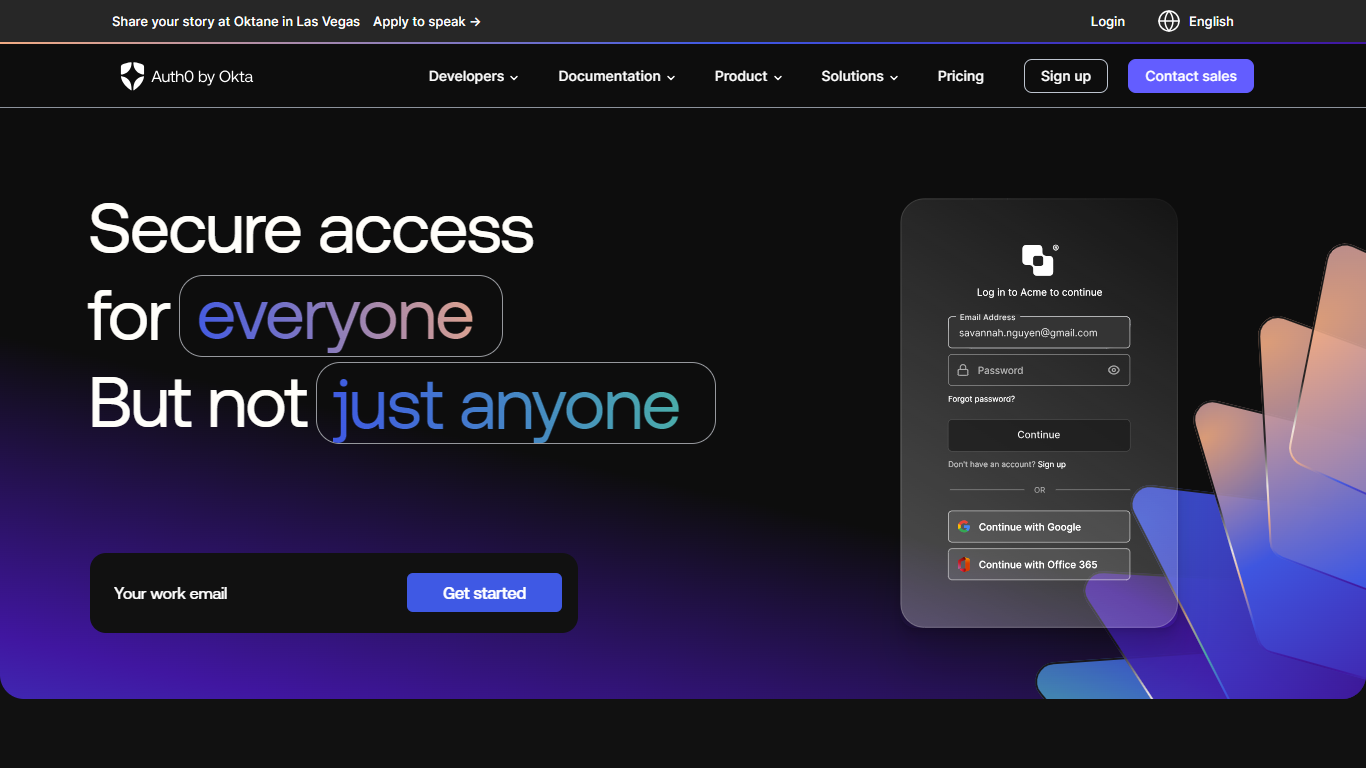

What is Auth0?
Auth0 is a customer identity and access management platform from Okta. It handles authentication and authorization for web, mobile, and API applications so development teams can add login, SSO, and access controls without building identity infrastructure from scratch.
The platform covers B2C consumer apps, B2B SaaS products, and internal tools. Developers integrate via SDKs and quickstarts for stacks like React, Next.js, iOS, Android, Java, .NET, and Python. Auth0 also ships dedicated tooling for securing AI agents, including user authentication before agent access, Token Vault for scoped API credentials, and fine-grained authorization for RAG pipelines.
Auth0 reports blocking 3 billion-plus attacks monthly across Okta and Auth0 platforms, 99.99% uptime, and 10 billion-plus authentications per month. Customers listed on the site include Siemens, Signify, Zapier, Wyndham Hotels, and the City of Los Angeles.
Rapid Editor
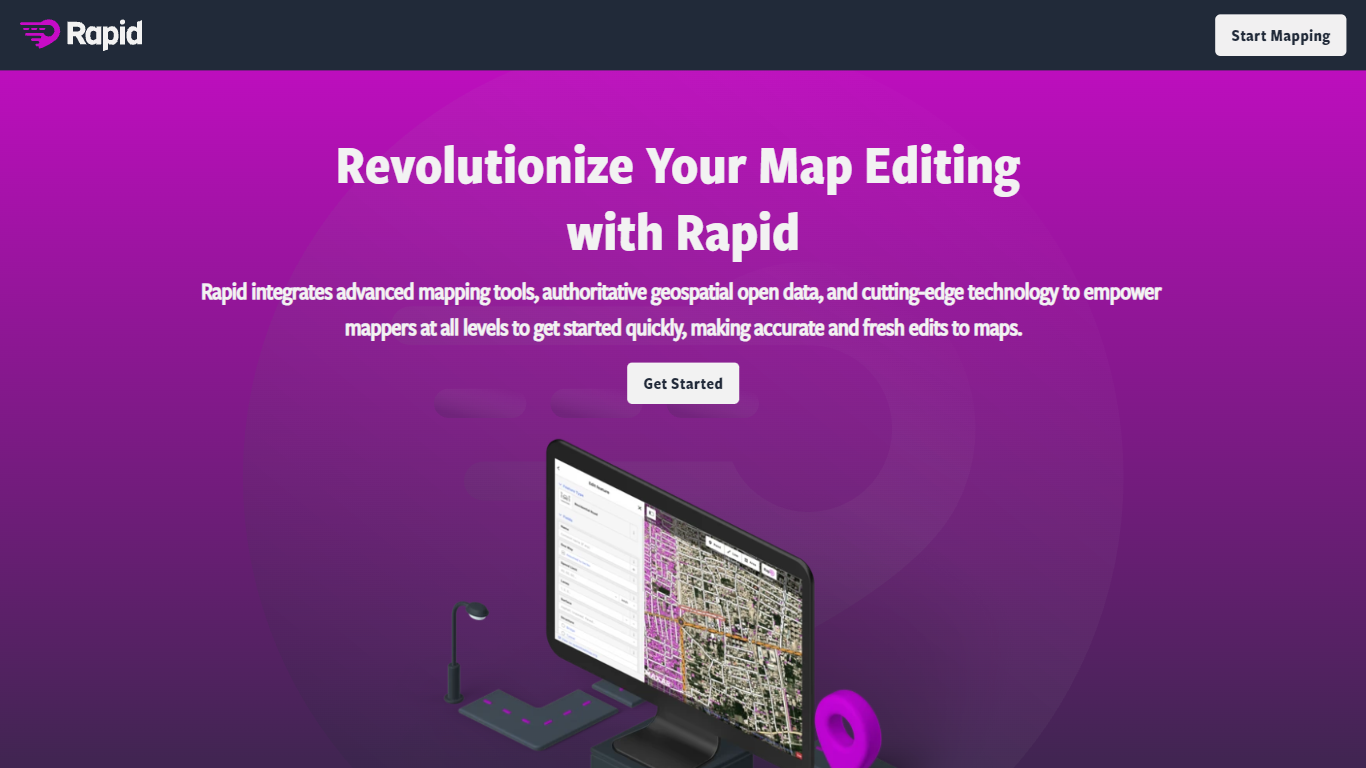
What is Rapid Editor?
Rapid Editor lets you edit OpenStreetMap from the browser by reviewing satellite imagery, open geospatial datasets, and predicted roads, buildings, and pathways before you commit changes. You can browse the world map without signing up, but you need an OpenStreetMap account to save edits back to the community map. Meta built the editor to give new and experienced mappers a faster starting point than tracing every feature by hand.
Where classic OSM editors expect you to trace every road and building by hand, Rapid treats machine learning outputs as editable suggestions you accept, tweak, or ignore. That trade-off favors speed on humanitarian crises and large unmapped areas, not deep tag editing or offline workflows. The editor also lets you pull external map layers into the session, while predicted features ship under an MIT license with attribution rules for Maxar or DigitalGlobe imagery. If your workflow depends on JOSM plugins or painstaking manual geometry, Rapid will feel lighter and more opinionated.
Volunteer mappers, HOTOSM tasking managers, and local community groups use Rapid to chip away at missing roads and structures worldwide. Esri and OpenStreetMap partnerships surface authoritative datasets inside the same canvas, which helps teams standardize imports during coordinated mapathons. Humanitarian responders who need a quick visual scan of gaps before assigning tiles tend to reach for Rapid first, then hand complex fixes to other tools.
Auth0 Upvotes
Rapid Editor Upvotes
Auth0 Top Features
Universal Login and Embedded Login flows with branding controls for web and mobile apps
Single sign-on across enterprise federation, social logins, and username-password setups
Multifactor authentication with adaptive MFA that triggers only on risky login attempts
Passwordless authentication and breached password detection to reduce credential risk
Token Vault for AI agents to request short-lived tokens instead of storing third-party API keys
Fine-grained authorization APIs for access control in B2B SaaS and RAG document retrieval
Machine-to-machine authentication for APIs, background jobs, and IoT device communication
Actions and Forms extensibility to customize signup, login, and identity workflows without new backend code
30-plus SDKs and quickstarts to integrate Auth0 into common languages and frameworks in minutes
Rapid Editor Top Features
Predicted roads, pathways, and buildings appear as an editable overlay you accept, reject, or adjust before uploading to OpenStreetMap
Browse world map data without registering; an OpenStreetMap account is required only when you want to save edits back to the community database
Pull in external map layers as User-Originated Data, with you responsible for licensing and configuration per the site terms
Predicted feature datasets ship under the MIT license, with changeset attribution to source=maxar or source=digitalglobe when metadata requires it
Partnerships with OpenStreetMap, HOTOSM, and Esri surface authoritative open datasets inside the same editing canvas
Source code lives at github.com/facebookincubator/RapiD for community review and contributions
Auth0 Category
- Web Apps
Rapid Editor Category
- Web Apps
Auth0 Pricing Type
- Freemium
Rapid Editor Pricing Type
- Free