Bookshelf vs Scholarcy
In the face-off between Bookshelf vs Scholarcy, which AI Summarizer tool takes the crown? We scrutinize features, alternatives, upvotes, reviews, pricing, and more.
In a face-off between Bookshelf and Scholarcy, which one takes the crown?
If we were to analyze Bookshelf and Scholarcy, both of which are AI-powered summarizer tools, what would we find? Neither tool takes the lead, as they both have the same upvote count. You can help us determine the winner by casting your vote and tipping the scales in favor of one of the tools.
Think we got it wrong? Cast your vote and show us who's boss!
Bookshelf

What is Bookshelf?
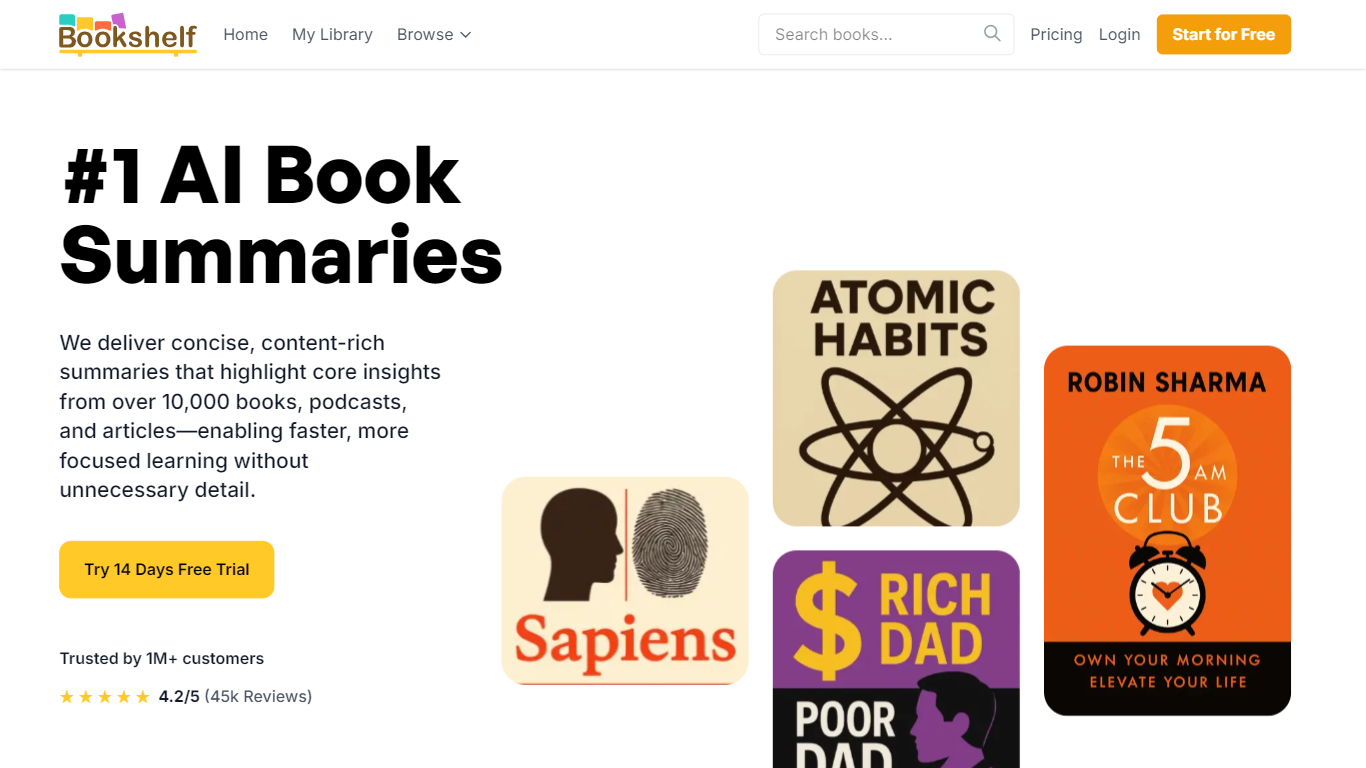
Bookshelf delivers 15-minute summaries of nonfiction books, podcasts, and articles you can read, listen to, or download as PDF and EPUB. The library spans 10,000+ titles across business, psychology, history, and self-help, with exercises and topic guides that go beyond a quick recap.
Blinkist made short book summaries mainstream; Bookshelf pushes the same format with heavier download options and a lifetime license. You get audio summaries, CarPlay and Android Auto support, offline listening on paid tiers, and a Basic free tier that unlocks one handpicked title per day after the trial ends.
Busy readers and commuters are the core audience. Premium unlocks unlimited access to 7,500+ summaries plus a shareable friend account. Paid plans are $9.99 per month, $59.99 per year, or a $129 lifetime license, all with a 14-day free trial.
Scholarcy
What is Scholarcy?
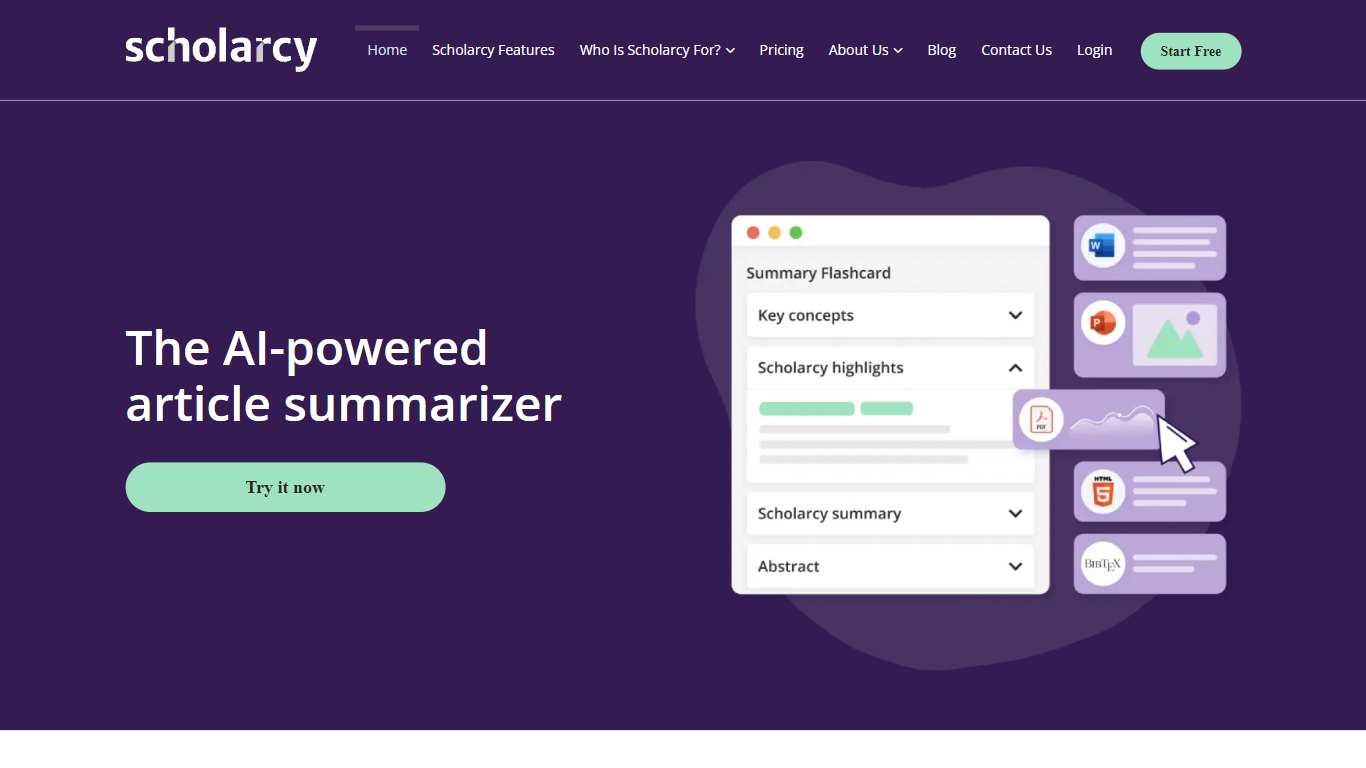
Scholarcy turns academic papers, book chapters, and articles into interactive summary flashcards that highlight key findings, methods, and limitations. Upload a PDF, import from Zotero or Google Drive, or paste a YouTube link, and Scholarcy extracts structured takeaways you can read in minutes instead of skimming for an hour.
General summarizers compress text into paragraphs. Scholarcy builds flashcards designed for research screening, with Spotlight jumps to important sections, research quality indicators, study comparisons, and a Dig Deeper prompt feature for asking questions about the paper. That structure suits literature reviews more than a generic TL;DR.
Students, PhD researchers, and international learners use Scholarcy to screen papers, organize flashcards into collections, and export bibliographies to Word or reference managers. Browser extensions for Chrome, Edge, Firefox, and Safari let you summarize articles while browsing, and paid plans add unlimited summaries, literature matrix exports, and batch export of up to 100 flashcards.
Bookshelf Upvotes
Scholarcy Upvotes
Bookshelf Top Features
10,000+ book, podcast, and article summaries with 15-minute read or listen formats
PDF, EPUB, and audiobook downloads plus Apple CarPlay and Android Auto support
14-day free trial on paid plans with a Basic tier of one handpicked title per day
Premium unlocks 7,500+ summaries, offline access, personalized picks, and a friend account
Monthly plan at $9.99, yearly at $59.99, or $129 lifetime one-time payment
Topic analyses and reflection exercises beyond standard chapter summaries
Scholarcy Top Features
Converts PDFs, articles, book chapters, and YouTube videos into interactive flashcard summaries
Free plan includes up to 10 summaries with single flashcard export
Scholarcy Plus at $9.99 per month includes unlimited summaries and a 7-day free trial
Yearly plan at $90 saves 25% compared to monthly billing
Import directly from Zotero and export to Excel, Markdown, Word, and reference managers
Literature Matrix export compares up to 100 flashcards across key findings and methods
Browser extensions for Chrome, Edge, Firefox, and Safari summarize papers while browsing
Bookshelf Category
- Summarizer
Scholarcy Category
- Summarizer
Bookshelf Pricing Type
- Freemium
Scholarcy Pricing Type
- Freemium