Bookshelf vs Stenography
In the face-off between Bookshelf vs Stenography, which AI Summarizer tool takes the crown? We scrutinize features, alternatives, upvotes, reviews, pricing, and more.
In a face-off between Bookshelf and Stenography, which one takes the crown?
If we were to analyze Bookshelf and Stenography, both of which are AI-powered summarizer tools, what would we find? Bookshelf stands out as the clear frontrunner in terms of upvotes. The number of upvotes for Bookshelf stands at 7, and for Stenography it's 6.
Don't agree with the result? Cast your vote and be a part of the decision-making process!
Bookshelf
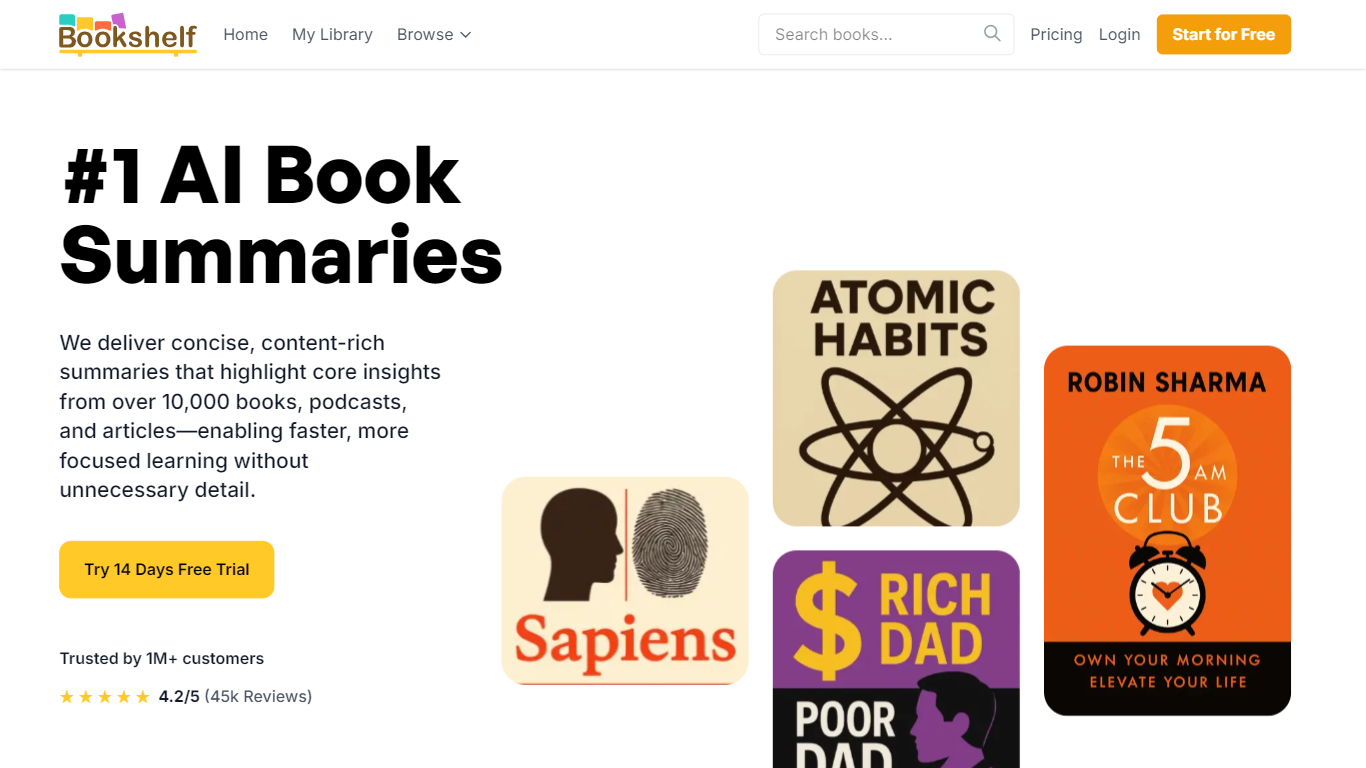

What is Bookshelf?
Bookshelf delivers 15-minute summaries of nonfiction books, podcasts, and articles you can read, listen to, or download as PDF and EPUB. The library spans 10,000+ titles across business, psychology, history, and self-help, with exercises and topic guides that go beyond a quick recap.
Blinkist made short book summaries mainstream; Bookshelf pushes the same format with heavier download options and a lifetime license. You get audio summaries, CarPlay and Android Auto support, offline listening on paid tiers, and a Basic free tier that unlocks one handpicked title per day after the trial ends.
Busy readers and commuters are the core audience. Premium unlocks unlimited access to 7,500+ summaries plus a shareable friend account. Paid plans are $9.99 per month, $59.99 per year, or a $129 lifetime license, all with a 14-day free trial.
Stenography
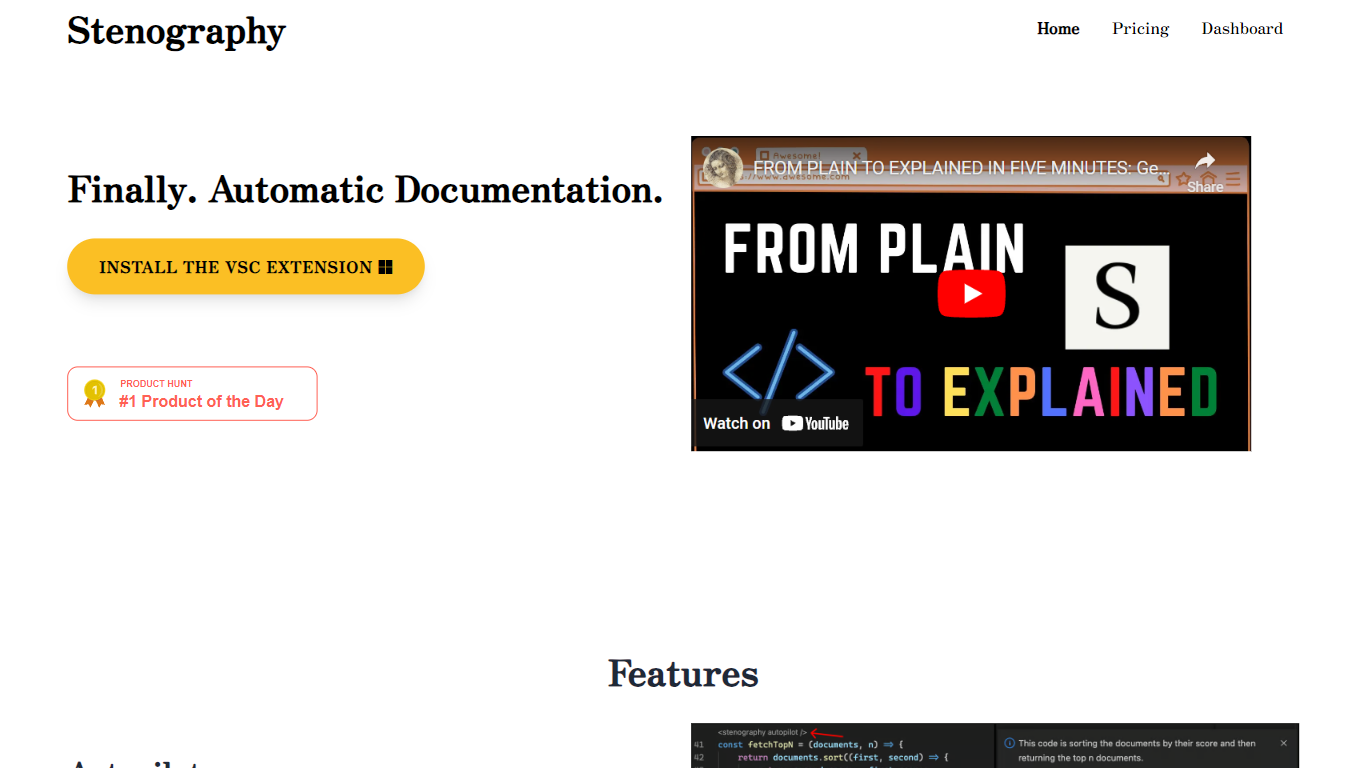
What is Stenography?
Stenography turns source code into plain-English summaries and keeps those explanations updated as you edit. Its VS Code extension runs Autopilot on every save to document entire codebases, while a separate API accepts code snippets and returns customizable explanations you can embed in your own apps or extensions.
Where generic AI chat tools treat code like any other text prompt, Stenography layers Stack Overflow suggestions and linked documentation into each response so answers cite real references instead of guessing. A passthrough API design means your code is not stored on Stenography servers, which matters when you are documenting proprietary repositories.
Developers who maintain large codebases, extension authors, and teams that want living docs without manual README upkeep are the main audience. The free tier covers 250 API calls per month, and paid plans scale invocation limits for heavier use.
Bookshelf Upvotes
Stenography Upvotes
Bookshelf Top Features
10,000+ book, podcast, and article summaries with 15-minute read or listen formats
PDF, EPUB, and audiobook downloads plus Apple CarPlay and Android Auto support
14-day free trial on paid plans with a Basic tier of one handpicked title per day
Premium unlocks 7,500+ summaries, offline access, personalized picks, and a friend account
Monthly plan at $9.99, yearly at $59.99, or $129 lifetime one-time payment
Topic analyses and reflection exercises beyond standard chapter summaries
Stenography Top Features
Autopilot documents entire codebases on every save inside VS Code
API accepts code input and returns plain-English explanations you can customize
Responses include Stack Overflow suggestions and linked web documentation
250 free API invocations per month on VS Code or custom extensions
Passthrough API does not store submitted code on Stenography servers
Chrome extension and additional integrations listed on the Notion extensions page
Bookshelf Category
- Summarizer
Stenography Category
- Summarizer
Bookshelf Pricing Type
- Freemium
Stenography Pricing Type
- Freemium