Cerebras vs PSEUDO.AI
In the face-off between Cerebras vs PSEUDO.AI, which AI Developer tool takes the crown? We scrutinize features, alternatives, upvotes, reviews, pricing, and more.
In a face-off between Cerebras and PSEUDO.AI, which one takes the crown?
If we were to analyze Cerebras and PSEUDO.AI, both of which are AI-powered developer tools, what would we find? PSEUDO.AI is the clear winner in terms of upvotes. PSEUDO.AI has garnered 7 upvotes, and Cerebras has garnered 6 upvotes.
Not your cup of tea? Upvote your preferred tool and stir things up!
Cerebras
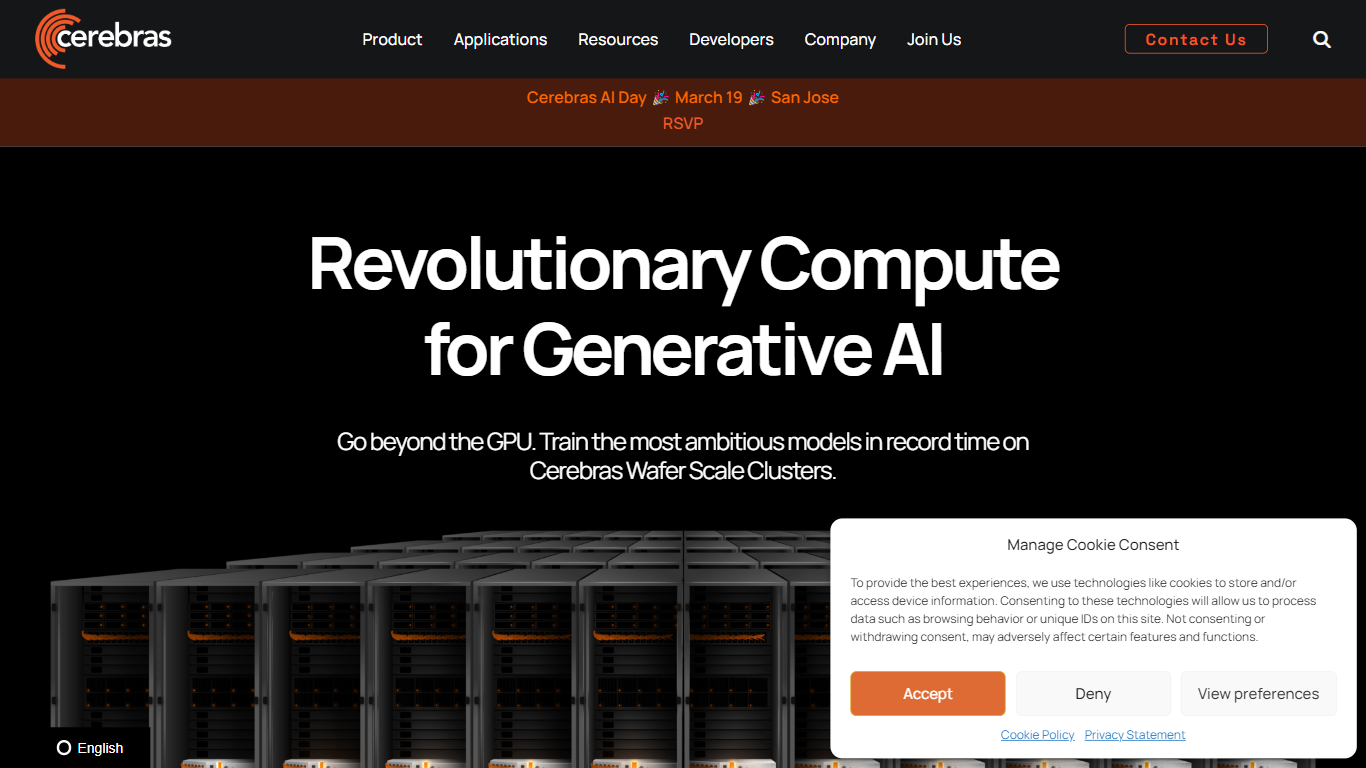

What is Cerebras?
Cerebras builds wafer-scale AI chips and runs one of the fastest LLM inference platforms available today. Its CS-2 and CS-3 systems power cloud APIs, dedicated private endpoints, and on-prem deployments for teams that need low-latency responses at production scale.
The Wafer-Scale Engine is a single chip 58 times larger than typical GPUs, designed specifically for training and inference workloads. On the cloud side, developers call open models like Llama, Qwen, GLM, and GPT OSS through a simple API key, with throughput that routinely hits thousands of tokens per second on supported models.
Cerebras serves AI-native startups, enterprise research teams, and global companies across healthcare, cybersecurity, and drug discovery. Customers include OpenAI, Meta, GSK, Notion, and Mayo Clinic. You can start free on the inference API, scale through pay-as-you-go developer billing, or talk to sales for dedicated capacity and custom model weights.
PSEUDO.AI
What is PSEUDO.AI?
PSEUDO.AI turns source code into human-readable pseudocode in your browser. You enter a prompt or code snippet, pick a language, and the app returns plain-language steps that read like structured pseudocode rather than raw syntax. It runs on the web at pseudoai.vercel.app with no install, and targets teams who need to explain implementation details to people who do not read code daily.
Most code explainers summarize what a snippet does in prose. PSEUDO.AI keeps the output closer to pseudocode structure, which makes handoffs to designers, product owners, or junior developers easier to scan. The trade-off is focus: it is built for pseudocode conversion, not debugging, testing, or repo-wide documentation. That narrow scope is the point when the goal is shared comprehension, not a full IDE workflow.
Software developers use it to translate tricky logic before code reviews or stakeholder meetings. Computer science students and instructors lean on it when a textbook example needs a readable walkthrough. Product managers and mentors who sit in technical discussions but do not write production code get a format they can follow without parsing braces and semicolons.
Cerebras Upvotes
PSEUDO.AI Upvotes
Cerebras Top Features
Wafer-Scale Engine chip built 58x larger than standard GPUs
Cloud inference API with models like Llama, Qwen, GLM, and GPT OSS
Gemma 4 runs at 1,500+ tokens per second on Cerebras hardware
GPT OSS 120B hits roughly 3,000 tokens per second on the developer tier
Deploy on-prem with CS-2 or CS-3 for full data and model control
Partner integrations through AWS Marketplace, OpenRouter, Hugging Face, and Vercel
Free account includes $5 in credits on the inference API per pricing page
PSEUDO.AI Top Features
Choose from 12 languages on the converter page, including C, C++, C#, Java, Python 3, JavaScript, Node.js, PHP, Kotlin, Swift, and SQL.
Runs entirely in the browser at pseudoai.vercel.app with no downloads required, per the homepage FAQ.
Uses an OpenAI-trained GPT model to generate pseudocode from your code input, according to the site FAQ.
Three-step workflow on the converter: enter a prompt or topic, pick a language, then click GO and copy the output.
Homepage FAQ lists Java, Python, C++, and JavaScript among supported languages, with a broader list on the live converter.
Cerebras Category
- Developer
PSEUDO.AI Category
- Developer
Cerebras Pricing Type
- Freemium
PSEUDO.AI Pricing Type
- Free