ChatGPT4YouTube vs SciSpace (formerly Typeset)
In the contest of ChatGPT4YouTube vs SciSpace (formerly Typeset), which AI Summarizer tool is the champion? We evaluate pricing, alternatives, upvotes, features, reviews, and more.
If you had to choose between ChatGPT4YouTube and SciSpace (formerly Typeset), which one would you go for?
When we examine ChatGPT4YouTube and SciSpace (formerly Typeset), both of which are AI-enabled summarizer tools, what unique characteristics do we discover? In the race for upvotes, SciSpace (formerly Typeset) takes the trophy. SciSpace (formerly Typeset) has attracted 24 upvotes from aitools.fyi users, and ChatGPT4YouTube has attracted 6 upvotes.
Feeling rebellious? Cast your vote and shake things up!
ChatGPT4YouTube
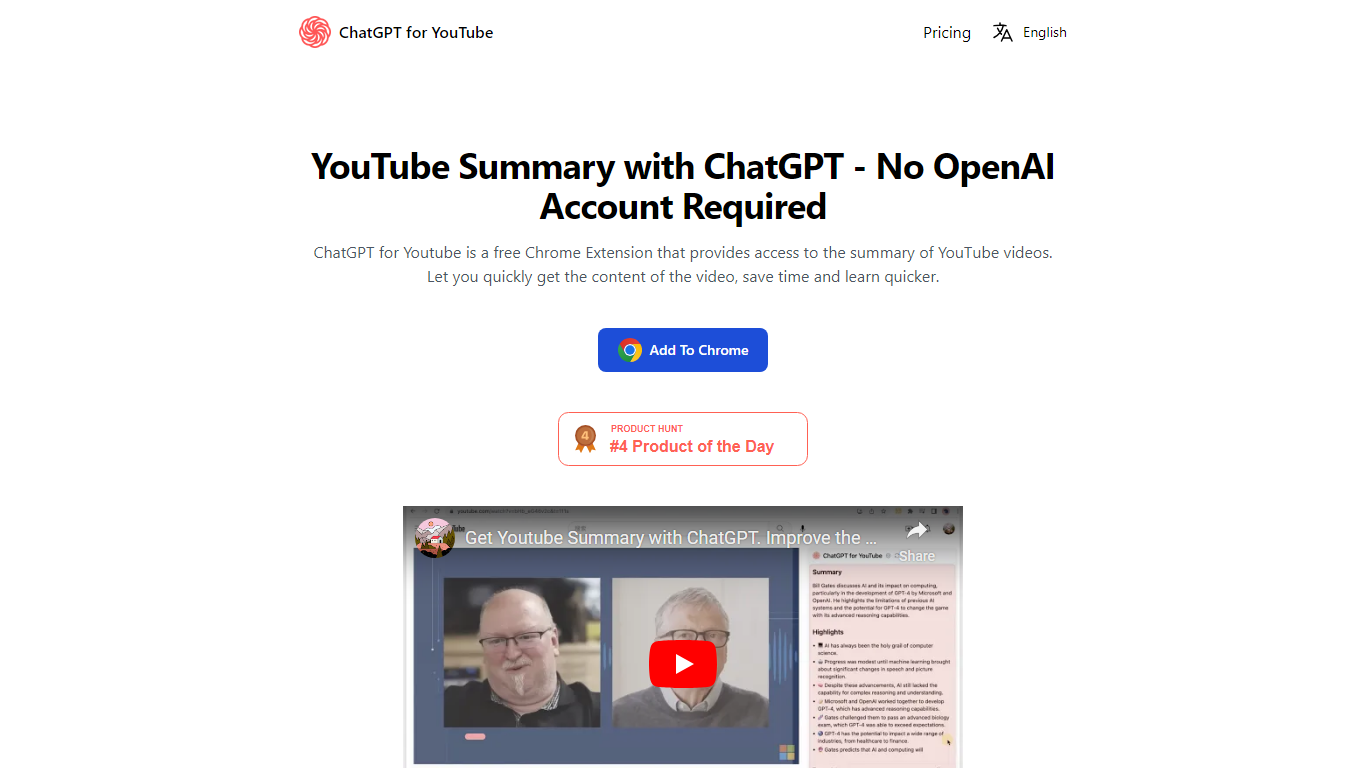

What is ChatGPT4YouTube?
ChatGPT4YouTube is a free Chrome extension that turns YouTube videos into text summaries you can read in place of watching the full runtime. Install it from the Chrome Web Store, open a video on youtube.com, and get a recap on the page. The site markets the product as AI Summary for YouTube, and LELU TECH LTD runs both the extension and the account portal at chatgpt4youtube.com.
Most YouTube summary tools assume you already have ChatGPT open or an API key ready. ChatGPT4YouTube runs the summarization on its own backend, so you never connect a personal AI account. That convenience comes with quota limits: seven free summaries per week, then one-time Pro packs or a $14.90 monthly subscription for unlimited use.
Students skimming lecture recordings, researchers reviewing long talks, and busy viewers who need the gist from a tutorial all fit the use case. Sign in with Google on chatgpt4youtube.com to buy extra quotas or manage a subscription.
SciSpace (formerly Typeset)
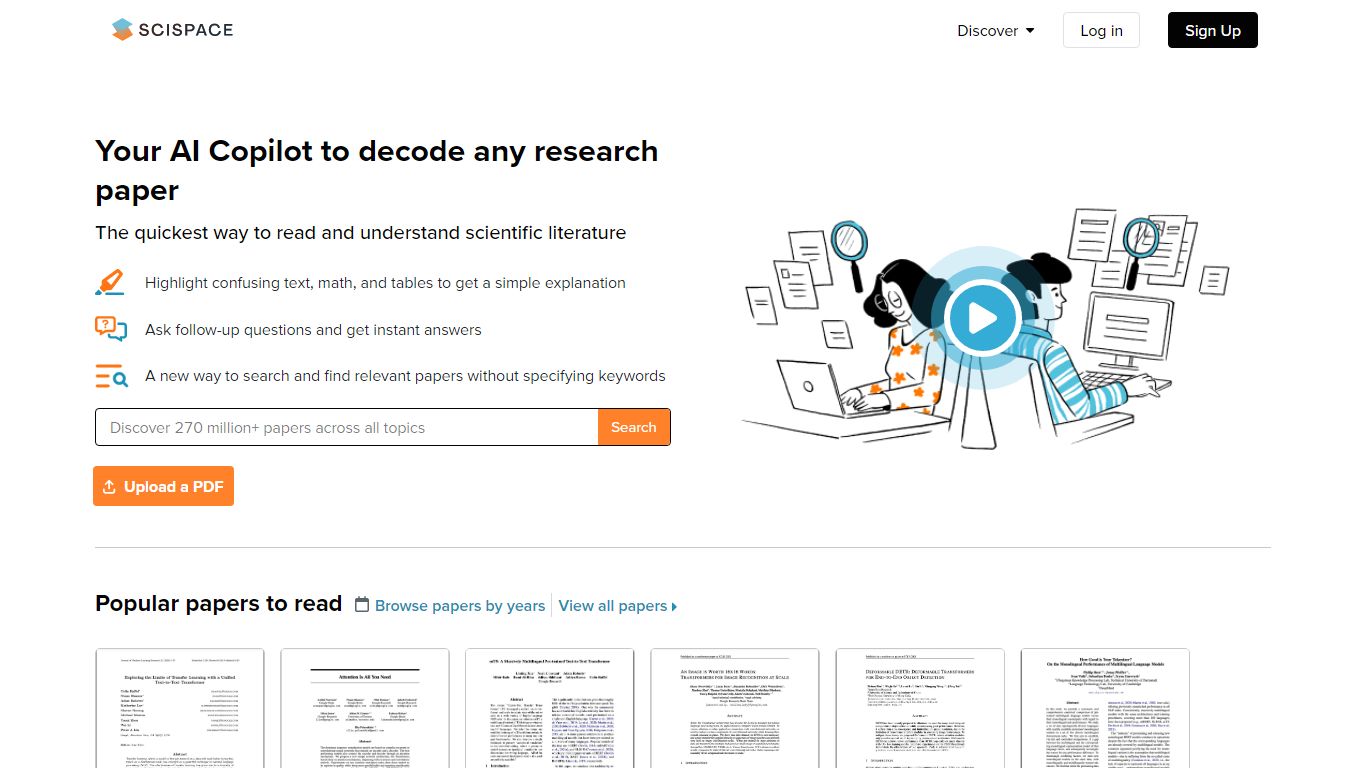
What is SciSpace (formerly Typeset)?
SciSpace, formerly Typeset, is a research workspace where you search a large academic paper index, chat with PDFs, and draft literature reviews with cited sources. The typeset.io URL now lands on scispace.com, which bundles an AI agent, literature review search, paraphraser, citation generator, data extraction, and AI detection in one interface.
General AI chat tools answer from the open web. SciSpace centers the workflow on papers: you can run systematic reviews across 280M+ indexed works, highlight passages for explanations, and move from reading into AI Writer drafts with references. Biomedical Agent, enterprise recruiting, and Chrome or mobile apps extend the same stack for labs and R&D teams.
Graduate students, PhD researchers, and pharma or biotech analysts use SciSpace to screen literature faster, unpack dense PDFs, and produce summaries or manuscripts with traceable citations. The platform reports adoption by 9.6 million researchers and lists SOC 2 compliance on its site.
ChatGPT4YouTube Upvotes
SciSpace (formerly Typeset) Upvotes
ChatGPT4YouTube Top Features
Generates text summaries directly on YouTube video pages via a Chrome extension
Free tier includes seven summary quotas each week with limited transcription words
Pro one-time packs start at $9.90 for 300 summary quotas
Monthly subscription at $14.90 unlocks unlimited summary quotas
Works without connecting your own AI account or API key
Google sign-in at chatgpt4youtube.com for quota purchases and subscription management
SciSpace (formerly Typeset) Top Features
Search and review literature across 280M+ indexed research papers
Chat with PDF highlights for plain-language explanations of dense sections
SciSpace Agent plus Biomedical Agent for guided research tasks
Built-in paraphraser, citation generator, AI detector, and data extraction tools
AI Writer and templates for drafting papers with cited sources
Chrome extension and mobile app for reading outside the browser tab
Premium plans with a 24-hour money-back guarantee on subscriptions
ChatGPT4YouTube Category
- Summarizer
SciSpace (formerly Typeset) Category
- Summarizer
ChatGPT4YouTube Pricing Type
- Freemium
SciSpace (formerly Typeset) Pricing Type
- Freemium