CodeFlying vs Tune
Dive into the comparison of CodeFlying vs Tune and discover which AI Model Generation tool stands out. We examine alternatives, upvotes, features, reviews, pricing, and beyond.
In a comparison between CodeFlying and Tune, which one comes out on top?
When we compare CodeFlying and Tune, two exceptional model generation tools powered by artificial intelligence, and place them side by side, several key similarities and differences come to light. Interestingly, both tools have managed to secure the same number of upvotes. Since other aitools.fyi users could decide the winner, the ball is in your court now to cast your vote and help us determine the winner.
Don't agree with the result? Cast your vote and be a part of the decision-making process!
CodeFlying

What is CodeFlying?
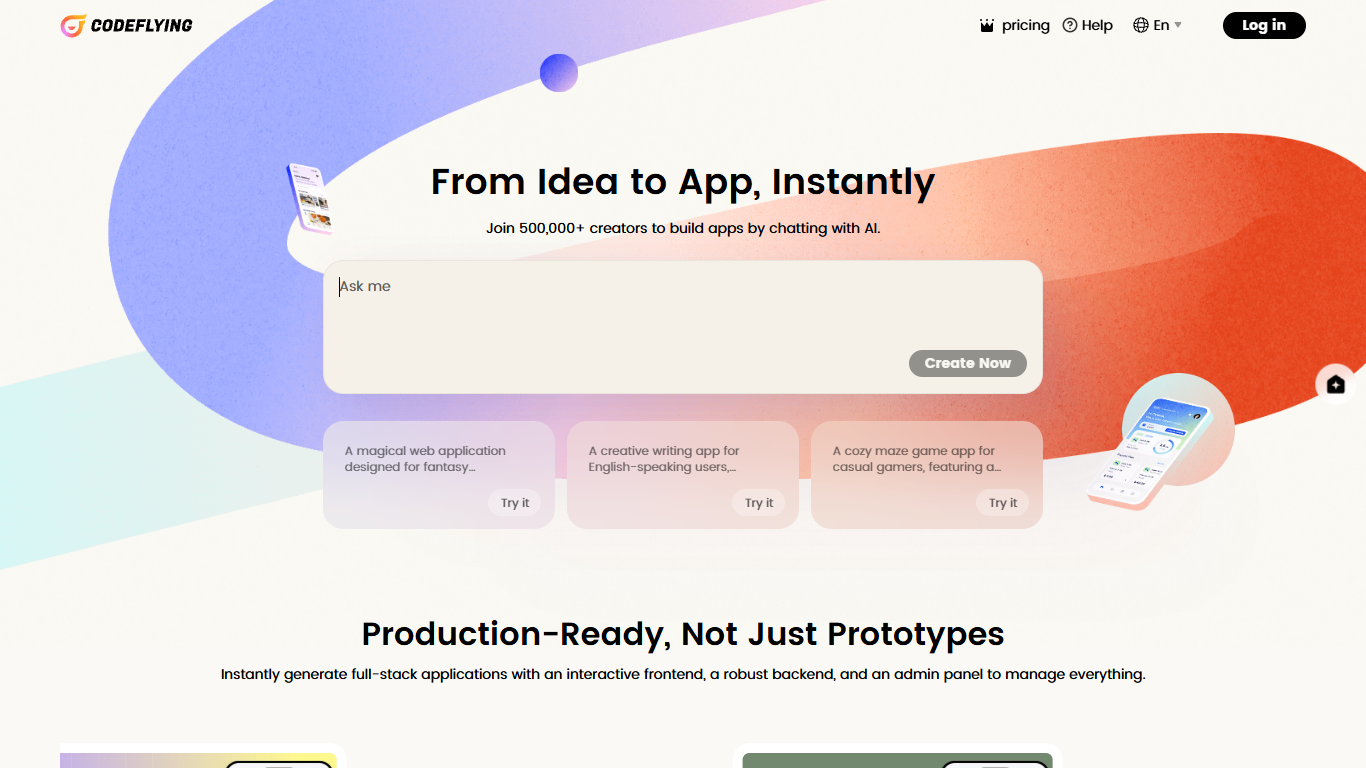
CodeFlying lets you describe an app idea in chat and get back websites, mobile apps, and messaging mini apps for Telegram, WhatsApp, Line, and similar channels. Upload a reference image on the homepage when you want layout or visual direction baked into the first generation.
Most no-code builders stop at landing pages or one output type. CodeFlying also advertises WeChat mini-program building in its site keywords, plus posters, marketing copy, and an AI customer service agent alongside the app generator. The public gallery groups community builds into Personal Tools, Enterprise, Education, Entertainment, and E-commerce tabs so you can browse by use case before prompting.
The product targets creators who want a single builder for web, mobile, and messaging surfaces without writing code first. Coffy, a voice assistant on the homepage, helps when you do not have a starting idea. CodeFlying is operated by KUAFUAI LTD., powered by KuaFuAI, supports 14 interface languages, and its meta description reports more than 1 million creators on the platform.
Tune

What is Tune?
Tune is an enterprise GenAI stack from NimbleBox that helps teams fine-tune, deploy, and run open-source large language models on their own cloud or on-prem infrastructure. The platform centers on Tune Studio for model experimentation and fine-tuning, Tune Chat for customizable AI assistants, and professional services for organizations that want hands-on help.
Tune Studio gives developers a playground to test LLMs, save high-quality interaction datasets, fine-tune models on dedicated GPU hardware, and deploy through public APIs or inference engines like TGI, vLLM, and Triton. Supported base models include Llama 3.1, Qwen 2, Gemma 2, Mixtral, and others.
The company positions itself for enterprises that need data ownership, compliance, and flexibility beyond closed-source APIs. Tune reports SOC 2 Type 2, HIPAA, and ISO 27001 compliance, with options for dedicated cloud, user cloud, and on-premises deployment.
CodeFlying Upvotes
Tune Upvotes
CodeFlying Top Features
Accept chat prompts up to 50,000 characters on the homepage builder
Generate websites, mobile apps, and mini apps for Telegram, WhatsApp, and Line
Upload reference images in PNG, JPEG, GIF, WebP, or SVG to steer visual direction
Build WeChat mini programs alongside web and mobile targets per site keywords
Call Coffy for voice-guided help when you need a first project idea or prompt
Bundle AI marketing tools and a smart customer agent with apps you publish
Switch the interface among 14 languages including English, Spanish, Japanese, and Arabic
Tune Top Features
Fine-tune open-source LLMs like Llama 3.1, Qwen 2, Gemma 2, and Mixtral on dedicated GPU hardware
Deploy models through public APIs or inference stacks including TGI, vLLM, and Triton
Tune Studio playground to test models and save interaction datasets for training
Tune Chat for customizable AI assistants with document and web search support
Enterprise deployment on dedicated cloud, user cloud, or on-prem with SOC 2, HIPAA, and ISO 27001 compliance
CodeFlying Category
- Model Generation
Tune Category
- Model Generation
CodeFlying Pricing Type
- Freemium
Tune Pricing Type
- Freemium