Coderbuds vs TimeComplexity.ai
In the battle of Coderbuds vs TimeComplexity.ai, which AI Developer tool comes out on top? We compare reviews, pricing, alternatives, upvotes, features, and more.
Between Coderbuds and TimeComplexity.ai, which one is superior?
Upon comparing Coderbuds with TimeComplexity.ai, which are both AI-powered developer tools, Interestingly, both tools have managed to secure the same number of upvotes. Join the aitools.fyi users in deciding the winner by casting your vote.
Don't agree with the result? Cast your vote and be a part of the decision-making process!
Coderbuds

What is Coderbuds?
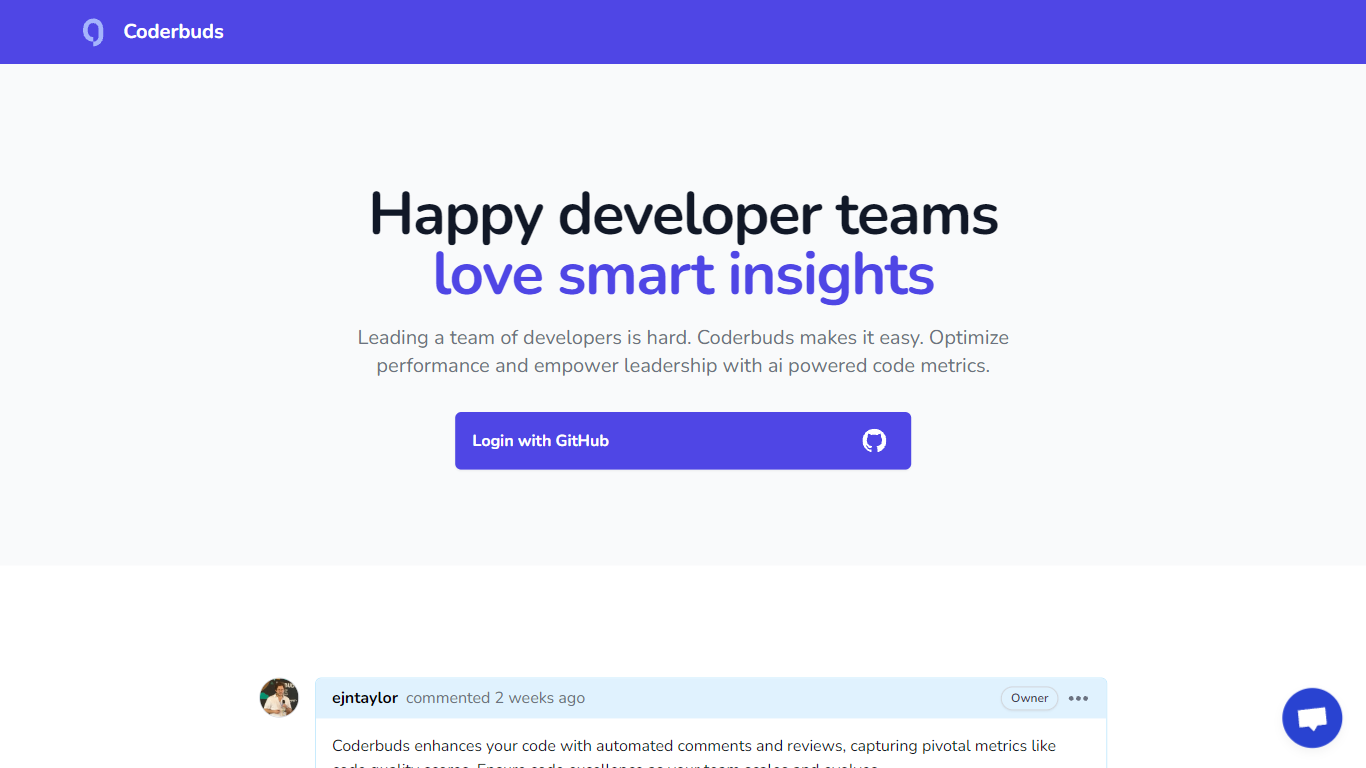
Coderbuds reads pull requests, reviews, and deployments from GitHub or Bitbucket, then surfaces delivery, collaboration, and team-health metrics for engineering leaders. It connects Jira, Linear, Slack, and Microsoft Teams so managers can see lead time, review delays, and DORA-style performance without building a data warehouse. Engineers get the same insights pushed into coding agents through MCP.
Most DORA dashboards stop at reporting what already happened. Coderbuds also feeds team conventions, org maps, and playbooks into Claude Code, Cursor, Codex, and Copilot before code reaches review, so standards show up in the prompt instead of a comment thread two days later. The Patchstack case study on the site cites lead time dropping from about four days to one day over six months.
Engineering managers use it to spot bottlenecks and walk into leadership meetings with numbers. Individual engineers see coaching on their own PR patterns first, and satisfaction surveys stay anonymous at the team level. Source code never leaves your repository; Coderbuds stores only PR metadata like titles, timestamps, and line counts.
TimeComplexity.ai
What is TimeComplexity.ai?
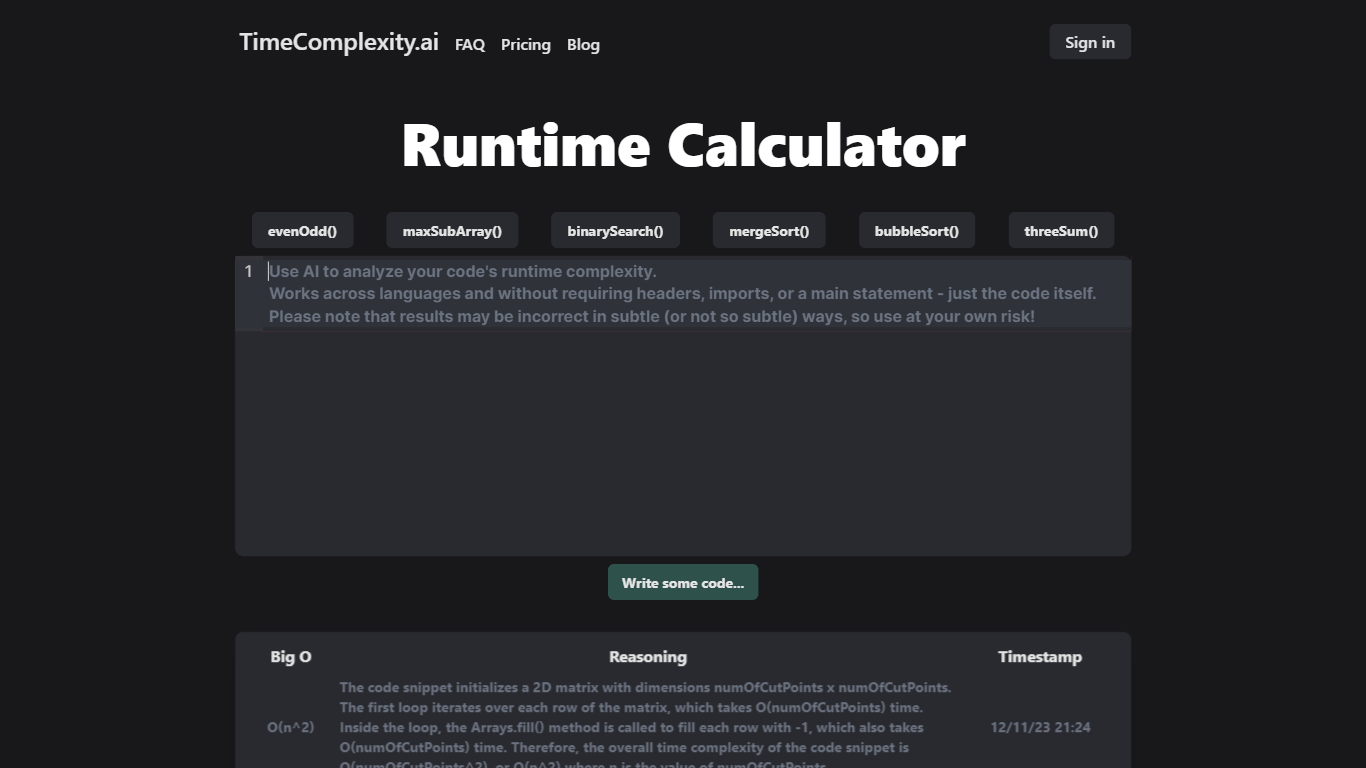
Paste a function into TimeComplexity.ai and it returns Big O runtime complexity with plain-language reasoning. You drop in an algorithm snippet, and the site responds with notation like O(n log n) plus an explanation of why that bound fits the loops and recursion it sees.
Static analyzers usually need a full file with imports and a main block. TimeComplexity.ai accepts partial snippets in Python, JavaScript, Java, C++, Go, and other languages without headers or setup code. That makes it useful for interview prep and quick checks on isolated functions pulled from a larger codebase.
Developers, CS students, and interview candidates use TimeComplexity.ai to sanity-check algorithm bounds before submitting homework or reviewing pull requests. Anonymous users get 20 queries per day, signed-in users get 50, and the $5 per month Pro plan removes the daily cap.
Coderbuds Upvotes
TimeComplexity.ai Upvotes
Coderbuds Top Features
DORA and SPACE dashboards with six months of history included
$12 per active developer per month on annual billing, with a free start and no credit card
Connects GitHub, Bitbucket, Jira, Linear, Slack, and Microsoft Teams
MCP server pushes team conventions into Cursor, Claude Code, Codex, and Copilot
Pre-flight checks flag PR size and convention fit before review starts
10,000+ pull requests analyzed across customer workspaces
TimeComplexity.ai Top Features
Returns Big O notation plus written reasoning for each pasted code snippet
Accepts partial code without headers, imports, or a main function across common languages
Uses GPT-3.5 Turbo with a formatted prompt, per the site FAQ
Anonymous users receive 20 queries per day; signed-in users receive 50 free queries daily
Pro plan at $5 per month unlocks unlimited queries with query history and deletion
Each analysis gets a shareable ID so you can link results with teammates
Coderbuds Category
- Developer
TimeComplexity.ai Category
- Developer
Coderbuds Pricing Type
- Freemium
TimeComplexity.ai Pricing Type
- Freemium