
Last updated 08-09-2026
Category:
Reviews:
Join thousands of AI enthusiasts in the World of AI!
Coderbuds
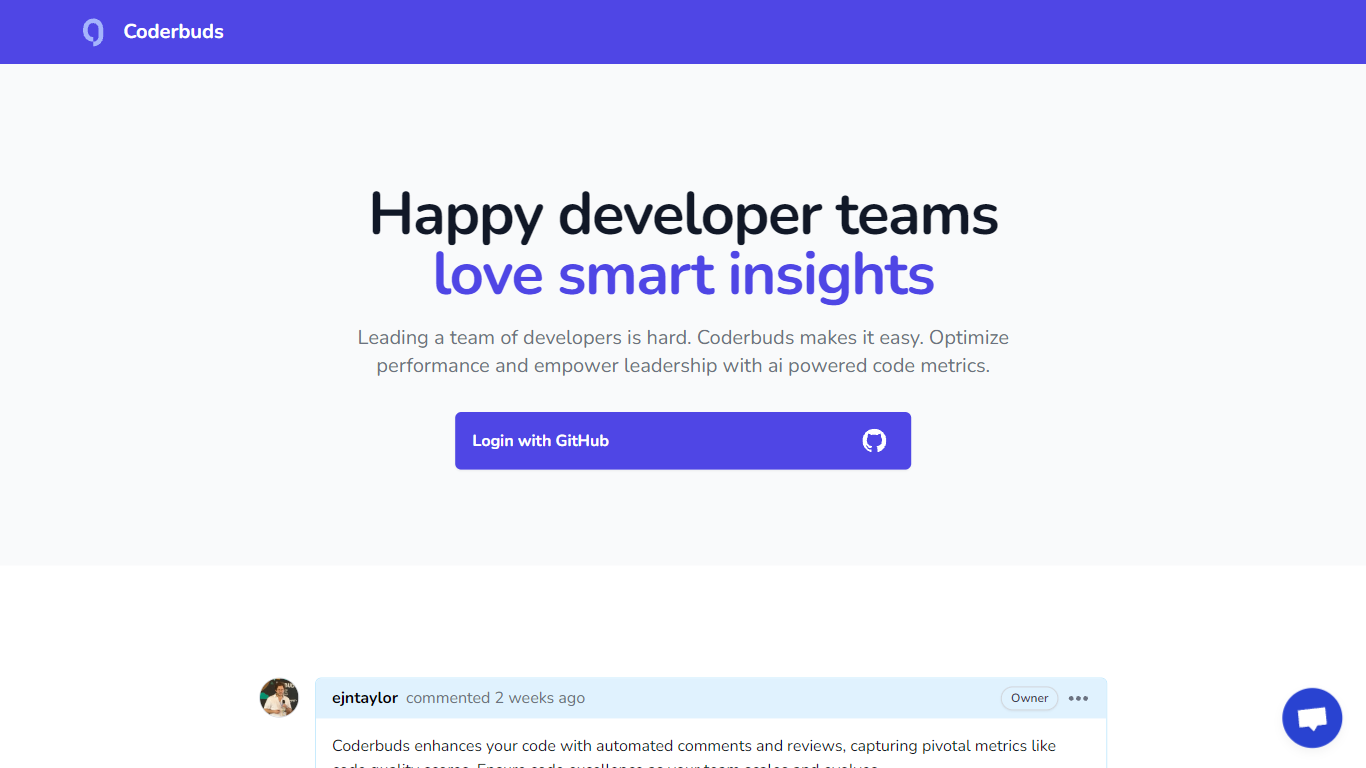
Coderbuds reads pull requests, reviews, and deployments from GitHub or Bitbucket, then surfaces delivery, collaboration, and team-health metrics for engineering leaders. It connects Jira, Linear, Slack, and Microsoft Teams so managers can see lead time, review delays, and DORA-style performance without building a data warehouse. Engineers get the same insights pushed into coding agents through MCP.
Most DORA dashboards stop at reporting what already happened. Coderbuds also feeds team conventions, org maps, and playbooks into Claude Code, Cursor, Codex, and Copilot before code reaches review, so standards show up in the prompt instead of a comment thread two days later. The Patchstack case study on the site cites lead time dropping from about four days to one day over six months.
Engineering managers use it to spot bottlenecks and walk into leadership meetings with numbers. Individual engineers see coaching on their own PR patterns first, and satisfaction surveys stay anonymous at the team level. Source code never leaves your repository; Coderbuds stores only PR metadata like titles, timestamps, and line counts.
DORA and SPACE dashboards with six months of history included
$12 per active developer per month on annual billing, with a free start and no credit card
Connects GitHub, Bitbucket, Jira, Linear, Slack, and Microsoft Teams
MCP server pushes team conventions into Cursor, Claude Code, Codex, and Copilot
Pre-flight checks flag PR size and convention fit before review starts
10,000+ pull requests analyzed across customer workspaces
Combines delivery dashboards with coding-agent guidance in one product
Source code stays in your repo; only PR metadata is stored
Free start imports 30 days of history with no credit card
Works with or without AI coding agents connected
Anonymous team-level satisfaction surveys protect individual privacy
Requires GitHub or Bitbucket; no GitLab integration listed on the homepage
Per-developer pricing adds up quickly on larger teams
Managers still see some individual delivery data, which may not fit every culture
Annual billing is required to get the advertised $12 per developer rate
What does Coderbuds measure?
Coderbuds tracks delivery, collaboration, and team-health signals including lead time, deployment frequency, review delays, and pull request patterns. Every metric links back to the underlying work so managers can see what changed instead of guessing from aggregate numbers.
Does Coderbuds require coding agents?
No. Coderbuds works as a delivery dashboard when you connect GitHub or Bitbucket alone. If your team uses coding agents, Coderbuds can also push shared standards and playbooks into those sessions through its MCP integration.
Does Coderbuds store our source code?
No. Coderbuds keeps code in GitHub or Bitbucket and stores only delivery metadata such as pull request titles, timestamps, and statistics. Your repositories are read for analysis but source files are not copied to Coderbuds servers.
How much does Coderbuds cost?
Coderbuds offers one plan at $12 USD per active developer per month when billed annually, which saves 20% compared with monthly billing. You can start free with no credit card and import 30 days of history on connect.
Is Coderbuds a surveillance tool?
Coderbuds is built to improve how teams work, not to rank individuals. Managers see some per-person delivery data, but engineers see the same data about themselves and coaching appears to them first. Satisfaction surveys are anonymous and reported only at team level.
How is Coderbuds different from a CLAUDE.md file?
Repository rules files load on every session and drift as code moves. Coderbuds serves standards across every repo and coding agent, sends only context relevant to a session, and tracks whether following those standards actually shortened lead time.