Qodo (formerly CodiumAI) vs Tabnine
In the face-off between Qodo (formerly CodiumAI) vs Tabnine, which AI Code Assistant tool takes the crown? We scrutinize features, alternatives, upvotes, reviews, pricing, and more.
In a face-off between Qodo (formerly CodiumAI) and Tabnine, which one takes the crown?
If we were to analyze Qodo (formerly CodiumAI) and Tabnine, both of which are AI-powered code assistant tools, what would we find? Qodo (formerly CodiumAI) stands out as the clear frontrunner in terms of upvotes. The upvote count for Qodo (formerly CodiumAI) is 14, and for Tabnine it's 4.
Not your cup of tea? Upvote your preferred tool and stir things up!
Qodo (formerly CodiumAI)
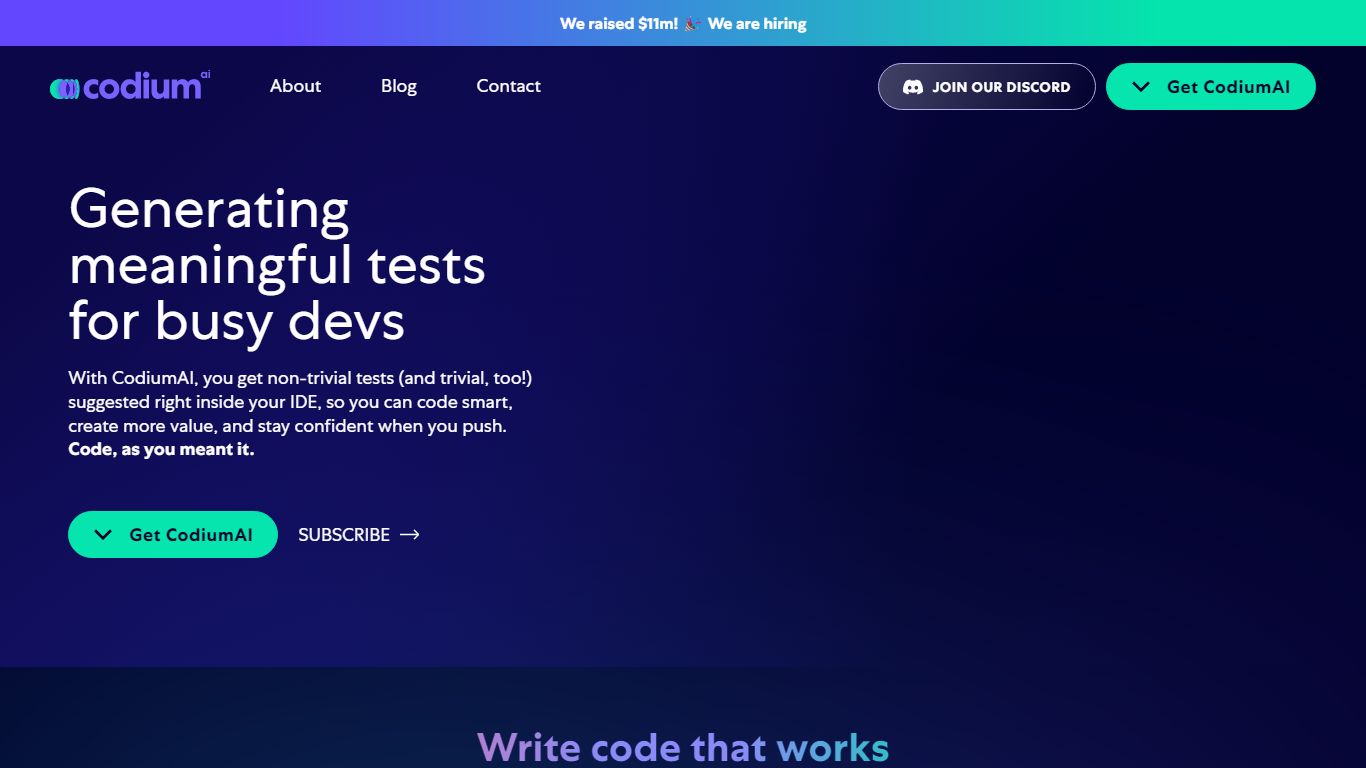

What is Qodo (formerly CodiumAI)?
Qodo is a code assistant and AI code review platform that runs in your IDE, pull requests, CLI, and Git workflows. It started as CodiumAI with test generation and now focuses on agentic code review, living rules, and governance across large codebases. The VS Code extension has 891.7K installs and the JetBrains plugin has 642.7K.
Where generic review bots flag style nits on a single diff, Qodo reasons over full codebase context, PR history, and mined team rules. That is how it targets real bugs and breaking cross-repo changes instead of flooding PRs with noise. Cross-repo review maps dependencies between services so a shared library change flags downstream consumers before merge.
Engineering teams at companies like NVIDIA and Booking.com use Qodo to keep standards consistent as AI coding tools speed up output. It fits platform leads who need enforceable rules, security reviewers who want SOC 2 Type II controls, and teams on GitHub, GitLab, Bitbucket, or Azure DevOps who want review agents without migrating repos.
Tabnine
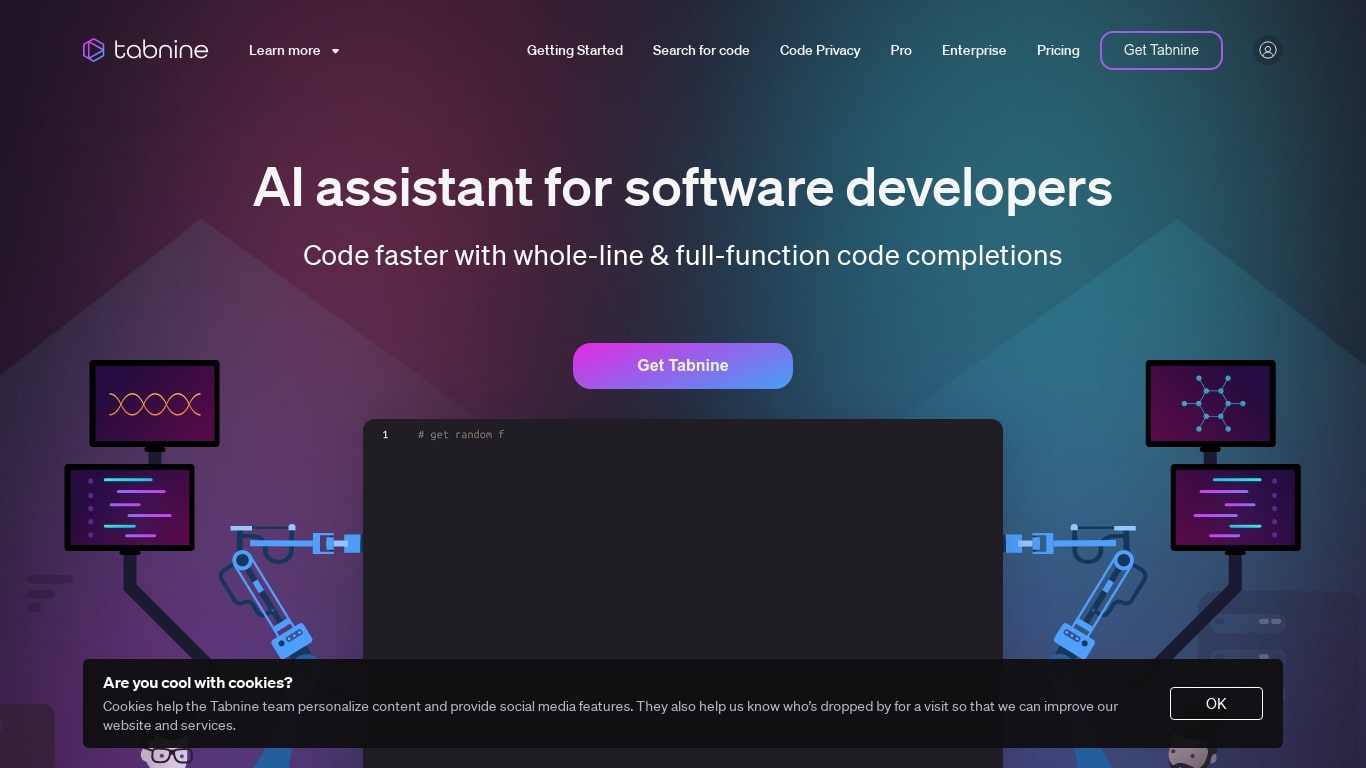
What is Tabnine?
Tabnine is a code assistant that runs inside your IDE with inline completions, multi-line function suggestions, and chat grounded in your repository context. It connects to GitHub, GitLab, Bitbucket, or Perforce so suggestions reflect your architecture instead of generic public code patterns. Teams can deploy it as SaaS, in a VPC, on-premises, or fully air-gapped with zero code retention policies.
Most coding copilots optimize for speed on public repos, while Tabnine sells enterprise control: centralized governance, provenance tracking, SSO, and model choice across OpenAI, Anthropic, Google, Meta, and Mistral endpoints. The Agentic Platform adds CLI agents, MCP tool access, and the Enterprise Context Engine for Jira and Confluence-aware workflows. Tricentis acquired Tabnine in 2025, positioning it inside broader quality-engineering stacks.
Engineering teams in regulated industries use Tabnine when privacy and audit trails matter as much as autocomplete speed. Code Assistant costs $39 per user per month on annual billing, and the Agentic Platform with context engine and CLI agents costs $59 per user per month.
Qodo (formerly CodiumAI) Upvotes
Tabnine Upvotes
Qodo (formerly CodiumAI) Top Features
891.7K VS Code installs and 642.7K JetBrains plugin installs listed on the homepage
Agentic PR review agents reason over full codebase context, not just the diff
Cross-repo review flags breaking changes across dependent repositories before merge
Living rules system mines patterns from PR history and enforces standards on every change
Pro Team plans start at $30 per month with credit packs from 2,500 to 20,000 credits
Integrates with GitHub, GitLab, Bitbucket, and Azure DevOps plus VS Code and JetBrains IDEs
Tabnine Top Features
Inline and multi-line code completions inside major IDEs with chat support
Index private repositories from GitHub, GitLab, Bitbucket, or Perforce Helix Core
Deploy as SaaS, VPC, on-premises, or fully air-gapped with zero code retention
Agentic Platform adds MCP-connected agents and a terminal-native Tabnine CLI
Code Assistant plan starts at $39 per user per month on annual billing
Qodo (formerly CodiumAI) Category
- Code Assistant
Tabnine Category
- Code Assistant
Qodo (formerly CodiumAI) Pricing Type
- Paid
Tabnine Pricing Type
- Paid