DATAKU vs Airbook
Compare DATAKU vs Airbook and see which AI Data Science tool is better when we compare features, reviews, pricing, alternatives, upvotes, etc.
Which one is better? DATAKU or Airbook?
When we compare DATAKU with Airbook, which are both AI-powered data science tools, With more upvotes, Airbook is the preferred choice. Airbook has 13 upvotes, and DATAKU has 7 upvotes.
Not your cup of tea? Upvote your preferred tool and stir things up!
DATAKU

What is DATAKU?
DATAKU is a data science site that tracks AI benchmarks, API pricing, and model releases, then packages the numbers into free calculators and downloadable datasets. The homepage archives articles on inference costs, funding rounds, and head-to-head model comparisons, while the Tools section hosts eight utilities such as an LLM cost calculator, benchmark decoder, and model graveyard.
Most AI news sites summarize press releases. DATAKU cross-references provider docs, leaderboard scores, and its own pricing tables, which is why the downloadable datasets page lists 48-row pricing histories and 62-row benchmark score tables under CC BY 4.0 licenses.
Data analysts, ML engineers, and buyers use DATAKU when they need cost-per-token math, benchmark context, or CSV exports instead of marketing claims. The About page describes the project as benchmark and pricing tracking run by a former Tokyo data analyst.
Airbook
What is Airbook?
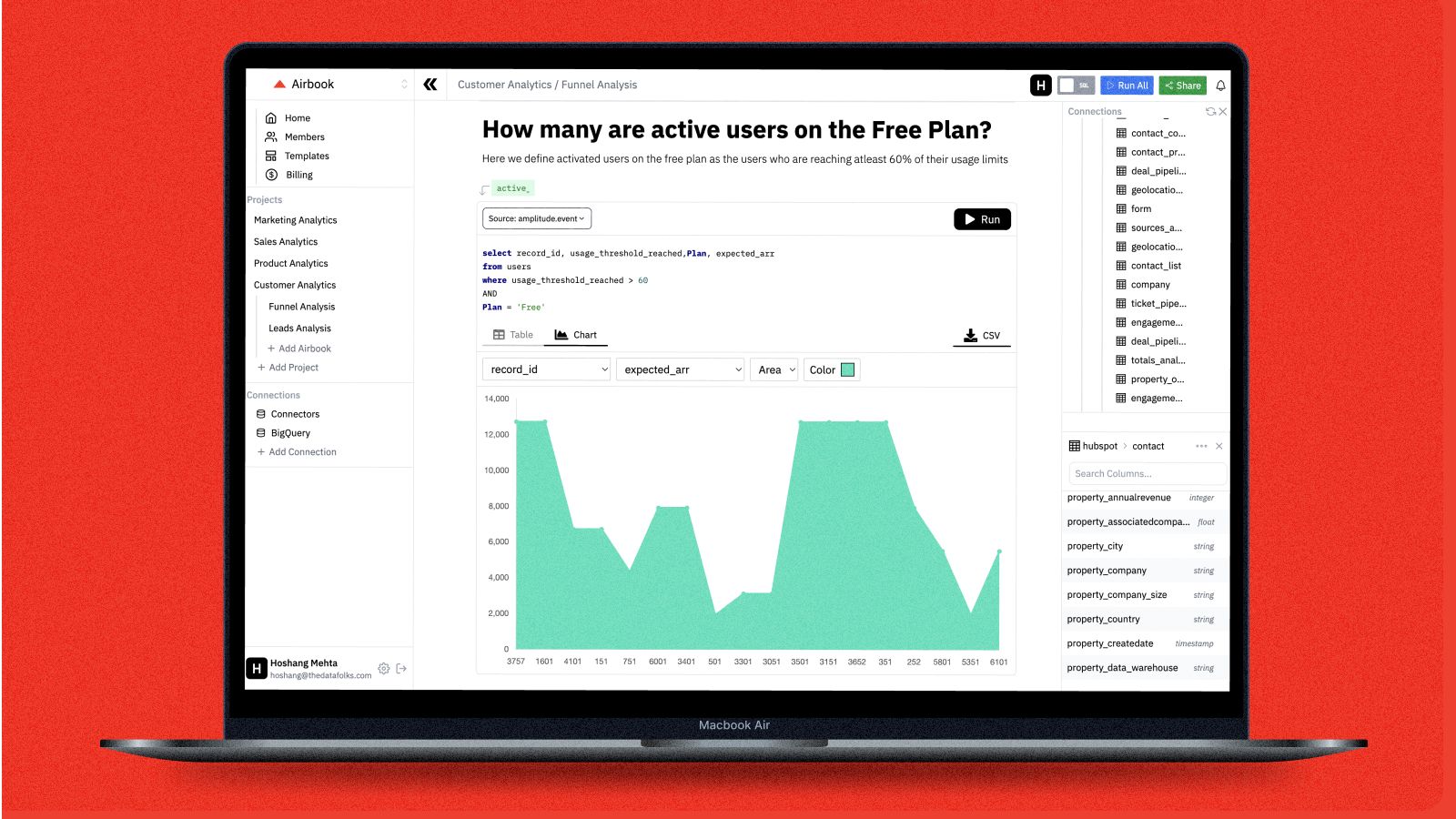
Airbook is a collaborative data workspace for GTM and analytics teams that connects CRMs, product analytics, warehouses, and billing tools in one notebook-style interface. You query across sources with SQL or a no-code builder, build dashboards, and push segments or alerts into downstream growth tools. It fits data science workflows where RevOps, marketing ops, and analysts need a shared view of funnel and revenue metrics without standing up a full ETL pipeline.
Most BI tools stop at charts, or they need a separate warehouse project before anyone can ask a question. Airbook bundles connectors, cross-source joins, and activation workflows in the same workspace where you write queries, so a pipeline review and a HubSpot segment can live on one page. The free tier caps you at one database connection and 10 AI-assisted queries per month, which is narrower than enterprise stacks but enough for solo analysts testing the workflow.
RevOps teams use Airbook to unify Salesforce, HubSpot, Stripe, and product usage for pipeline reviews. Growth teams track which campaigns drive revenue, not just leads, and sync audience segments into tools like Braze or Klaviyo from the Scale plan upward. Data teams get a governed workspace where business users self-serve while SQL analysts keep control over joins and metric definitions.
DATAKU Upvotes
Airbook Upvotes
DATAKU Top Features
LLM Cost Calculator estimates API spend across OpenAI, Anthropic, Google, Meta, and Mistral models
Benchmark Decoder explains what benchmarks measure and which models score highest
AI Training Data Tracker documents sources and cutoff dates for 18+ major models
Model Graveyard archives 25+ deprecated models with replacement notes
Downloadable datasets include 48-row pricing history and 62-row benchmark tables (CC BY 4.0)
AI Energy Calculator estimates watts, kWh, and CO2 per model query
Airbook Top Features
Freemium plan includes 10 AI requests per month, 1 analyst seat, and 1 database connection
Growth plan at $599 per month adds 1 CRM connector plus cross-source joins across CRM and warehouse data
Scale plan at $1,499 per month supports any 5 connectors and triggers workflows to downstream growth tools
Query with a SQL IDE or no-code builder, including linked blocks that refresh when source data changes
SOC 2 Type 2 certified with role-based permissions and optional SSO on the Scale plan
Unlimited viewer seats on every plan, including the free tier with 2 projects
DATAKU Category
- Data Science
Airbook Category
- Data Science
DATAKU Pricing Type
- Free
Airbook Pricing Type
- Freemium