DeBERTa vs Stellaris AI
In the clash of DeBERTa vs Stellaris AI, which AI Large Language Model (LLM) tool emerges victorious? We assess reviews, pricing, alternatives, features, upvotes, and more.
When we put DeBERTa and Stellaris AI head to head, which one emerges as the victor?
Let's take a closer look at DeBERTa and Stellaris AI, both of which are AI-driven large language model (llm) tools, and see what sets them apart. Both tools have received the same number of upvotes from aitools.fyi users. Your vote matters! Help us decide the winner among aitools.fyi users by casting your vote.
Not your cup of tea? Upvote your preferred tool and stir things up!
DeBERTa
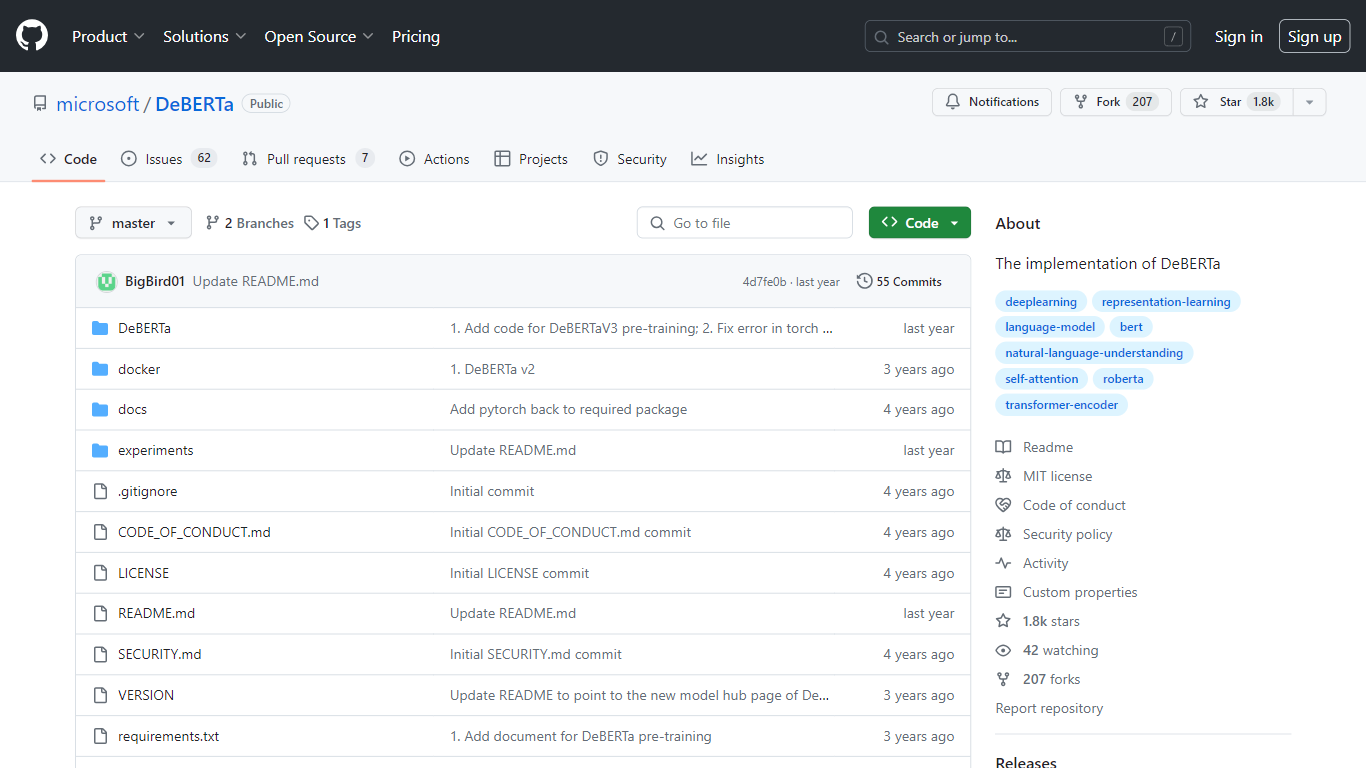

What is DeBERTa?
DeBERTa enhances natural language understanding by using a disentangled attention mechanism that separately encodes word content and position. This allows the model to better capture relationships between words in a sentence, improving context comprehension.
What distinguishes DeBERTa is its ELECTRA-style pre-training combined with gradient-disentangled embedding sharing. This approach increases training efficiency and model performance, enabling smaller models to outperform larger ones on benchmarks such as MNLI and SQuAD v2.0.
DeBERTa offers a variety of pre-trained models ranging from 22 million to 1.5 billion parameters, including multilingual versions supporting over 100 languages. It supports integration with PyTorch, Docker, and pip, and provides scripts and documentation for pre-training and fine-tuning.
The tool has achieved state-of-the-art results on benchmarks like SuperGLUE, surpassing human performance with its large-scale models. Its balance of size, efficiency, and accuracy makes it suitable for both research and practical NLP applications.
Maintained on GitHub by Microsoft researchers, DeBERTa encourages community contributions and offers support for collaboration and inquiries.
Stellaris AI
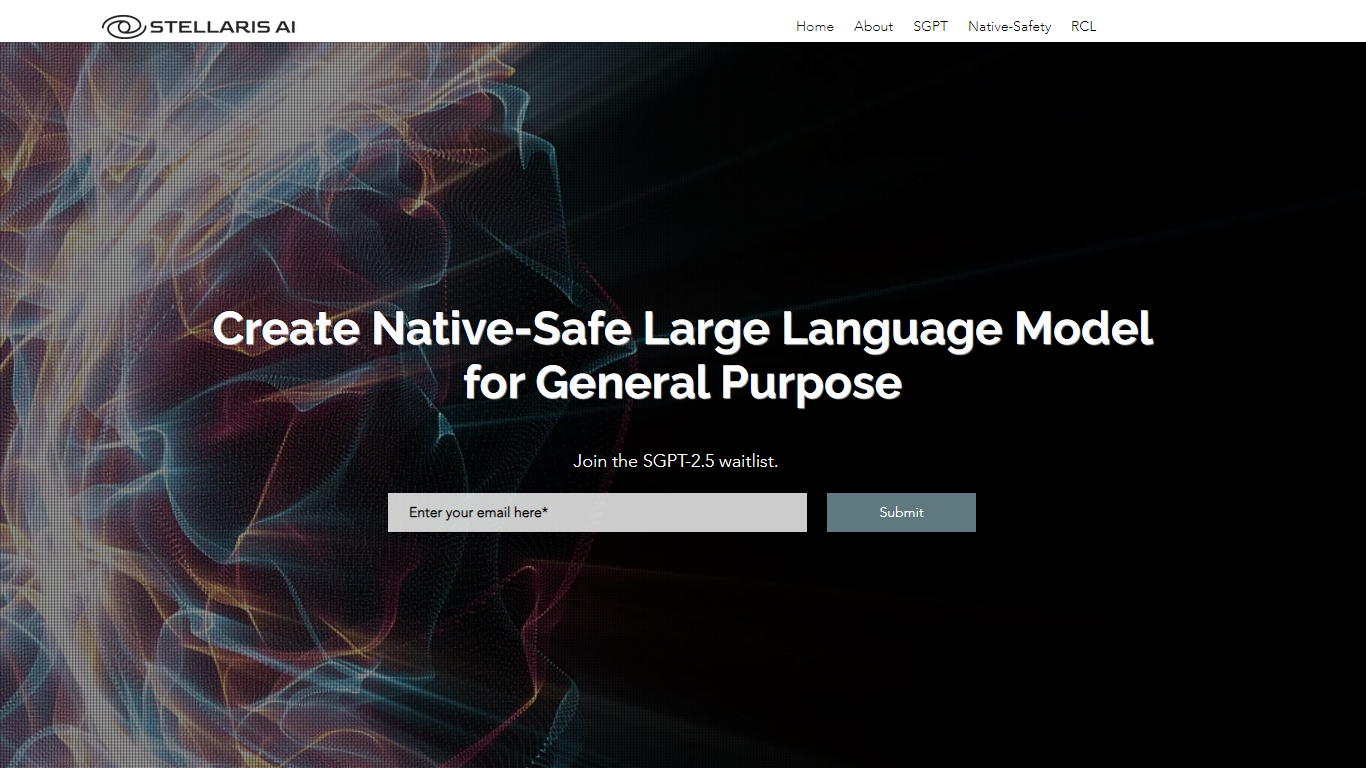
What is Stellaris AI?
Stellaris AI builds large language models marketed around native safety and human-like reasoning for real-world tasks. Its flagship SGPT line targets text and code generation, knowledge Q&A, logical reasoning, and analytics at a scale the company describes as hundreds of billions of parameters. The public site centers on a waitlist for SGPT-4.5 rather than a self-serve chat product you can open today.
Where many LLM labs bolt safety filters on after training, Stellaris AI frames safety as part of the model stack through strict source referencing and harm minimization in the architecture. It also highlights Real-time Context Learning (RCL) for adapting answers with live knowledge, a combination aimed at teams that want cited outputs instead of unchecked generation.
Researchers, enterprise AI teams, and early adopters join the SGPT-4.5 waitlist for first access. The company cites 10+ years of research and three core product pillars: Stellaris GPT, Native Safety, and RCL.
DeBERTa Upvotes
Stellaris AI Upvotes
DeBERTa Top Features
Disentangled attention separates word content and position for better context understanding 📚
ELECTRA-style pre-training boosts training efficiency and model accuracy ⚡
Wide range of pre-trained models from 22M to 1.5B parameters for flexible use 🧩
Multilingual support covering over 100 languages for global applications 🌍
Easy integration with PyTorch, Docker, and pip for quick deployment 🚀
Pre-trained models available on Hugging Face and GitHub releases
Detailed documentation and fine-tuning scripts included
Stellaris AI Top Features
SGPT models described at 100B+ parameters for text, code, and reasoning tasks
Native Safety framework with strict source referencing and harm minimization
Real-time Context Learning (RCL) for live knowledge integration
Three product pillars: Stellaris GPT, Native Safety, and RCL
SGPT-4.5 waitlist open for early access signups on the homepage
DeBERTa Category
- Large Language Model (LLM)
Stellaris AI Category
- Large Language Model (LLM)
DeBERTa Pricing Type
- Free
Stellaris AI Pricing Type
- Freemium