Diffusion Art vs Drag Your GAN
Dive into the comparison of Diffusion Art vs Drag Your GAN and discover which AI Image Generation Model tool stands out. We examine alternatives, upvotes, features, reviews, pricing, and beyond.
In a comparison between Diffusion Art and Drag Your GAN, which one comes out on top?
When we compare Diffusion Art and Drag Your GAN, two exceptional image generation model tools powered by artificial intelligence, and place them side by side, several key similarities and differences come to light. Drag Your GAN is the clear winner in terms of upvotes. The number of upvotes for Drag Your GAN stands at 8, and for Diffusion Art it's 7.
Feeling rebellious? Cast your vote and shake things up!
Diffusion Art

What is Diffusion Art?
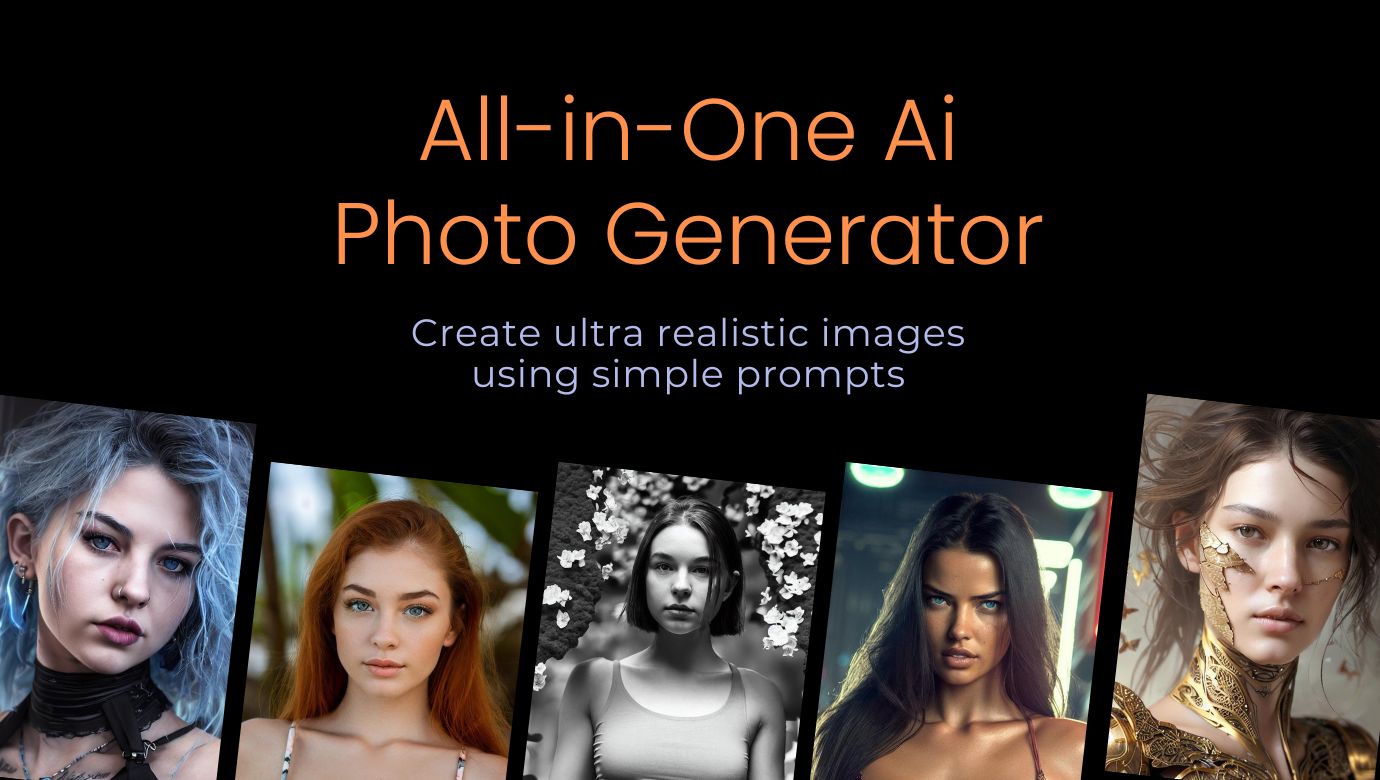
Diffusion Art turns text prompts into artwork through free and premium diffusion models you run from the browser. You type a description, hit generate, and get images with optional inpainting, editing, and batch runs at diffusionart.ai. A free tier covers casual testing, while paid plans unlock premium models, private mode, and monthly token allotments.
Most prompt-to-image sites treat free and paid models as the same stack with a paywall on resolution. Diffusion Art runs separate free and premium model sets, with maintenance priority on paid tiers and best-effort uptime on free models. That split lets hobbyists keep generating at $0 while subscribers get faster queues, up to 10,000 tokens per month, and up to 10GB cloud storage on the Pro plan.
Content creators, marketers, and designers use Diffusion Art when they need commercial-licensed outputs without ads or watermarks on the free plan, or higher-volume generation with private mode on Starter through Pro subscriptions. Login and billing run through diffusionart.ai even when you land on the diffusionart.co domain.
Drag Your GAN
What is Drag Your GAN?
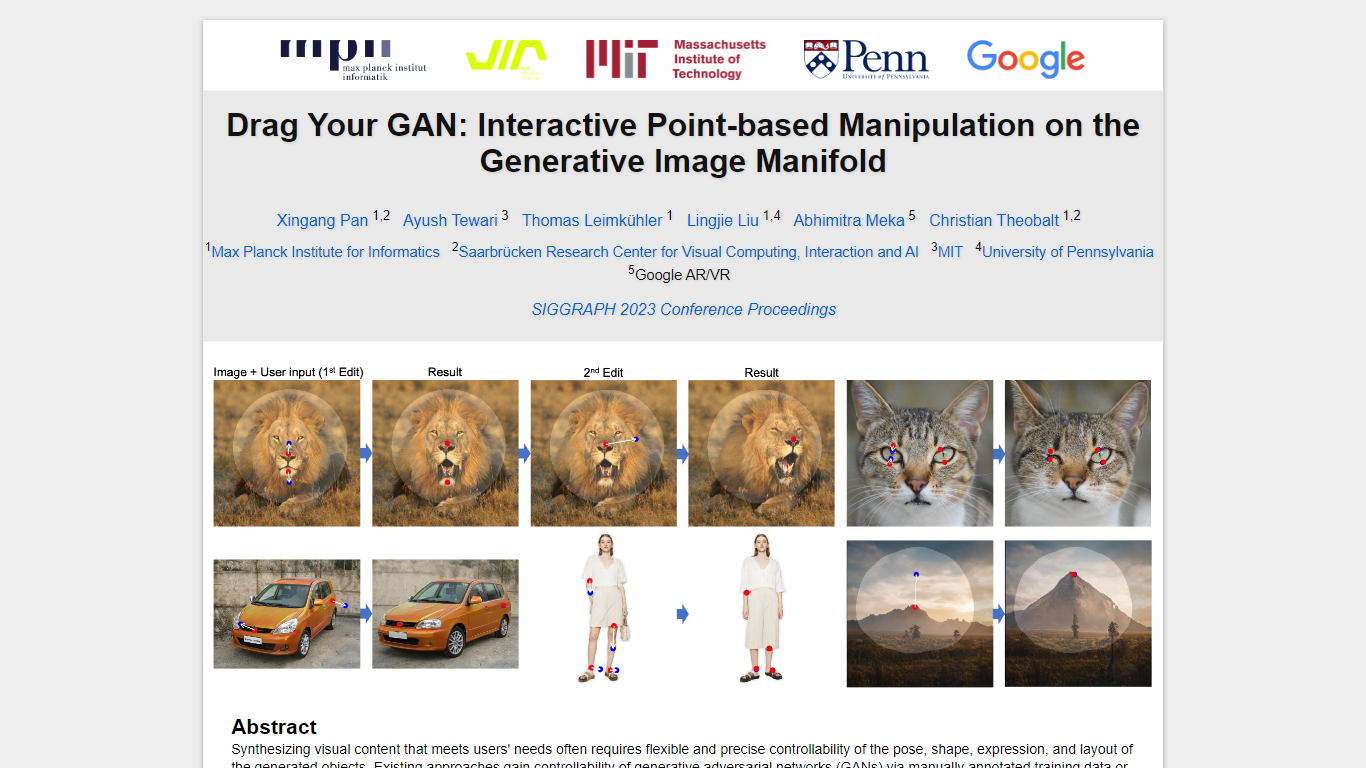
Drag Your GAN lets you reshape a generated image by dragging handle points to target spots on the canvas. Instead of training on labeled pose data or 3D priors, DragGAN moves pixels inside a pretrained GAN's image manifold so edits stay photorealistic even when occluded regions get hallucinated. The project page hosts the SIGGRAPH 2023 paper, demo clips, and links to open source code.
Most GAN editors rely on fixed training annotations or 3D meshes, which limits what you can deform. DragGAN pairs feature-based motion supervision with discriminative point tracking so handle points follow your cursor while staying on the object surface. That makes it useful for nudging animal poses, facial expressions, car angles, and landscape layouts without retraining the generator.
Researchers, graphics students, and computer vision engineers use it to prototype interactive image editing workflows. The Max Planck Institute page distributes the paper PDF and GitHub repo under a non-commercial Creative Commons license, with contact details for the lead author.
Diffusion Art Upvotes
Drag Your GAN Upvotes
Diffusion Art Top Features
Free plan includes commercial license with no ads or watermarks on generated images
Premium plans range from 1,000 to 10,000 tokens per month across Starter, Plus, and Pro tiers
Plus plan at $20 per month includes 5GB cloud storage and private mode
Supports inpainting, editing, and batch generation from natural language prompts
Yearly billing saves 20% versus monthly pricing on paid plans
High-resolution upscaling targets print, web, and large-display output
Drag Your GAN Top Features
Drag handle points to target positions for precise pixel-level control
Feature-based motion supervision drives handles without 3D priors
Point tracking uses discriminative GAN features to localize handles
Deforms animals, cars, humans, landscapes, and inverted real photos
Open source code published at github.com/XingangPan/DragGAN
Paper and demo videos from SIGGRAPH 2023 Conference Proceedings
Diffusion Art Category
- Image Generation Model
Drag Your GAN Category
- Image Generation Model
Diffusion Art Pricing Type
- Freemium
Drag Your GAN Pricing Type
- Free