Dify.AI vs Tability
In the clash of Dify.AI vs Tability, which AI Productivity tool emerges victorious? We assess reviews, pricing, alternatives, features, upvotes, and more.
When we put Dify.AI and Tability head to head, which one emerges as the victor?
Let's take a closer look at Dify.AI and Tability, both of which are AI-driven productivity tools, and see what sets them apart. In the race for upvotes, Tability takes the trophy. Tability has garnered 8 upvotes, and Dify.AI has garnered 6 upvotes.
Feeling rebellious? Cast your vote and shake things up!
Dify.AI

What is Dify.AI?
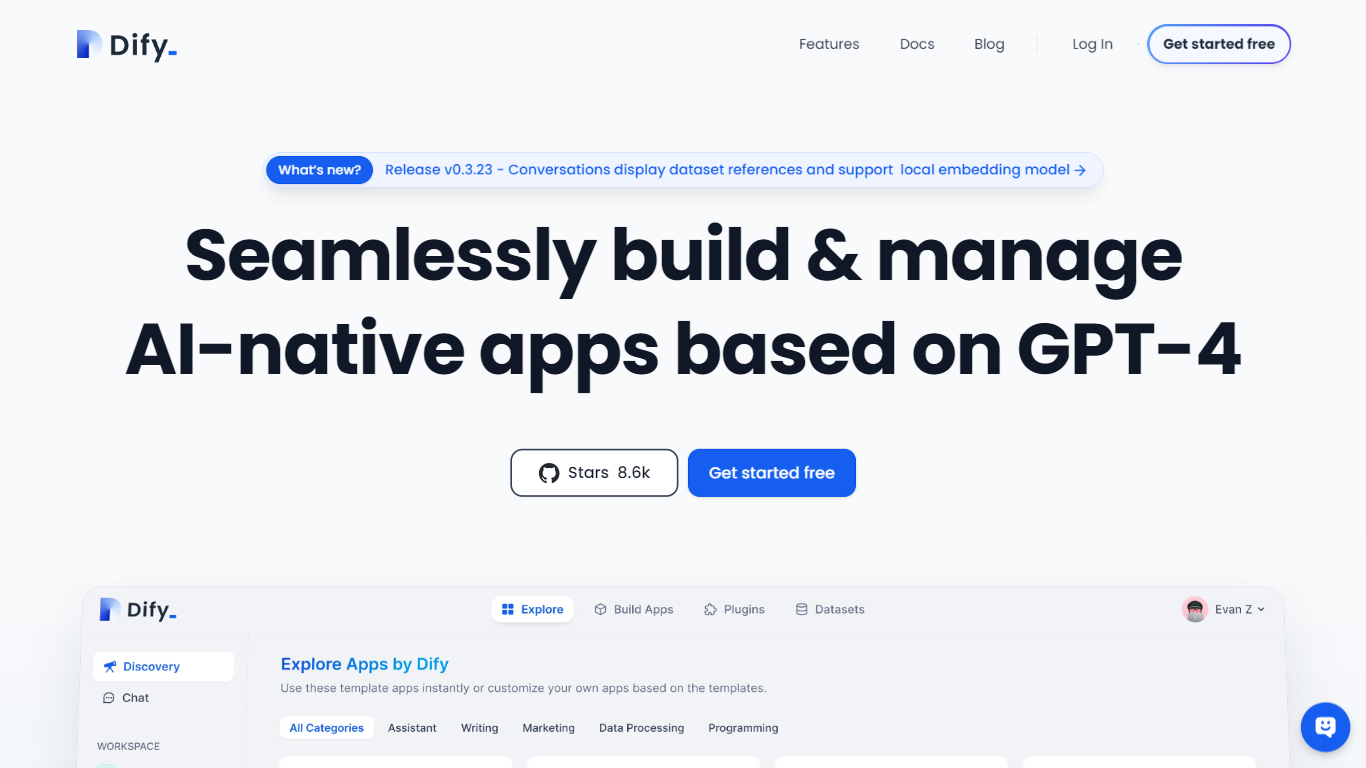
Dify.AI lets teams build agentic workflows, RAG pipelines, and AI agents on a visual canvas, then ship them to cloud, VPC, or self-hosted Docker without rewriting the stack. The Workflow Studio connects model calls, knowledge retrieval, tool use, branching, and human-review nodes into one debuggable execution path that publishes as a web app, API, embed, or MCP tool.
Where many AI builders stop at a chat wrapper, Dify treats the workflow as the product. Every node, variable, and run is traceable in logs, and the open-source Community Edition has 152,000+ GitHub stars. Dify Cloud adds managed hosting with message credits for trying models from OpenAI, Anthropic, Gemini, and others before you plug in your own API keys.
Developers, product teams, and enterprise IT groups use Dify for customer support bots, document processing pipelines, assessment generation, and internal knowledge assistants. The Marketplace supplies model providers, data sources, and MCP integrations teams can reuse across projects instead of wiring each app from scratch.
Tability
What is Tability?
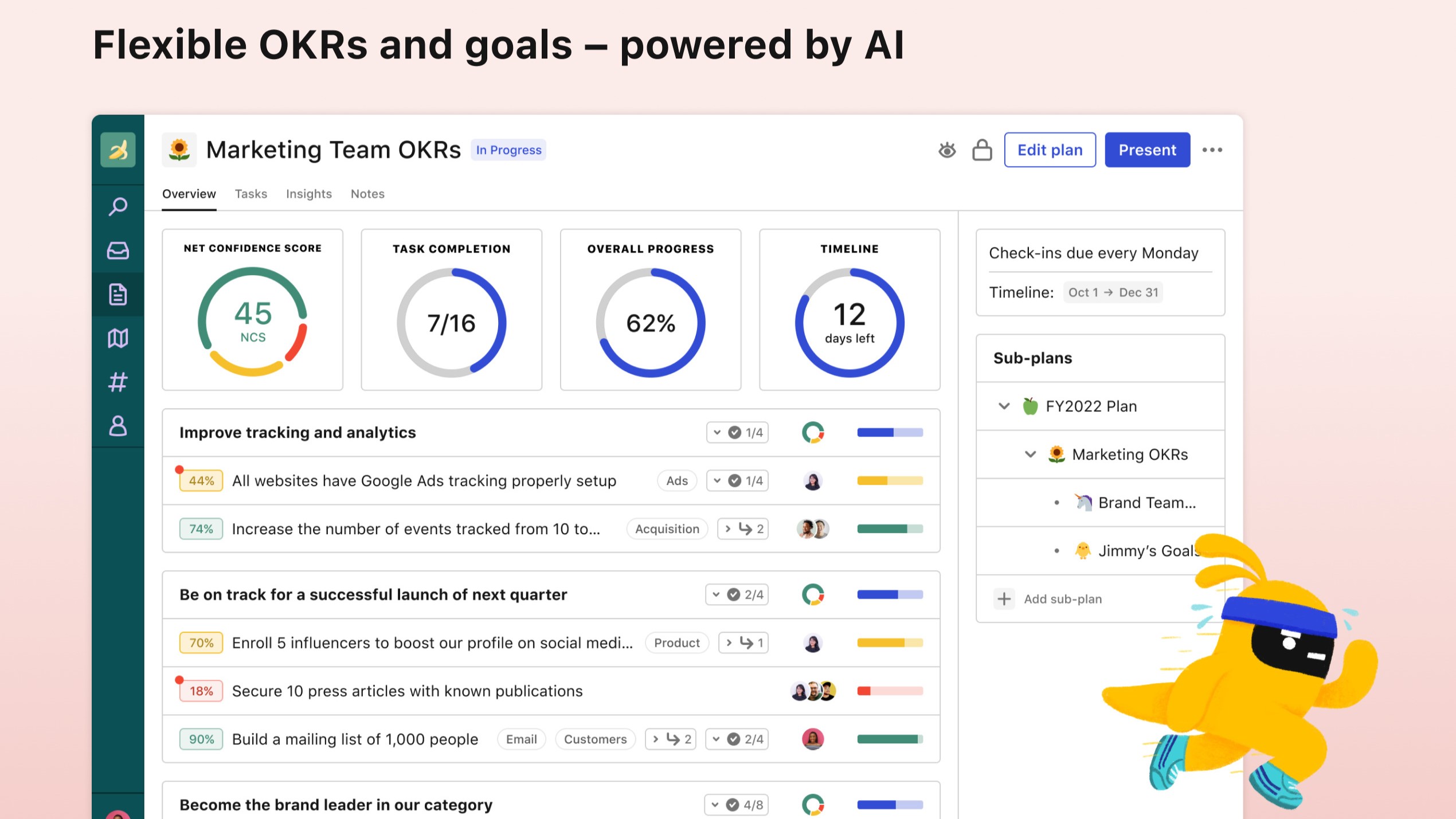
Tability helps teams set, track, and review OKRs, KPIs, and quarterly plans in one productivity workspace instead of scattered spreadsheets. AI drafts goals and tactics during signup, then live check-ins surface progress updates and early roadblocks before a quarter slips away.
Plenty of goal trackers feel like status spreadsheets with nicer colors. Tability leans into outcome-driven rituals: strategy maps, initiative dependencies, and integrations with Slack, Microsoft Teams, Jira, and Linear so updates happen where teams already work. Premium adds SAML SSO, data connectors, and an AI assistant mode for larger rollouts.
It fits startups and mid-size companies adopting OKRs for the first time as well as teams at Red Hat, Autodesk, and Freelancer that the site lists among customers. Pricing starts at $6 per user per month on yearly Basic billing with a 14-day free trial on signup.
Dify.AI Upvotes
Tability Upvotes
Dify.AI Top Features
Workflow Studio visual canvas with LLM, knowledge retrieval, branching, code, and human-review nodes
Knowledge Pipeline ingests files, websites, and drives with chunking, indexing, and retrieval testing
Agents get tools, memory, and boundary limits usable standalone or inside larger workflows
Marketplace installs model providers, data sources, and MCP integrations across projects
Publish apps as web experiences, API endpoints, embeds, or MCP-compatible tools with run logs
Community Edition deploys via single-command Docker with Apache-2.0-derivative license and 152K+ GitHub stars
Tability Top Features
AI-assisted OKR and tactic drafting on signup
14-day free trial with Google or email signup
Basic plan at $6 per user per month on yearly billing
Premium adds SAML SSO, SCIM, and data connectors
Integrations with Slack, Microsoft Teams, Jira, and Linear
Strategy maps plus initiative dependency tracking
Dify.AI Category
- Productivity
Tability Category
- Productivity
Dify.AI Pricing Type
- Freemium
Tability Pricing Type
- Freemium