Faraday vs STRING
Compare Faraday vs STRING and see which AI Data Science tool is better when we compare features, reviews, pricing, alternatives, upvotes, etc.
Which one is better? Faraday or STRING?
When we compare Faraday with STRING, which are both AI-powered data science tools, Neither tool takes the lead, as they both have the same upvote count. Be a part of the decision-making process. Your vote could determine the winner.
Disagree with the result? Upvote your favorite tool and help it win!
Faraday

What is Faraday?
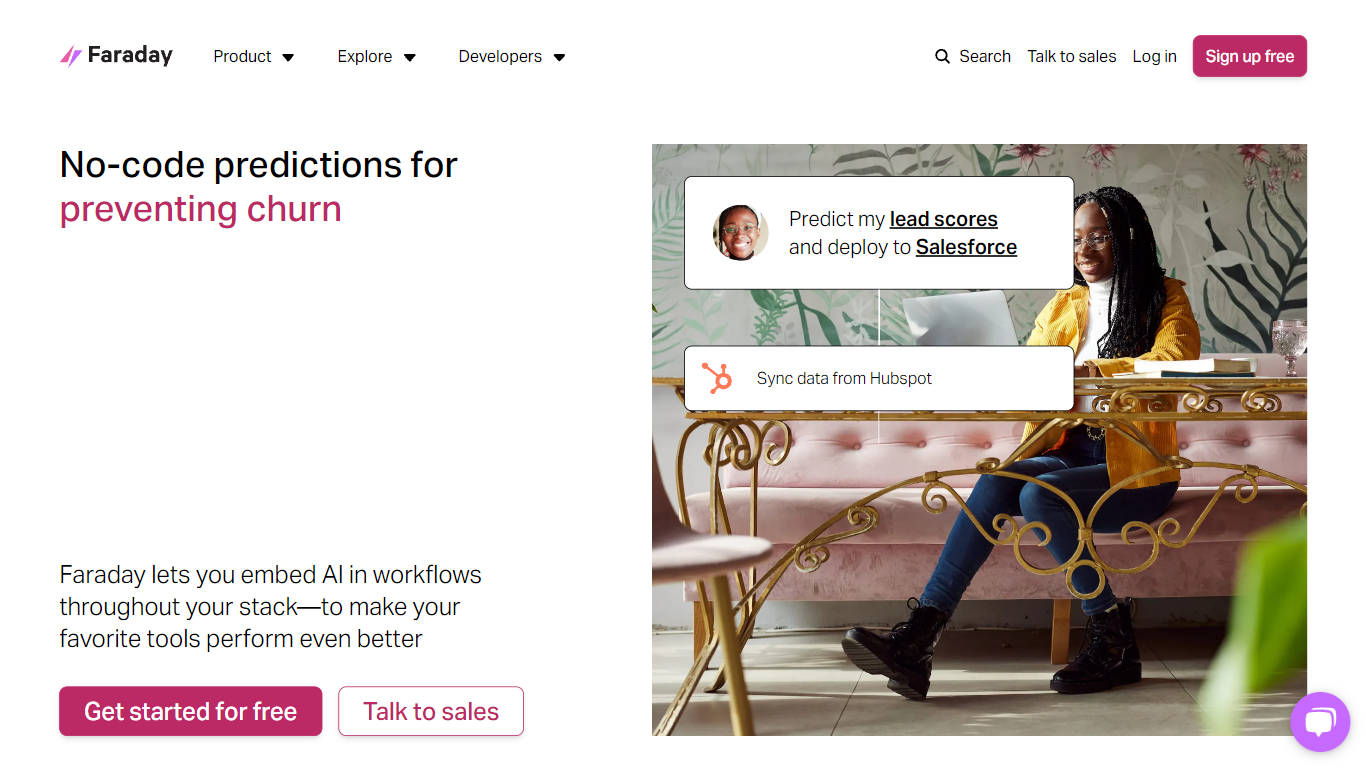
Faraday delivers customer context on roughly 240 million U.S. adults through its Faraday Identity Graph, giving marketing teams and AI agents the demographic, financial, and lifestyle signals that first-party CRM data alone cannot provide. Founded in 2012 and based in Burlington, Vermont, the platform enriches lead lists, builds propensity and churn models, and deploys predictions via REST API, MCP server, or batch files into warehouses like Snowflake, BigQuery, and Redshift.
Where traditional lead scoring tools rely on clicks and form fills, Faraday layers real-world household context onto your own customer records before training bespoke machine learning models. Case studies cite a jewelry brand personalizing at scale, American Standard closing leads at 3x higher margin, and Bespoke Post seeing 5x ROI on subscription box targeting. Both Faraday Pro (self-serve, pay per match) and Faraday Enterprise (custom models, sales-led setup) draw from the same identity graph.
E-commerce brands, financial services firms, home services companies, and AI platform builders use Faraday to segment personas, score propensity to buy, and ground agent workflows in verified consumer data rather than guesswork.
STRING
What is STRING?
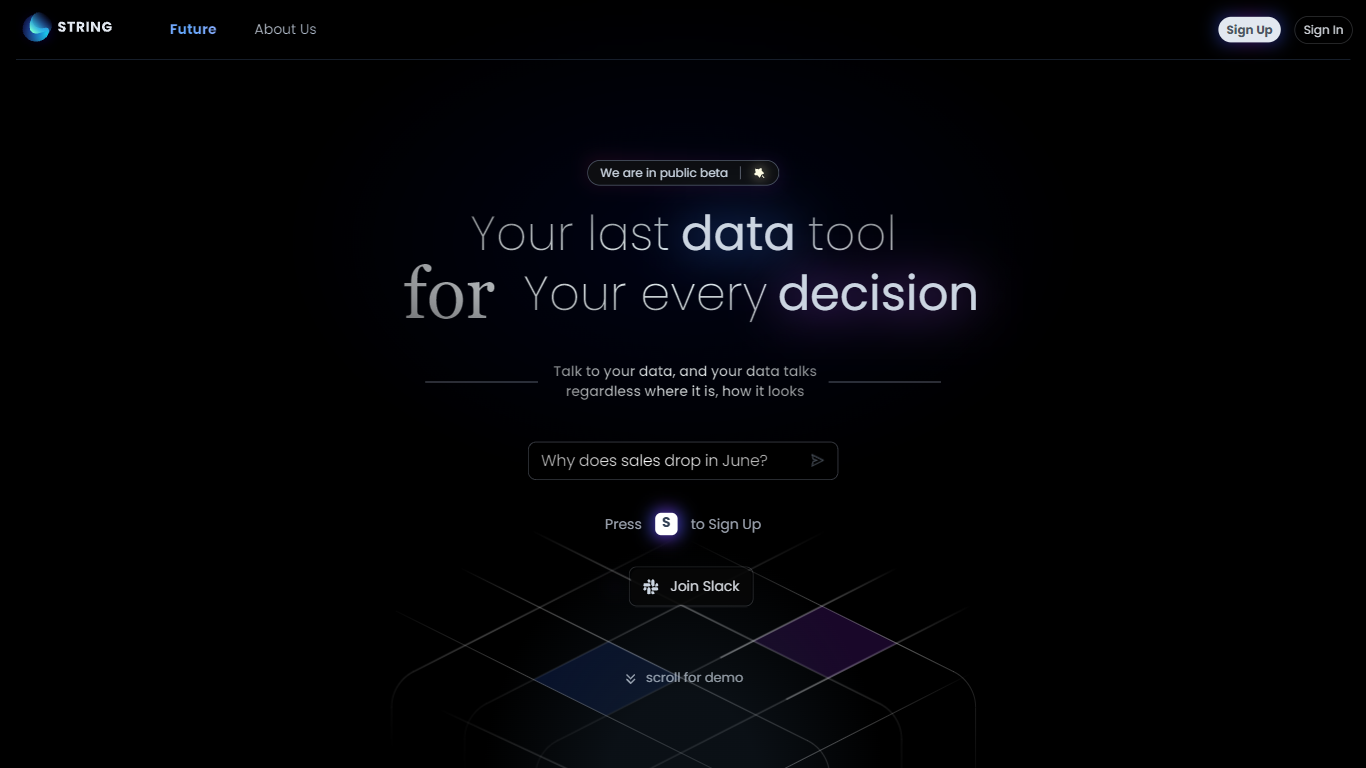
STRING lets you talk to your data through a conversational analytics interface marketed as your last data tool. You sign up for the public beta, connect sources wherever they live, and ask questions in natural language instead of building dashboards first. The product pitch centers on decisions: your data answers back regardless of format or location.
Legacy BI stacks expect hours of SQL and chart assembly before you get a useful answer. STRING's team, with backgrounds at Google, Uber, CMU, and UW, frames the product around AGI-style analytics that listens, understands unstructured text, and takes initiative beyond rigid queries. The Future page contrasts this with older tools that crunch structured tables slowly.
Data analysts, product managers, and operators who want quick answers without standing up a full BI project fit STRING best. It is still in public beta with Slack community access, so teams should expect evolving features rather than a finished enterprise contract page.
Faraday Upvotes
STRING Upvotes
Faraday Top Features
Faraday Identity Graph covers approximately 240 million U.S. adults with 1,500+ attributes per person
REST API returns enriched identity and predictive scores in under 200 milliseconds
Native MCP server lets AI agents pull customer context directly into their workflow
Propensity and recommender model builders train custom predictions on your first-party data
Integrates with Snowflake, BigQuery, Redshift, Salesforce, Shopify, and 50+ downstream tools
SOC 2 Type II certified since 2020 with HIPAA, GDPR, and CCPA compliance
STRING Top Features
Natural language interface to query data without pre-built dashboard workflows
Public beta signup with Slack community invite for early users
Designed to handle structured databases and unstructured sources like docs and notes
Team includes alumni from Google, Uber, Carnegie Mellon, and University of Washington
Slack community invite linked on homepage for public beta testers
Future roadmap targets proactive analytics that initiates insights beyond user prompts
Faraday Category
- Data Science
STRING Category
- Data Science
Faraday Pricing Type
- Freemium
STRING Pricing Type
- Freemium