FastCut vs Timebolt
In the face-off between FastCut vs Timebolt, which AI Video Editing tool takes the crown? We scrutinize features, alternatives, upvotes, reviews, pricing, and more.
In a face-off between FastCut and Timebolt, which one takes the crown?
If we were to analyze FastCut and Timebolt, both of which are AI-powered video editing tools, what would we find? Timebolt is the clear winner in terms of upvotes. The number of upvotes for Timebolt stands at 18, and for FastCut it's 6.
Disagree with the result? Upvote your favorite tool and help it win!
FastCut

What is FastCut?
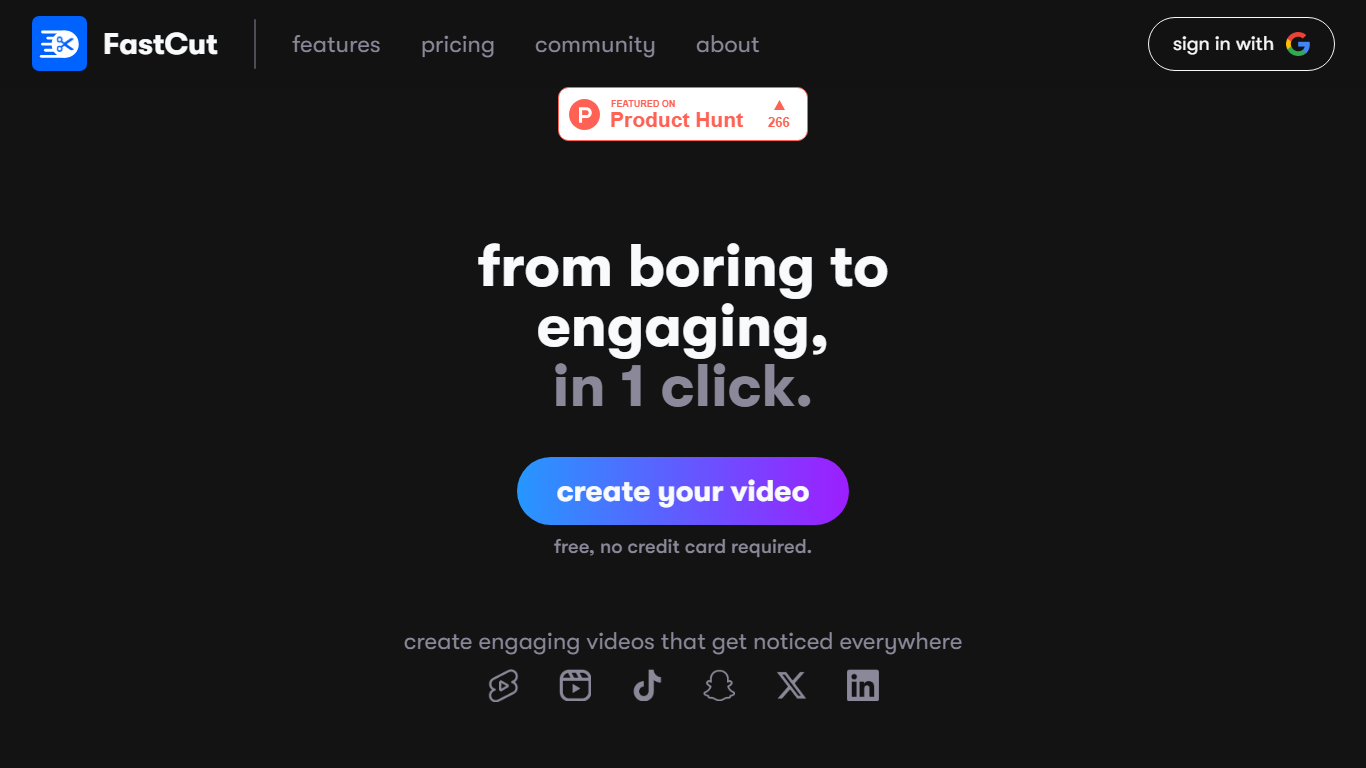
FastCut turns raw clips into captioned TikToks, Reels, and YouTube Shorts inside your browser. Upload footage and it trims dead air, adds animated captions, drops in B-roll, and exports a finished vertical video in about two minutes. The free tier gives you three videos with no credit card, and paid plans run on monthly video credits rather than unlimited timeline editing.
Most general editors expect you to cut on a timeline and add captions by hand. FastCut skips that loop: text-based trimming, silence removal, auto GIFs, Google Image Search for B-roll, and background music all run in one automated pass. It also hosts five free download utilities (YouTube, MP3, subtitles, thumbnails, Instagram Reels) that need no account, which is unusual for a paid editor and doubles as a quick way to pull source clips.
The product fits solo creators, social media managers, and marketers who publish shorts daily and want caption-heavy edits without learning Premiere or CapCut timelines. Teams needing enterprise volume can email for custom pricing.
Timebolt
What is Timebolt?
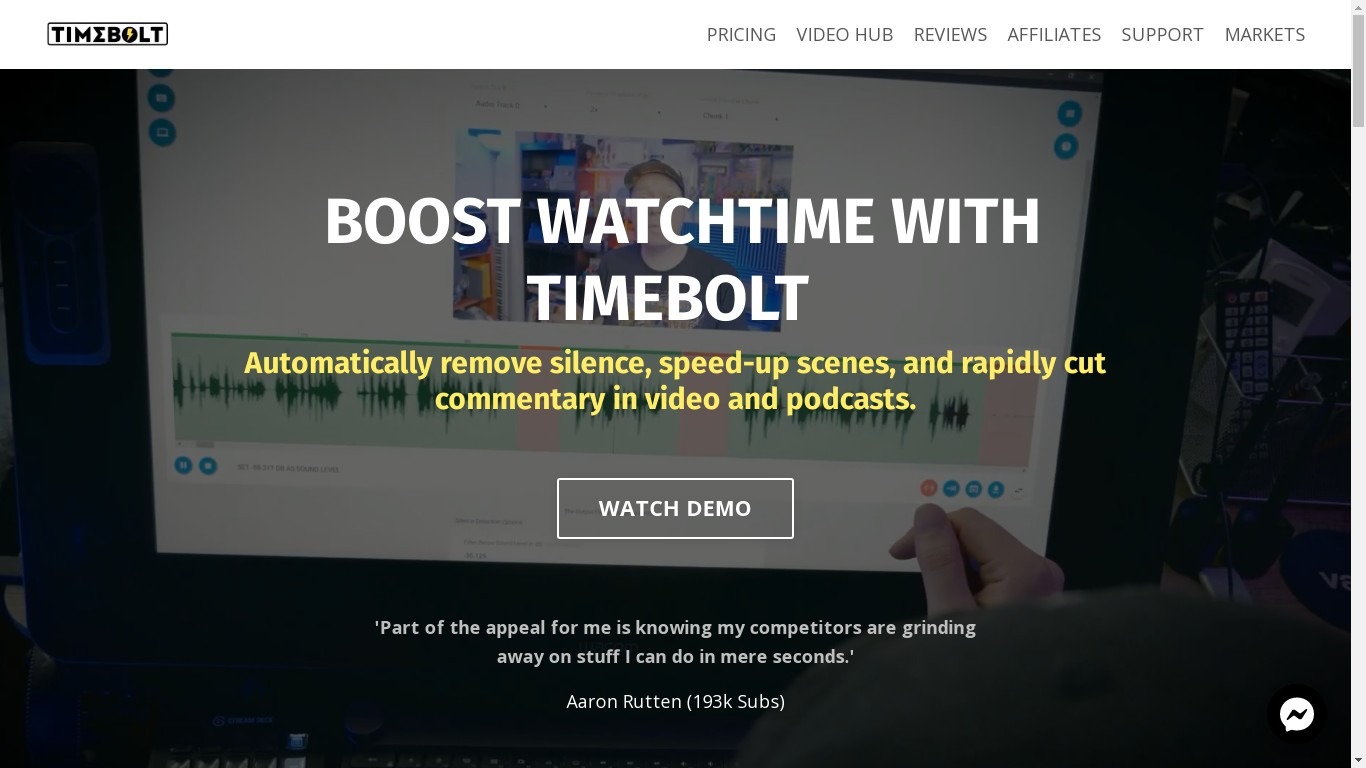
Timebolt is a desktop video editor built around waveform-first jump cuts for podcasts, interviews, and screen recordings. It strips silence, filler words, and bad takes with 0.01 second cut control, then exports timelines to Premiere Pro, Final Cut Pro, DaVinci Resolve, or Camtasia without re-cutting by hand.
Most text-based AI editors guess where pauses live and leave hundreds of missed cuts per hour. Timebolt measures the audio waveform first, which is why its benchmark claims zero mistakes left per hour while rivals like Descript and Gling still need manual cleanup. That trade-off favors editors who want frame-tight cuts over a chat-style transcript workflow.
Podcasters, YouTubers, and course creators use Timebolt to shrink raw talking-head footage before publishing. Post-production teams also route Riverside multicam sessions through Timebolt XML exports so senior editors finish polish work in their preferred NLE.
FastCut Upvotes
Timebolt Upvotes
FastCut Top Features
Free tier includes 3 total video credits at 2 minutes and 100MB each with watermark export
Starter plan at $20 per month covers 10 videos, Essential at $30 covers 20 videos up to 5 minutes and 4K export
Text-based trimming and silence removal run automatically so you edit by selecting transcript lines
Essential and Pro plans add auto B-rolls, GIFs via Google Image Search, and background music
Eight caption templates on Free, up to 11 premium fonts on Pro, plus animated caption styles on paid tiers
Exports up to 1080p on Starter and up to 4K on Essential and Pro without watermark on paid plans
Timebolt Top Features
0.01 second cut control on waveform-based silence removal
Processes an hour of footage in about 13 seconds for jump cuts
Exports XML timelines to Premiere Pro, Final Cut Pro, and DaVinci Resolve
UMCHECK removes filler words automatically from recorded speech
Free 4K screen capture tool for Mac and Windows
Benchmark reports zero missed cuts per hour versus hundreds on rival AI editors
FastCut Category
- Video Editing
Timebolt Category
- Video Editing
FastCut Pricing Type
- Freemium
Timebolt Pricing Type
- Freemium