Finpilot vs FlowCog
Compare Finpilot vs FlowCog and see which AI Finance tool is better when we compare features, reviews, pricing, alternatives, upvotes, etc.
Which one is better? Finpilot or FlowCog?
When we compare Finpilot with FlowCog, which are both AI-powered finance tools, FlowCog is the clear winner in terms of upvotes. FlowCog has garnered 8 upvotes, and Finpilot has garnered 6 upvotes.
You don't agree with the result? Cast your vote to help us decide!
Finpilot

What is Finpilot?
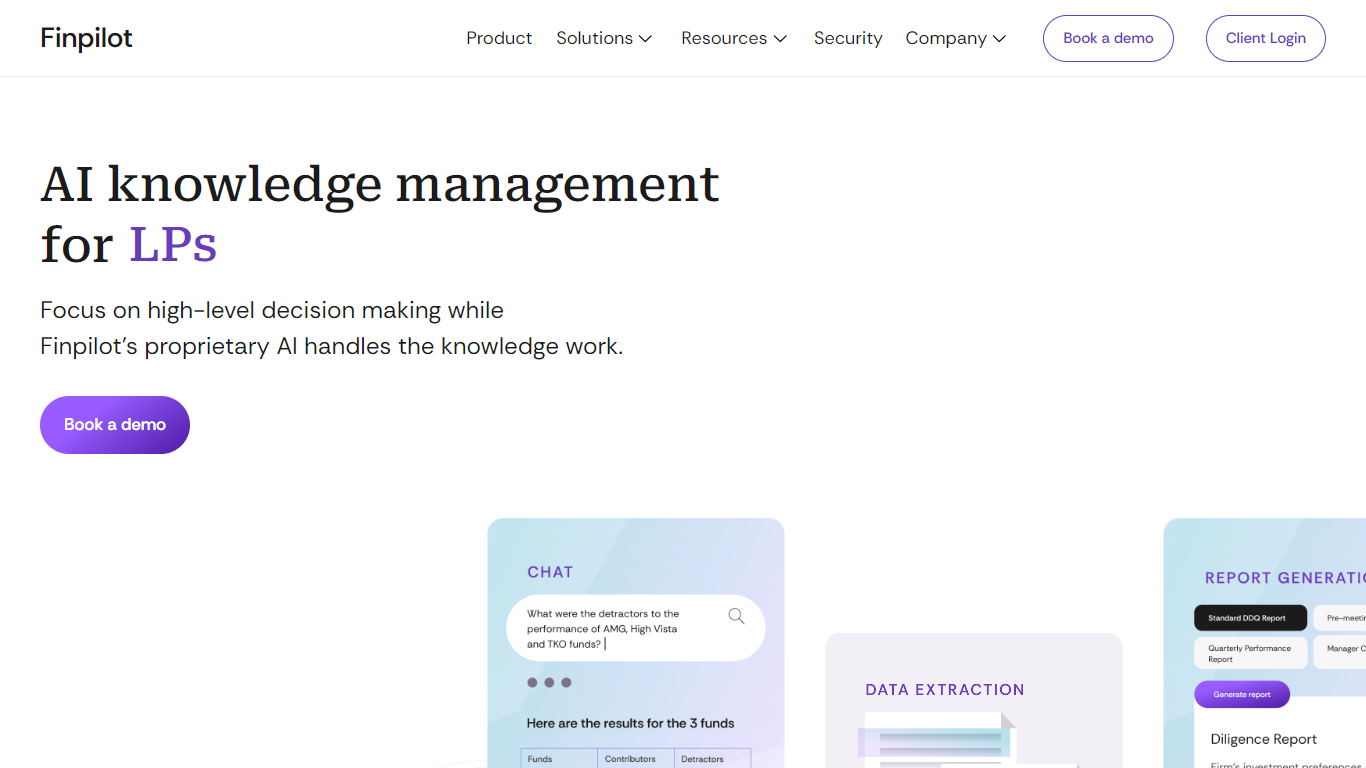
Finpilot is an AI knowledge management platform for institutional allocators, limited partners, wealth managers, and RIAs. It connects manager documents, meeting notes, CRM records, and internal memos so investment teams can query their full knowledge base, generate reports, and process documents without digging through folders.
The platform includes chat-based analysis across all organizational data, AI agents that draft investment memos and due diligence reports using your templates, Matrix tables that compare funds across strategy, fees, and performance, automated document extraction, a research hub that organizes manager communications, and alerts that flag capital calls or strategy changes as documents arrive.
Finpilot integrates with allocator systems including Backstop, Dynamo, Bipsync, Tamale, Canoe, Salesforce, FactSet, Microsoft SharePoint, and Teams. It is SOC 2 Type II compliant with enterprise encryption, SSO, role-based access, and citations on every output linking to exact source locations.
Endowments, foundations, OCIOs, family offices, pension funds, funds of funds, and wealth management firms use Finpilot to scale manager research, portfolio monitoring, due diligence, and client reporting. Access is through demo requests on the website.
FlowCog
What is FlowCog?
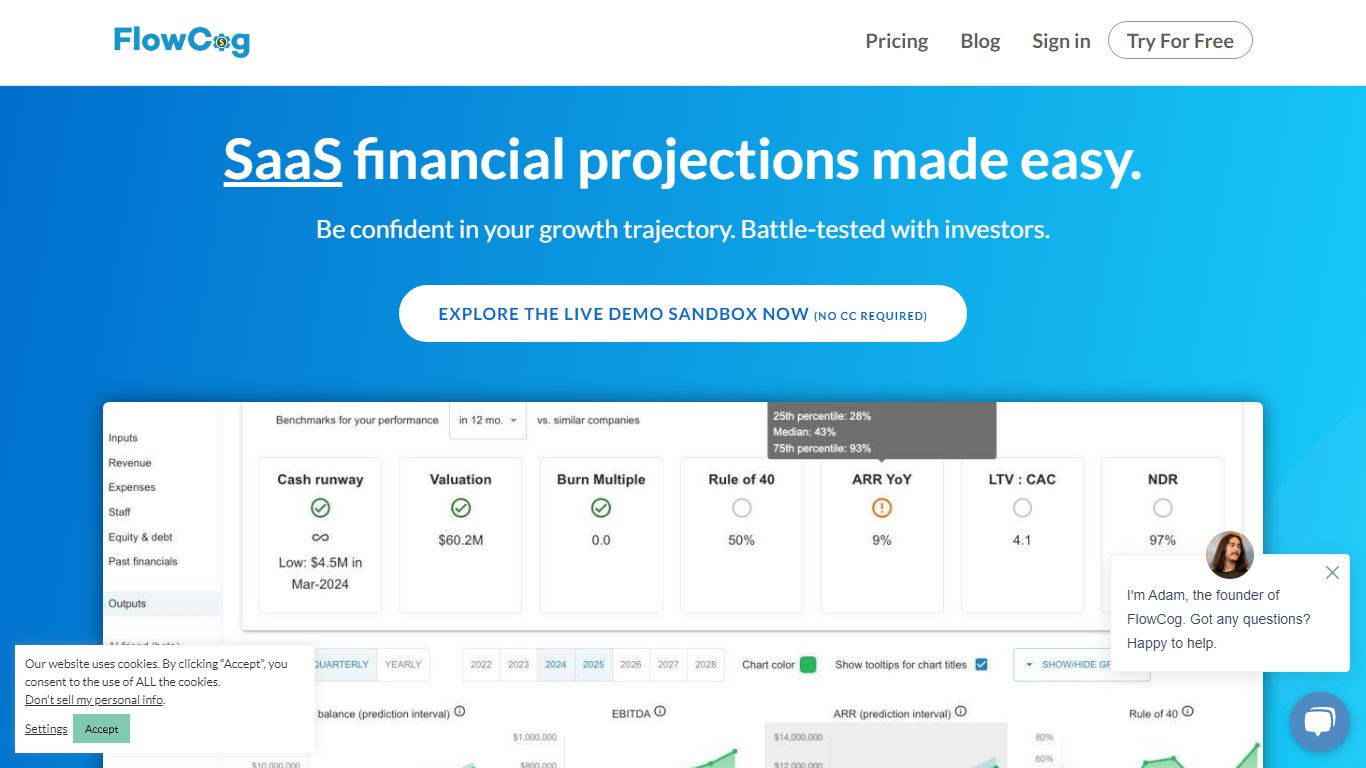
FlowCog turns growth assumptions into five-year income statements, cash flow, and balance sheet projections without rebuilding spreadsheet logic. Founders connect QuickBooks, Xero, or Puzzle, tweak headcount and customer behavior inputs on a visual canvas, and get break-even timing, cash runway, and board-ready charts. A free tier covers break-even and dilution tools for pre-revenue teams.
Baremetrics-style dashboards replay historical SaaS metrics, but FlowCog builds bottom-up forecasts from marketing, sales, churn, and hiring assumptions. It runs scenario and simulation analysis across hundreds of outcomes instead of a single hardcoded growth line. The trade-off is focus: it targets SaaS fundraising and board models, not general ledger bookkeeping.
Startup founders use FlowCog for investor updates and SAFE conversion math. Finance leads at sub-$30M ARR SaaS companies automate monthly model refreshes with unlimited seats for investors. Teams without clean books can start on the free canvas or lean on the eight-minute onboarding form plus industry benchmarks.
Finpilot Upvotes
FlowCog Upvotes
Finpilot Top Features
Chat across manager letters, memos, CRM records, and meeting notes with cited answers
AI agents draft investment memos, diligence reports, and committee materials from your templates
Matrix compares funds on strategy, fees, performance, and team composition in grid tables
Document processing pulls data from PDFs, tax returns, and fund statements into Excel or CRM
Research Hub auto-files manager documents and alerts teams on capital calls or strategy shifts
FlowCog Top Features
One-click sync with QuickBooks, Xero, and Puzzle accounting data
Five-year income statement, cash flow, and balance sheet projections
What-if scenario analysis for break-even, runway, and new locations
Premium plan includes QuickBooks, Stripe, and ChatGPT integrations
Unlimited seats for team members and investors on paid plans
Free tier covers break-even, SAFE conversion, and dilution calculators
14-day trial with no credit card required on paid plans
Finpilot Category
- Finance
FlowCog Category
- Finance
Finpilot Pricing Type
- Paid
FlowCog Pricing Type
- Freemium