ForgeFluencer vs GET3D | Nvidia
Explore the showdown between ForgeFluencer vs GET3D | Nvidia and find out which AI Model Generation tool wins. We analyze upvotes, features, reviews, pricing, alternatives, and more.
When comparing ForgeFluencer and GET3D | Nvidia, which one rises above the other?
When we contrast ForgeFluencer with GET3D | Nvidia, both of which are exceptional AI-operated model generation tools, and place them side by side, we can spot several crucial similarities and divergences. Neither tool takes the lead, as they both have the same upvote count. Your vote matters! Help us decide the winner among aitools.fyi users by casting your vote.
You don't agree with the result? Cast your vote to help us decide!
ForgeFluencer

What is ForgeFluencer?
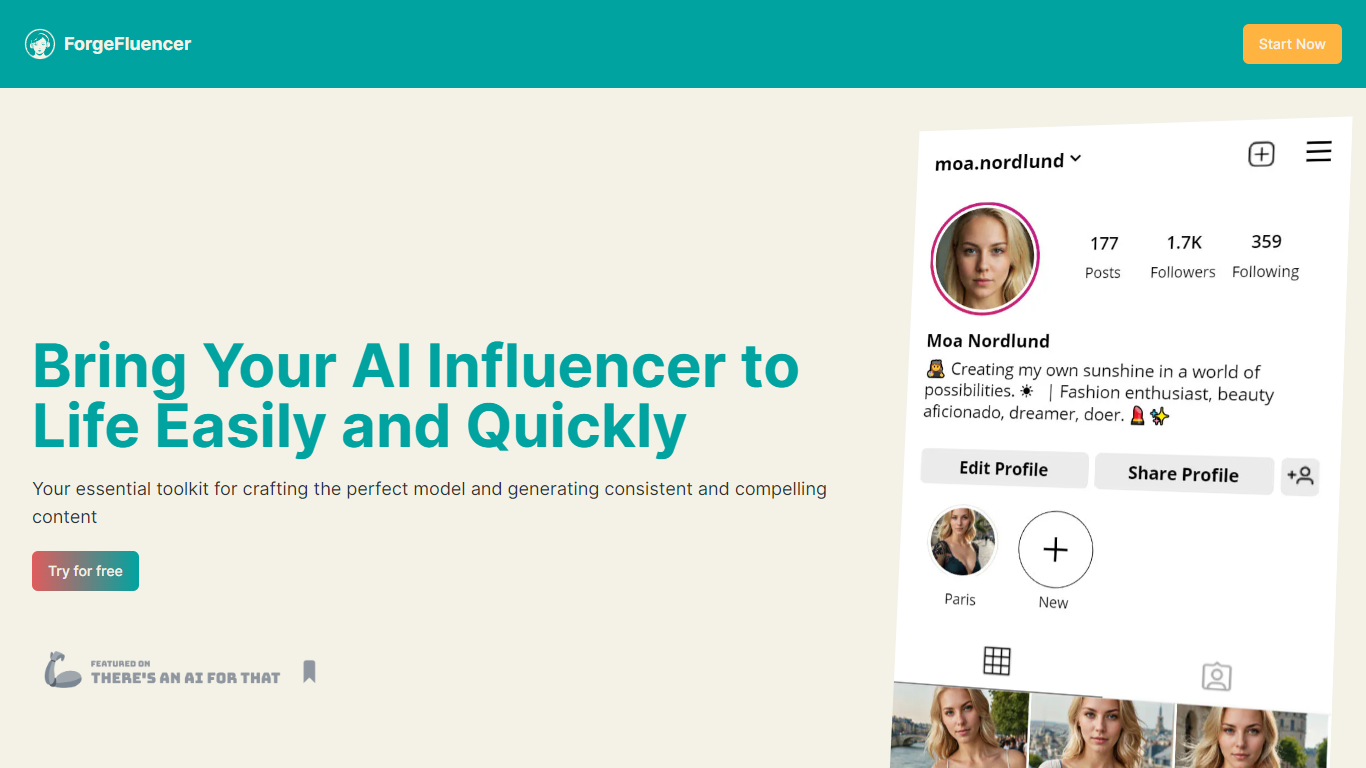
ForgeFluencer builds virtual influencers from a reference portrait and keeps the same face across photos, wardrobe try-ons, and short videos. Picture controls cover framing, aspect ratio, location, outfit, and emotion, while optional video face swaps and garment imports extend posts beyond static images.
Unlike juggling Discord bots and separate image editors, ForgeFluencer bundles model creation, a photoshoot catalogue, a photo studio, and video generation in one desktop-friendly workflow. The photoshoot mode generates preset scenes in two clicks, and the virtual wardrobe applies imported clothing to an existing model photo for branded outfit posts.
Creators targeting Instagram, TikTok, Fanvue, or Patreon use it for realistic influencer personas or anime-style characters. Free accounts include 5 credits and two model slots, while paid tiers raise monthly credits, model limits, and premium video allowances.
GET3D | Nvidia
What is GET3D | Nvidia?
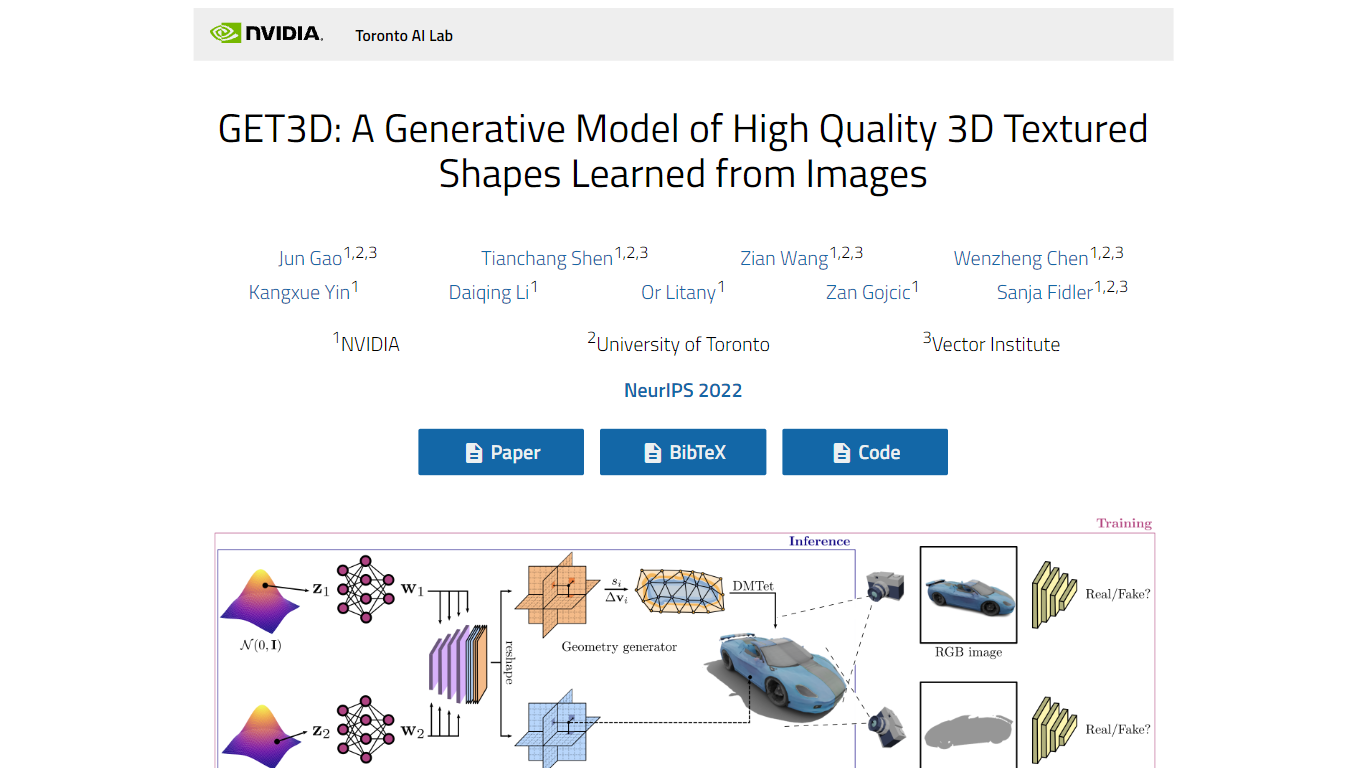
GET3D generates textured 3D mesh assets you can drop straight into a rendering engine, trained only from collections of 2D images. NVIDIA researchers built it to output explicit meshes with geometry and texture, not neural radiance fields that need custom renderers to use.
Most 3D generative models at the time either skipped textures, locked you into fixed topology, or required neural rendering pipelines to view results. GET3D uses differentiable marching tetrahedra (DMTet) plus adversarial losses on rasterized RGB images and silhouettes, so the output is a standard textured mesh. The trade-off is research-grade access: this is an NVIDIA Toronto AI Lab project from NeurIPS 2022, not a hosted SaaS with an upload button.
The model handles cars, chairs, animals, motorbikes, human characters, and buildings. It also supports text-guided shape generation via CLIP-based finetuning, similar to StyleGAN-NADA, and can disentangle geometry from texture through separate latent codes.
ForgeFluencer Upvotes
GET3D | Nvidia Upvotes
ForgeFluencer Top Features
Discover plan includes 5 free credits and storage for up to 2 models
Lite plan costs $4.99 per month with 20 credits and up to 6 models after the welcome offer
Premium plan at $29 per month includes 150 credits, 15 video face swaps, and 6 premium videos
Creator plan at $99 per month offers unlimited image generations and up to 50 models
Virtual Wardrobe applies garments from uploaded photos onto model images
Photo Shoot catalogue generates preset scenes in two clicks
Video generation turns stills into short clips with guided motion and face swap options
GET3D | Nvidia Top Features
Outputs explicit textured 3D meshes usable in standard rendering engines
Trained from 2D image collections using adversarial losses on RGB and silhouettes
Generates cars, chairs, animals, motorbikes, humans, and buildings
Disentangles geometry and texture through separate latent codes
Supports text-guided shape generation via CLIP-based finetuning
Published at NeurIPS 2022 by NVIDIA, University of Toronto, and Vector Institute
ForgeFluencer Category
- Model Generation
GET3D | Nvidia Category
- Model Generation
ForgeFluencer Pricing Type
- Freemium
GET3D | Nvidia Pricing Type
- Free