Glean vs Talk to Books
When comparing Glean vs Talk to Books, which AI Search Engine tool shines brighter? We look at pricing, alternatives, upvotes, features, reviews, and more.
In a comparison between Glean and Talk to Books, which one comes out on top?
When we put Glean and Talk to Books side by side, both being AI-powered search engine tools, The community has spoken, Talk to Books leads with more upvotes. The upvote count for Talk to Books is 23, and for Glean it's 7.
Does the result make you go "hmm"? Cast your vote and turn that frown upside down!
Glean
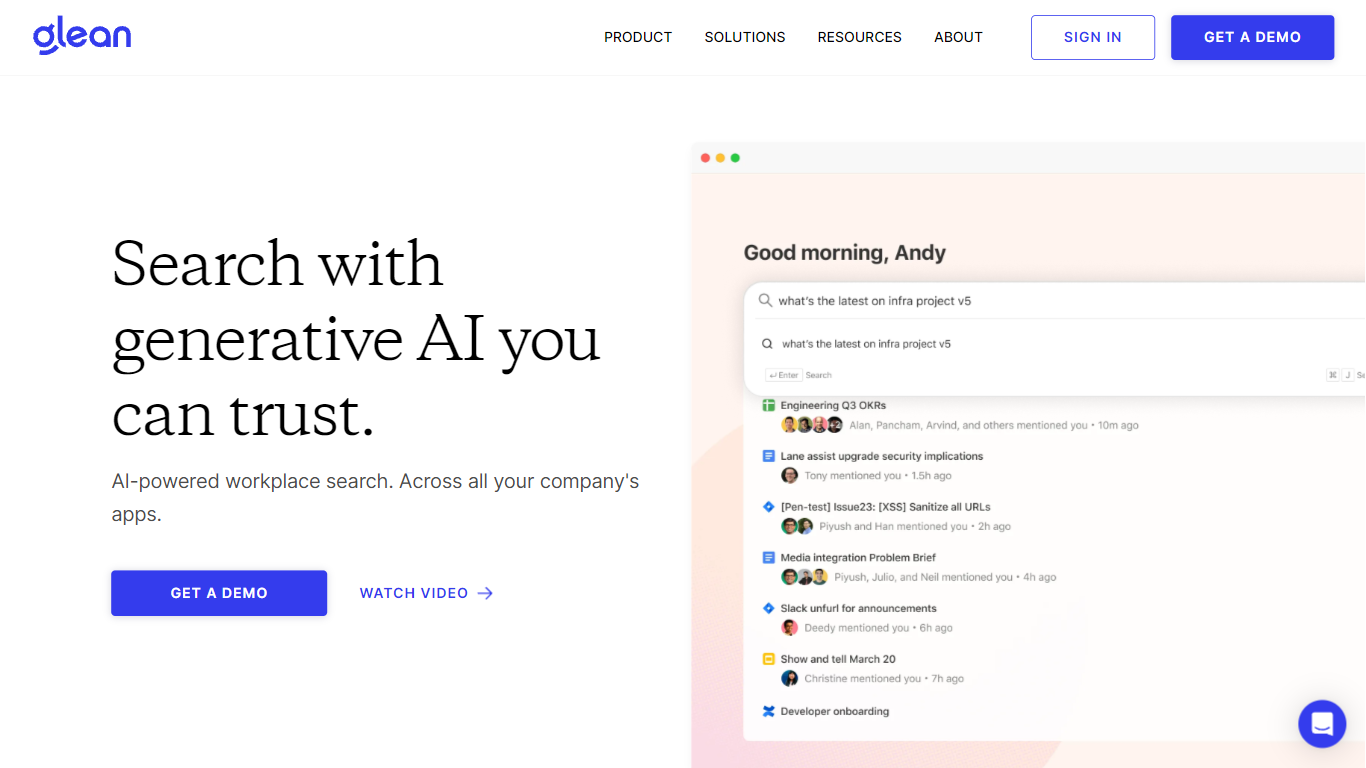

What is Glean?
Glean connects your company's apps, documents, and permissions into one enterprise search and Work AI platform. Employees ask questions in natural language, get answers grounded in Slack, Google Drive, Jira, Confluence, Salesforce, and hundreds of other sources, then automate follow-up work with assistants and agents. The system respects existing access controls so people only see what they are already allowed to view.
Generic AI chat tools send broad prompts to models without your org chart, ticket history, or doc permissions baked in. Glean indexes enterprise context once, maps relationships in an Enterprise Graph, and claims a 30% reduction in token usage compared with off-the-shelf MCP tools because less irrelevant text reaches the model. That matters when every department is spinning up agents on the same data.
IT, engineering, sales, support, and HR teams at companies like Booking.com, Zillow, and Samsung use Glean to find answers faster, build no-code agents, and cut internal support tickets. Deployment is demo-led: you request access through Glean's sales flow rather than self-serve signup.
Talk to Books
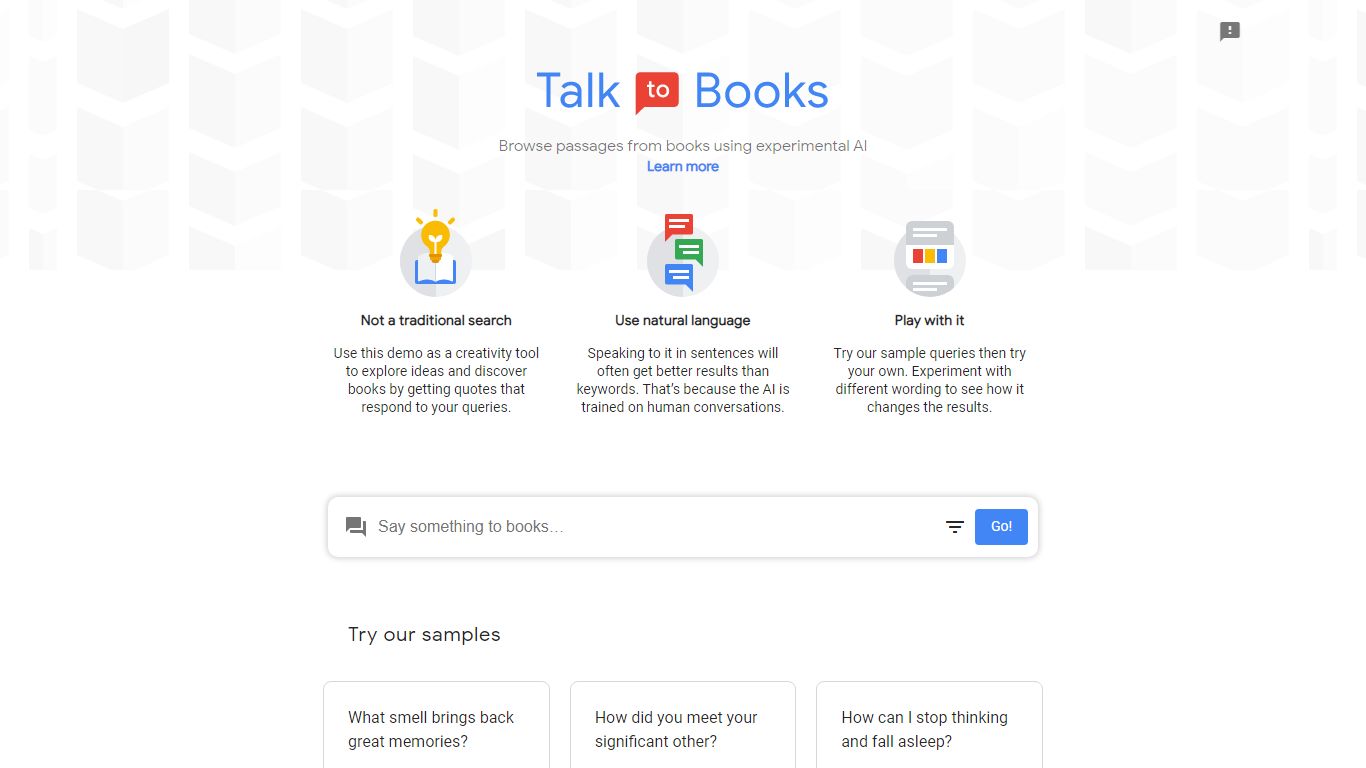
What is Talk to Books?
Talk to Books was a Google Research experiment that let you ask natural-language questions and get answers pulled from passages across a large collection of books. You typed a question or statement, and the system returned relevant book excerpts instead of standard web search results. Google has shut the service down, but the site still hosts an archive of sample queries.
The project launched in 2018 as part of Google's Semantic Experiences initiative. It used neural language models for semantic matching and retrieval, showing how conversational queries could surface ideas buried in published books rather than blog posts or forums.
Researchers, students, and curious readers used Talk to Books to explore topics through book-length context. The experiment informed later semantic search features inside Google products such as Shopping, Maps, Gmail, and Hangouts.
Glean Upvotes
Talk to Books Upvotes
Glean Top Features
275+ out-of-the-box connectors sync Slack, Google Drive, Jira, Confluence, GitHub, and Salesforce
Supports 35+ unique LLMs with flexible model choice across the platform
Glean claims 110 hours saved per user per year and 20% fewer internal support tickets
Permission-aware search inherits source-app access rules so users only see allowed content
SOC 2 Type II, ISO 27001, ISO 42001, HIPAA, and GDPR compliance badges listed on the homepage
Talk to Books Top Features
Ask questions in plain English and get book passages back, not web links
Searches across a large corpus of published books using semantic matching
Archived sample queries still viewable on the shutdown notice page
Part of Google's 2018 Semantic Experiences research alongside Semantris
Demonstrated neural retrieval models that later shaped other Google products
Glean Category
- Search Engine
Talk to Books Category
- Search Engine
Glean Pricing Type
- Paid
Talk to Books Pricing Type
- Free