StyleFrame (formerly Glyf) vs Text-To-4D
In the face-off between StyleFrame (formerly Glyf) vs Text-To-4D, which AI 3D Generation tool takes the crown? We scrutinize features, alternatives, upvotes, reviews, pricing, and more.
In a face-off between StyleFrame (formerly Glyf) and Text-To-4D, which one takes the crown?
If we were to analyze StyleFrame (formerly Glyf) and Text-To-4D, both of which are AI-powered 3d generation tools, what would we find? Text-To-4D stands out as the clear frontrunner in terms of upvotes. Text-To-4D has attracted 26 upvotes from aitools.fyi users, and StyleFrame (formerly Glyf) has attracted 6 upvotes.
Not your cup of tea? Upvote your preferred tool and stir things up!
StyleFrame (formerly Glyf)
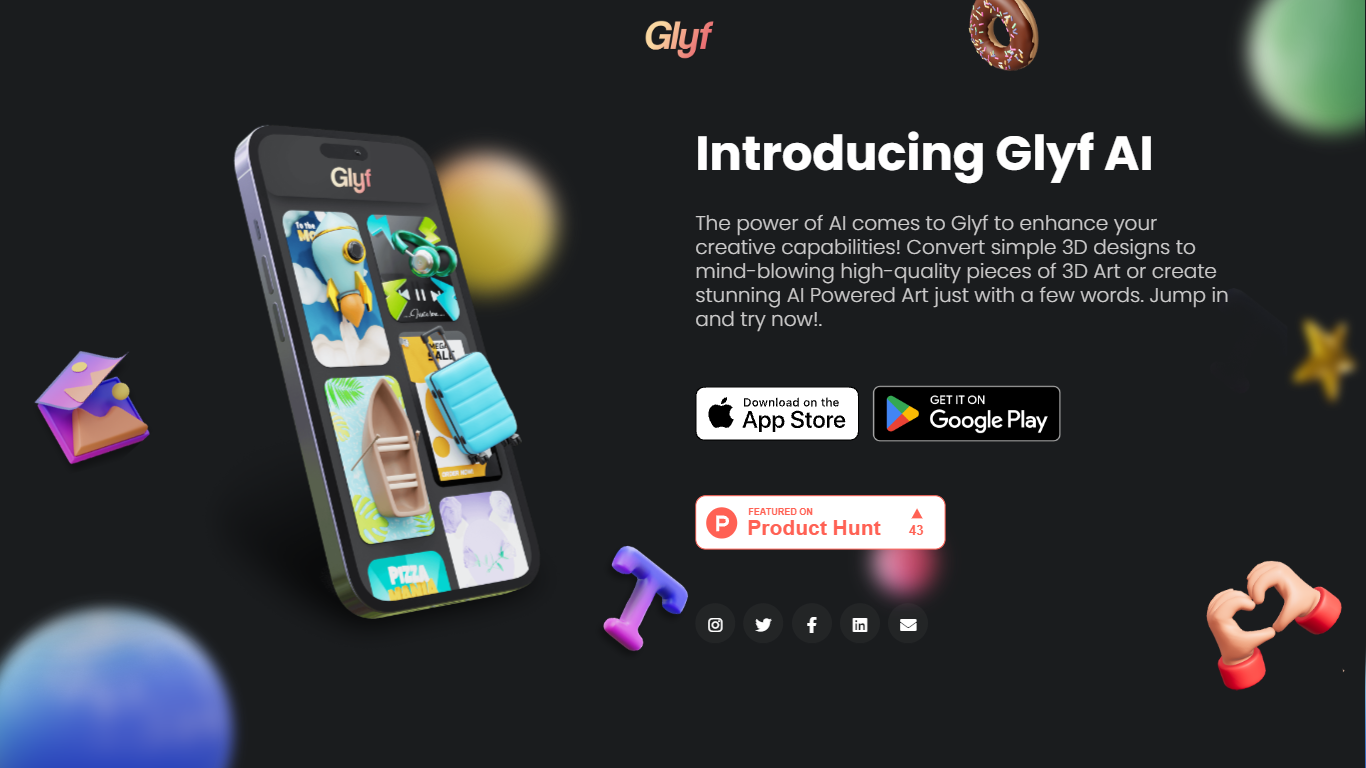

What is StyleFrame (formerly Glyf)?
StyleFrame is a 3D and video generation toolkit for motion designers and animators. It grew out of Glyf, whose original glyf.in domain now hosts unrelated blog content. StyleFrame puts keyframes on a timeline so you can animate with up to 9 frames, transfer motion from reference videos, and run 3D previsualization with style transfer across up to 9 references.
Most AI video tools generate a single clip from one prompt. StyleFrame is built around procedural, timeline-driven control: storyboards, inbetweening, motion references, restyle passes, and frames-to-video workflows sit in one editor. It also ships image tools for create, restyle, edit, background removal, and upscaling, with models including Seedance 2.5, MiniMax H3, and Gemini Omni Flash.
StyleFrame targets motion designers, animators, and studios who need frame-level control rather than one-shot generation. Credit-based plans start at $9 per month for Basic with 1,000 credits, scaling to Studio at $99 per month for 15,000 credits. Enterprise plans offer unlimited output with custom pricing.
Text-To-4D
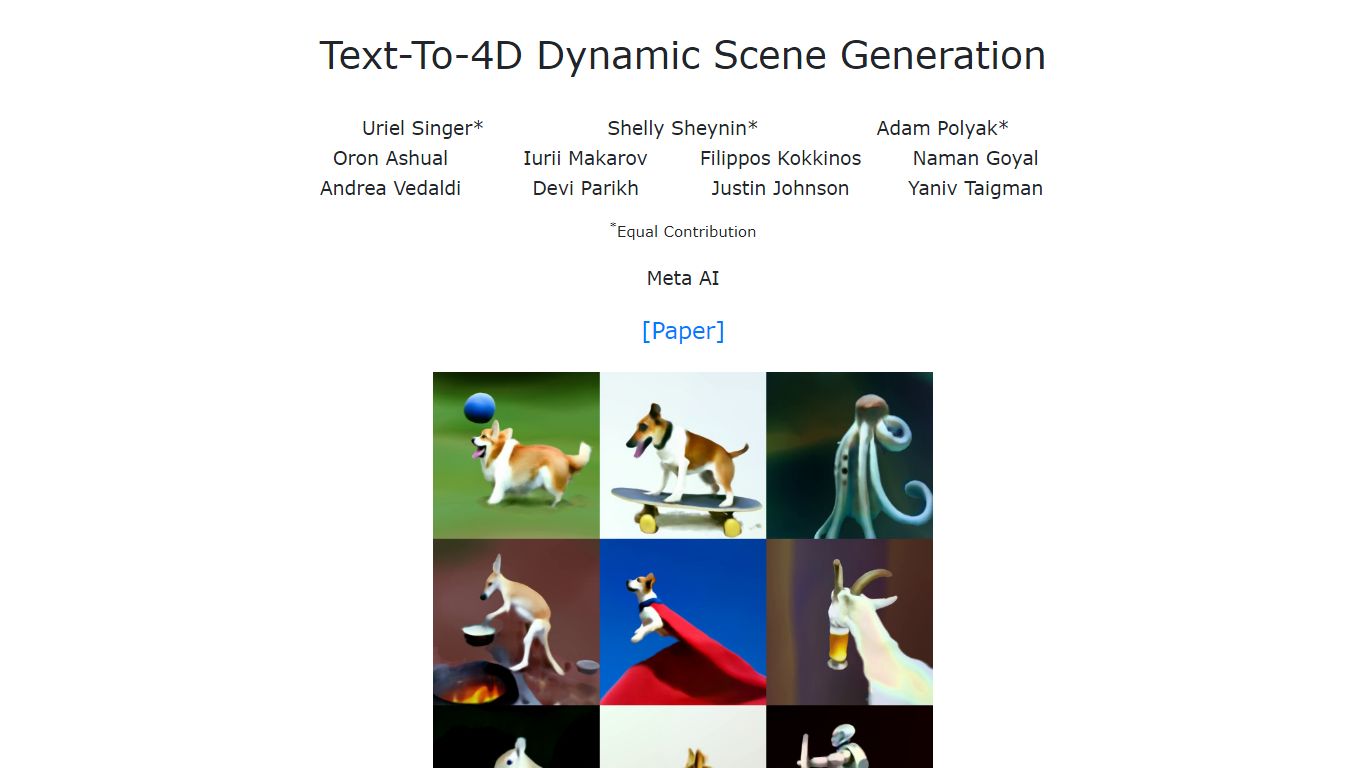
What is Text-To-4D?
Text-To-4D is a Meta AI research project (MAV3D) that generates three-dimensional dynamic scenes from text descriptions. The method uses a 4D dynamic Neural Radiance Field optimized for appearance, density, and motion consistency by querying a text-to-video diffusion model.
Unlike static 3D generators that output a single mesh, Text-To-4D produces scenes you can view from any camera angle and composite into other 3D environments. The approach needs no 3D or 4D training data; the underlying text-to-video model trains only on text-image pairs and unlabeled videos.
The project page hosts demo samples for text-to-4D prompts like "a corgi playing with a ball" and image-to-4D conversions from still photos. It is a research showcase, not a commercial product with a public API or signup. Researchers and 3D artists interested in NeRF-based dynamic scene generation can explore the paper and sample outputs on the site.
StyleFrame (formerly Glyf) Upvotes
Text-To-4D Upvotes
StyleFrame (formerly Glyf) Top Features
Timeline supports up to 9 keyframes for frames-to-video animation
3D-Previz and 2D-to-3D style transfer with up to 9 reference images
Visual effects mode transfers motion from a reference video onto a still image
Basic plan includes 1,000 credits per month at $9 monthly or $7 billed annually
Pro plan includes 5,000 credits; Studio plan includes 15,000 credits
Built-in image create, restyle, edit, background removal, and upscaler tools
Text-To-4D Top Features
Generates 3D dynamic scenes from text prompts via MAV3D (Make-A-Video3D)
4D dynamic NeRF optimized for appearance, density, and motion consistency
View generated scenes from any camera location and angle
Image-to-4D mode converts still photos into dynamic video scenes
Trained only on text-image pairs and unlabeled videos, no 3D/4D data required
Published research paper on arXiv (2301.11280) with interactive demo samples
StyleFrame (formerly Glyf) Category
- 3D Generation
Text-To-4D Category
- 3D Generation
StyleFrame (formerly Glyf) Pricing Type
- Paid
Text-To-4D Pricing Type
- Free