Draw3D vs Text-To-4D
In the face-off between Draw3D vs Text-To-4D, which AI 3D Generation tool takes the crown? We scrutinize features, alternatives, upvotes, reviews, pricing, and more.
In a face-off between Draw3D and Text-To-4D, which one takes the crown?
If we were to analyze Draw3D and Text-To-4D, both of which are AI-powered 3d generation tools, what would we find? Text-To-4D is the clear winner in terms of upvotes. Text-To-4D has attracted 26 upvotes from aitools.fyi users, and Draw3D has attracted 6 upvotes.
Want to flip the script? Upvote your favorite tool and change the game!
Draw3D
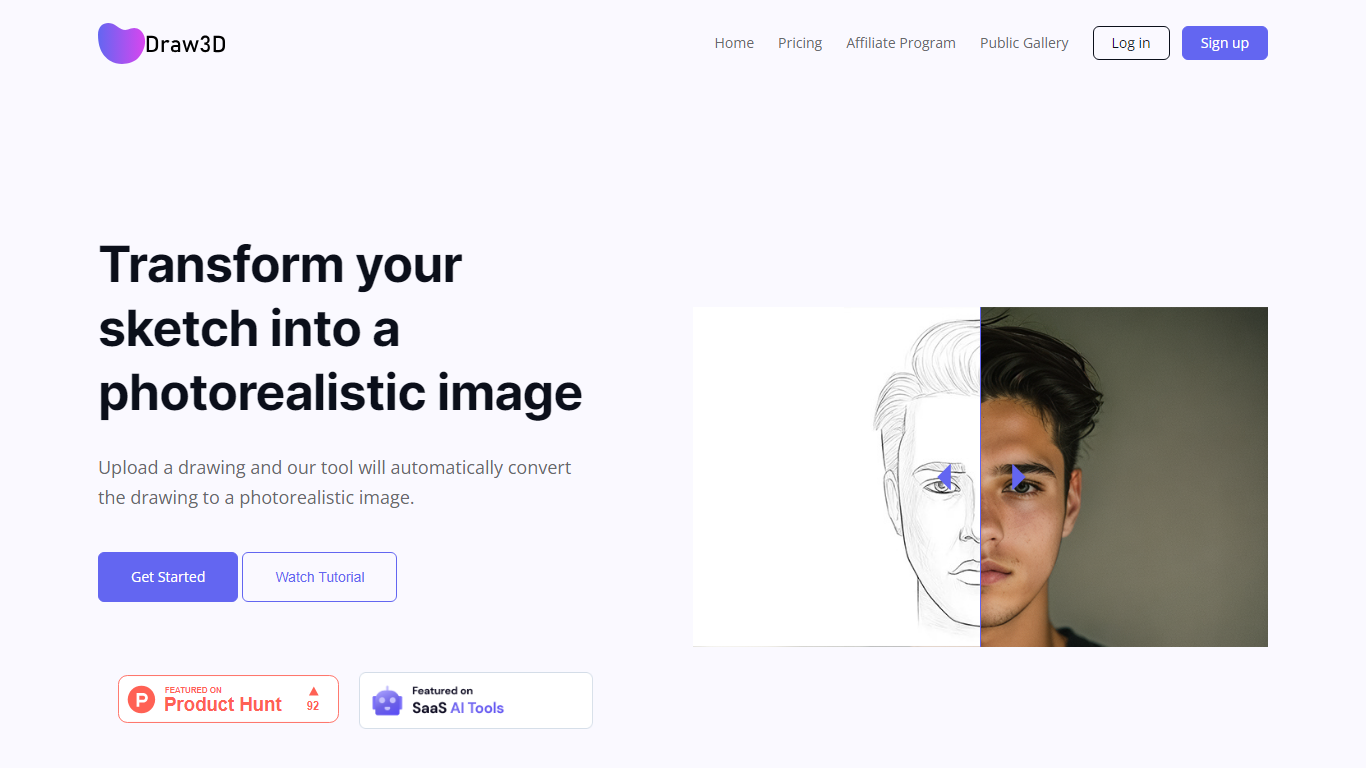

What is Draw3D?
Draw3D is a 3D generation and image toolkit that turns sketches and spatial blockouts into photoreal renders and cinematic video. You draw on a 2D canvas or place dummies in 3D space, hit generate, and the model respects your composition instead of guessing from a text prompt alone.
Text-to-image tools make you describe perspective and layout in words. Draw3D starts from your lines and 3D blockouts, then adds storyboard-to-video, AI inpainting, sculpture-to-photo conversion, and up to 8x upscaling for production exports. That workflow fits directors, architects, and product designers who already think in frames and volumes.
More than 80,000 creators have used the platform with 7.2 million images created, per the homepage stats. Free accounts include 5 generations per month; paid plans start at $9 per month for 120 generations with private gallery mode and commercial rights on every tier.
Text-To-4D
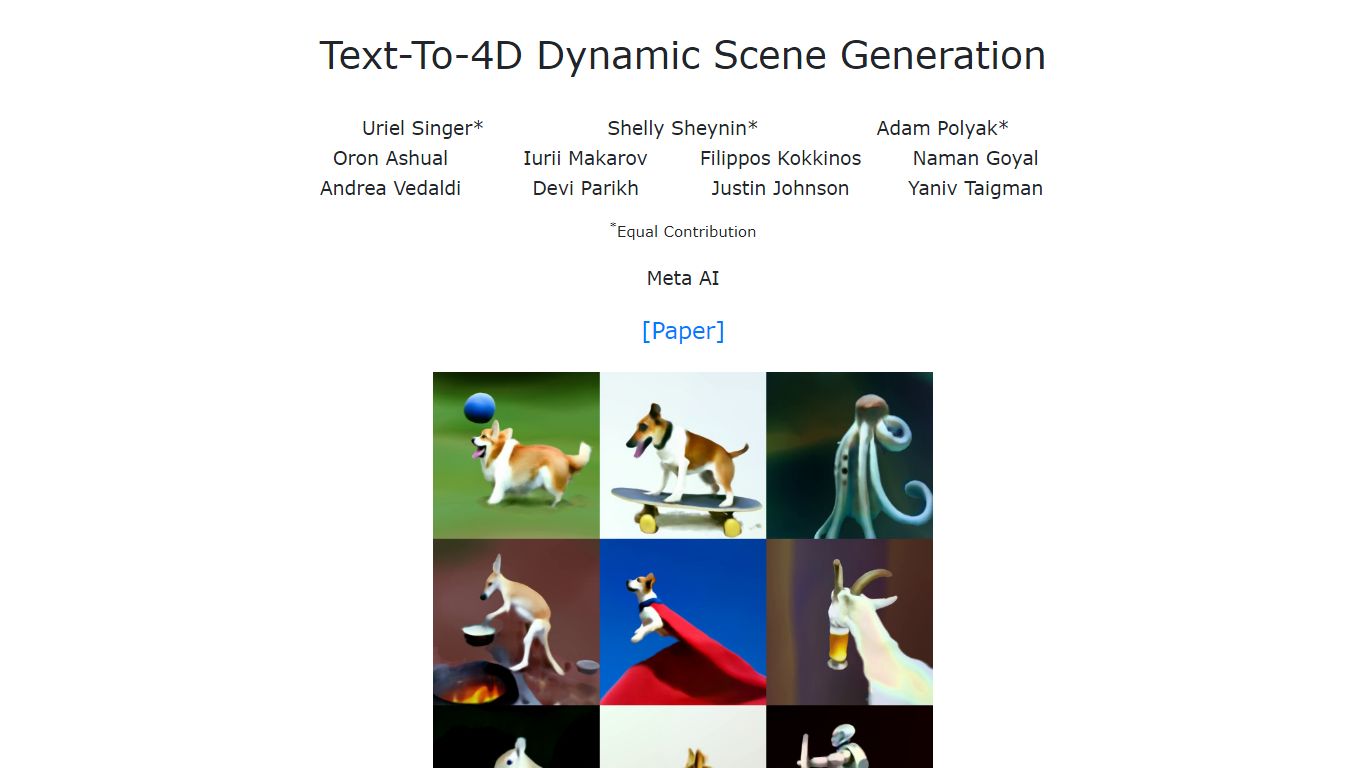
What is Text-To-4D?
Text-To-4D is a Meta AI research project (MAV3D) that generates three-dimensional dynamic scenes from text descriptions. The method uses a 4D dynamic Neural Radiance Field optimized for appearance, density, and motion consistency by querying a text-to-video diffusion model.
Unlike static 3D generators that output a single mesh, Text-To-4D produces scenes you can view from any camera angle and composite into other 3D environments. The approach needs no 3D or 4D training data; the underlying text-to-video model trains only on text-image pairs and unlabeled videos.
The project page hosts demo samples for text-to-4D prompts like "a corgi playing with a ball" and image-to-4D conversions from still photos. It is a research showcase, not a commercial product with a public API or signup. Researchers and 3D artists interested in NeRF-based dynamic scene generation can explore the paper and sample outputs on the site.
Draw3D Upvotes
Text-To-4D Upvotes
Draw3D Top Features
Convert 2D sketches and 3D spatial blockouts into photoreal images
Storyboard-to-cinematic-video pipeline with consistent characters
AI video generation with camera motion from still renders
8x AI upscaling on exports for production-resolution PNG and JPEG
Free plan includes 5 generations per month with commercial license
Starter plan at $9 per month includes 120 generations and private gallery
Touch and pen optimized for iPad and tablet sketching workflows
Text-To-4D Top Features
Generates 3D dynamic scenes from text prompts via MAV3D (Make-A-Video3D)
4D dynamic NeRF optimized for appearance, density, and motion consistency
View generated scenes from any camera location and angle
Image-to-4D mode converts still photos into dynamic video scenes
Trained only on text-image pairs and unlabeled videos, no 3D/4D data required
Published research paper on arXiv (2301.11280) with interactive demo samples
Draw3D Category
- 3D Generation
Text-To-4D Category
- 3D Generation
Draw3D Pricing Type
- Freemium
Text-To-4D Pricing Type
- Free