GPT 4o vs Gopher
In the battle of GPT 4o vs Gopher, which AI Large Language Model (LLM) tool comes out on top? We compare reviews, pricing, alternatives, upvotes, features, and more.
Between GPT 4o and Gopher, which one is superior?
Upon comparing GPT 4o with Gopher, which are both AI-powered large language model (llm) tools, Interestingly, both tools have managed to secure the same number of upvotes. Every vote counts! Cast yours and contribute to the decision of the winner.
Does the result make you go "hmm"? Cast your vote and turn that frown upside down!
GPT 4o
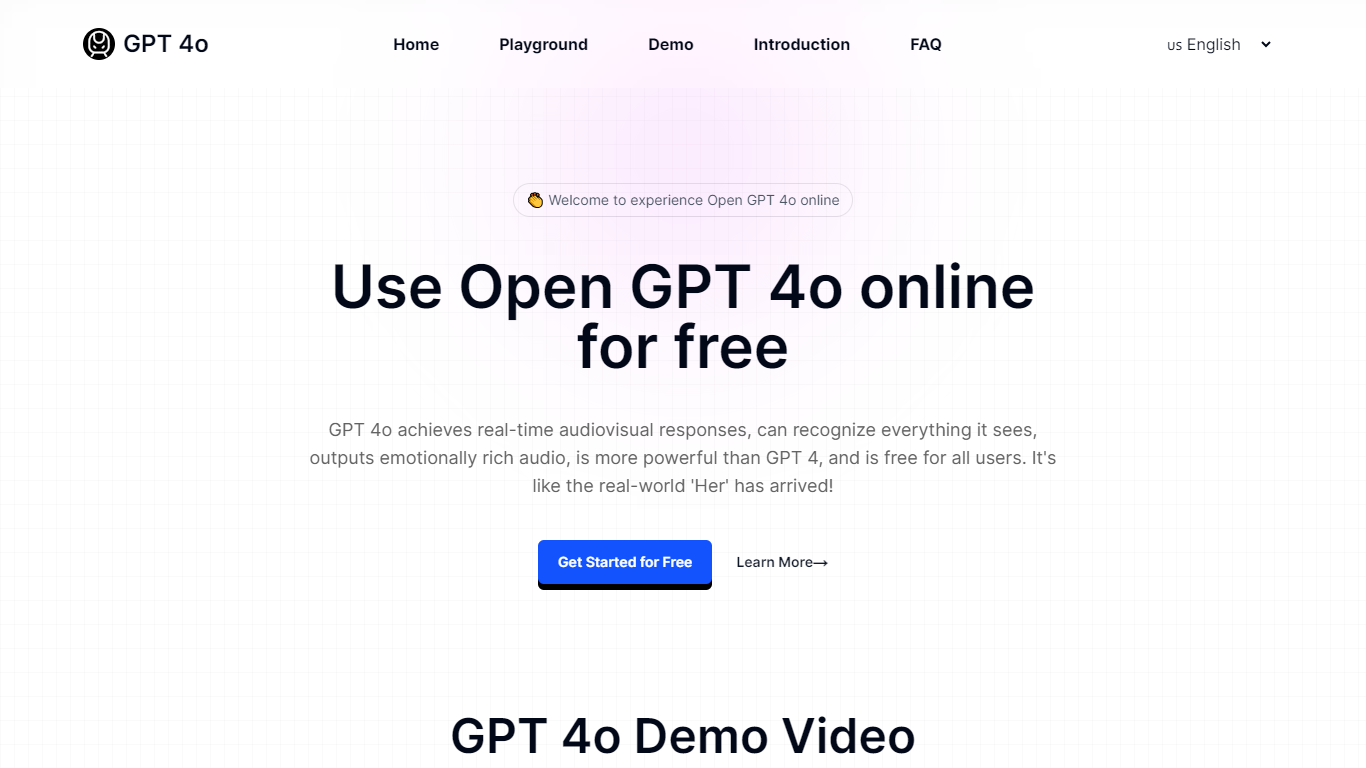

What is GPT 4o ?
Open GPT 4o is the latest innovation in AI technology, building upon the capabilities of previous models, such as GPT-4, to offer a free, advanced, and immersive multimodal experience. GPT 4o stands out with its real-time audiovisual responses, emotional audio outputs, and recognition of everything it sees, creating an interactive experience similar to conversing with a real person.
With its multimodal functionalities, GPT 4o supports combinations of text, audio, and images, allowing for diverse interactions across media types. Notably, GPT 4o is designed to function with super-fast voice response speeds and can handle interruptions naturally, enhancing the fluidity of conversations.
Users can look forward to the rich functionalities of this model, including superior visual capabilities, emotion recognition, output expressions, and support for developers through an improved and cost-effective API. Whether it's virtual assistance, real-time translation, or even a simple chat, GPT 4o offers an unparalleled AI experience for all users.
Gopher
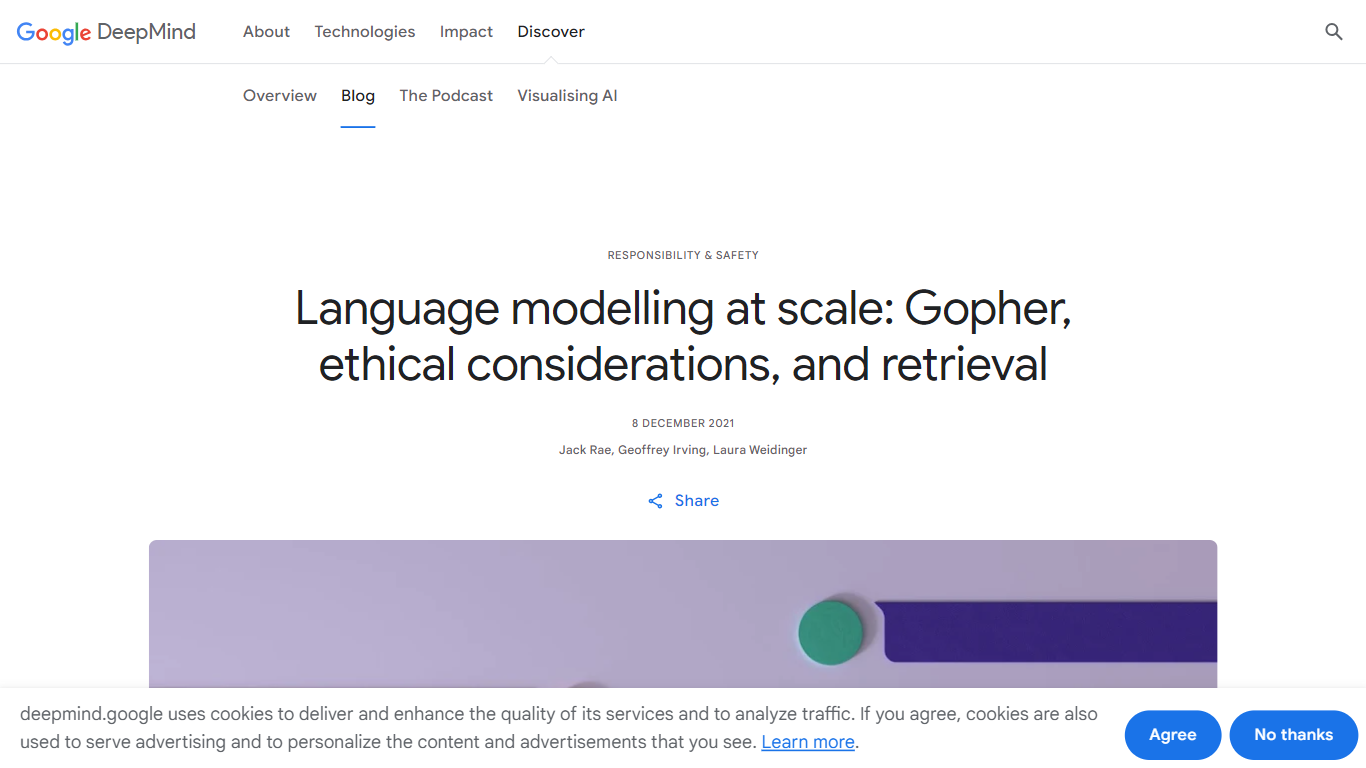
What is Gopher?
Gopher is a 280-billion-parameter transformer language model Google DeepMind announced in December 2021. DeepMind trained a family of models from 44 million to 280 billion parameters to study how scale affects text prediction, reading comprehension, fact-checking, and toxic-language detection.
Compared with general-purpose chatbots, Gopher was a research release, not a public app. DeepMind paired the model paper with an ethics taxonomy covering 21 risks across six themes and a separate Retrieval-Enhanced Transformer (RETRO) architecture that pulls passages from an internet-scale index to cut training cost and trace outputs back to sources.
The blog post targets AI researchers studying scaling laws, safety taxonomies, and retrieval-augmented language models. Gopher beat prior models on several Massive Multitask Language Understanding (MMLU) categories but still struggled with logical reasoning, common-sense questions, repetition, stereotypical bias, and confidently wrong answers in dialogue tests.
GPT 4o Upvotes
Gopher Upvotes
GPT 4o Top Features
Multimodal Capabilities: Handles and generates any combination of text, audio, and images for diverse interactions.
Real-Time Voice Responses: Responds to audio inputs in as little as 232 milliseconds, mimicking human conversation speed.
Emotion Recognition and Output: Can sense and express emotions, including laughter and singing, responding to the tone and background noise accurately.
Superior Visual Capabilities: Recognizes objects, emotions, and text in images and videos, akin to human perception.
Free Access and Improved API: All-inclusive capabilities with a user-friendly, cost-effective API at a 50% discounted rate.
Gopher Top Features
280-billion-parameter transformer model, the largest in a series scaling from 44 million parameters
Stronger reading comprehension, fact-checking, and toxic-language detection as model size grows
MMLU benchmark gains across humanities, science, medicine, and general knowledge categories
Dialogue tests where Gopher cited Wikipedia correctly on cell biology without dialogue fine-tuning
Companion ethics paper mapping 21 large language model risks across six thematic areas
RETRO retrieval architecture matches transformer quality with an order of magnitude fewer parameters
GPT 4o Category
- Large Language Model (LLM)
Gopher Category
- Large Language Model (LLM)
GPT 4o Pricing Type
- Freemium
Gopher Pricing Type
- Free