GPT Clone vs GET3D | Nvidia
In the face-off between GPT Clone vs GET3D | Nvidia, which AI Model Generation tool takes the crown? We scrutinize features, alternatives, upvotes, reviews, pricing, and more.
When we put GPT Clone and GET3D | Nvidia head to head, which one emerges as the victor?
If we were to analyze GPT Clone and GET3D | Nvidia, both of which are AI-powered model generation tools, what would we find? The upvote count reveals a draw, with both tools earning the same number of upvotes. You can help us determine the winner by casting your vote and tipping the scales in favor of one of the tools.
Disagree with the result? Upvote your favorite tool and help it win!
GPT Clone
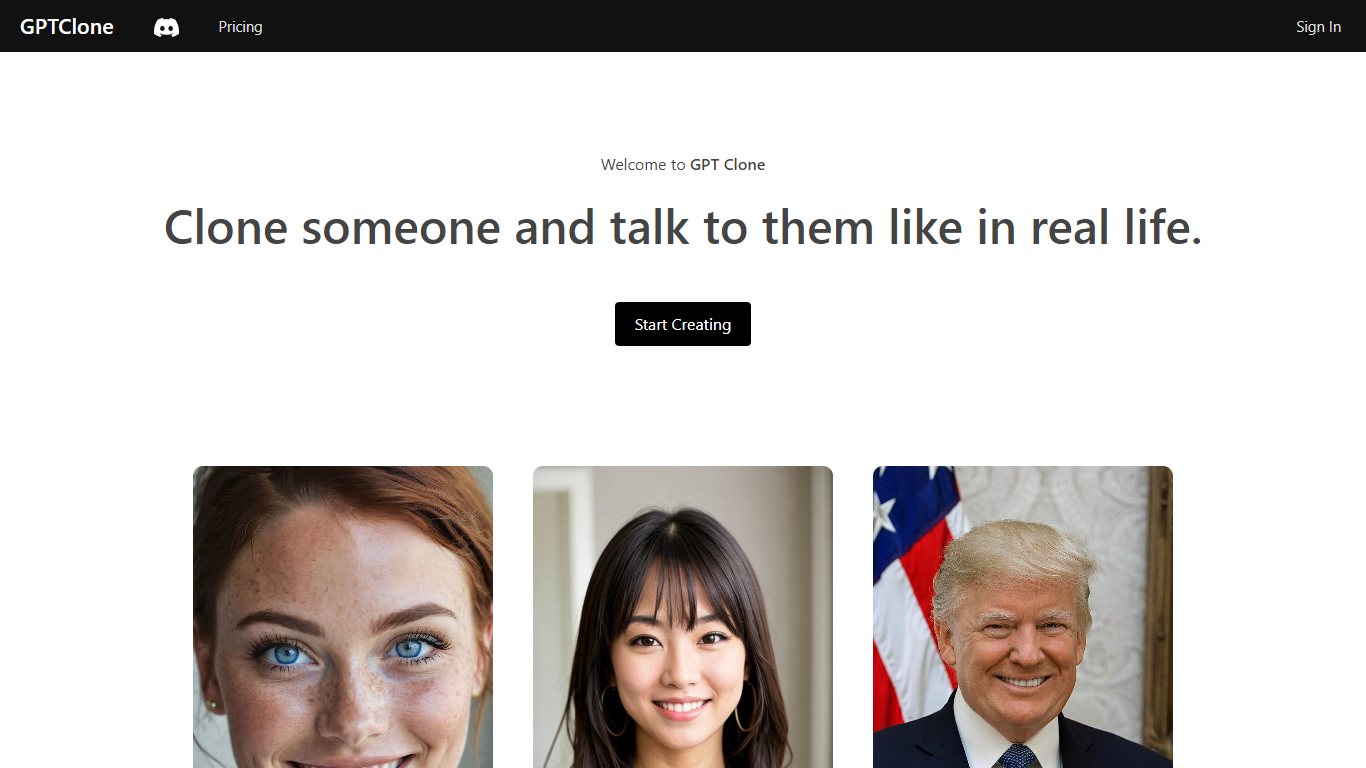

What is GPT Clone?
GPT Clone offers a unique platform where you can create digital clones of various personas including psychologists, relationship experts, well-known figures like Donald Trump, and celebrities like Elon Musk and Taylor Swift. With the ability to engage in lifelike conversations, this service brings a novel interaction experience to users.
Utilizing custom Stable Diffusion models and advanced infrastructure, GPT Clone provides developers with fast, reliable, and high-quality API services. Whether you're looking to simulate conversations for entertainment, education, or professional consultation, GPT Clone delivers a seamless and interactive experience that mimics real-life interactions.
GET3D | Nvidia
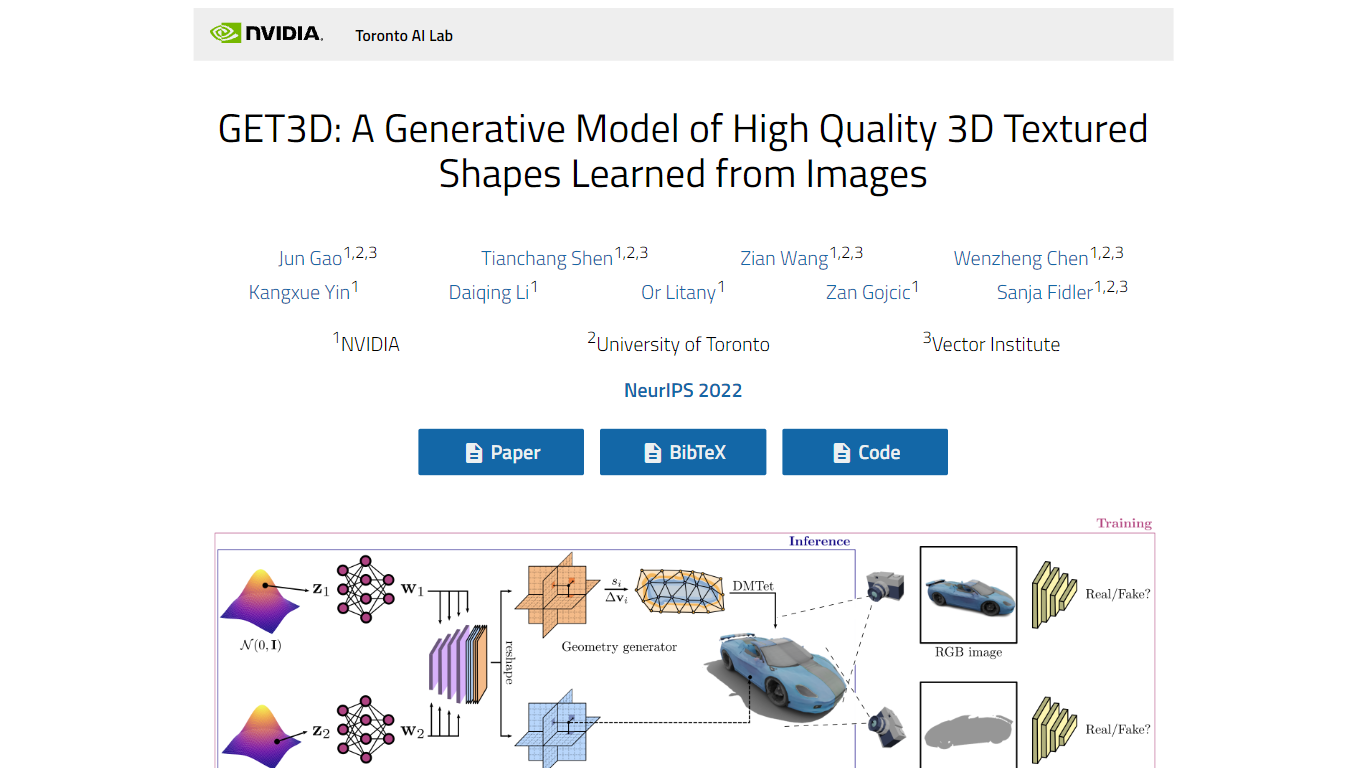
What is GET3D | Nvidia?
GET3D generates textured 3D mesh assets you can drop straight into a rendering engine, trained only from collections of 2D images. NVIDIA researchers built it to output explicit meshes with geometry and texture, not neural radiance fields that need custom renderers to use.
Most 3D generative models at the time either skipped textures, locked you into fixed topology, or required neural rendering pipelines to view results. GET3D uses differentiable marching tetrahedra (DMTet) plus adversarial losses on rasterized RGB images and silhouettes, so the output is a standard textured mesh. The trade-off is research-grade access: this is an NVIDIA Toronto AI Lab project from NeurIPS 2022, not a hosted SaaS with an upload button.
The model handles cars, chairs, animals, motorbikes, human characters, and buildings. It also supports text-guided shape generation via CLIP-based finetuning, similar to StyleGAN-NADA, and can disentangle geometry from texture through separate latent codes.
GPT Clone Upvotes
GET3D | Nvidia Upvotes
GPT Clone Top Features
Custom Stable Diffusion Models: Leverage specialized models for creating realistic digital personas.
High-Quality API Services: Access fast and reliable API endpoints for seamless integration.
Diverse Persona Cloning: Engage with a variety of cloned personas, from celebrities to subject matter experts.
Realistic Interactions: Experience conversations that closely mimic real-life exchanges.
Developer Support: Utilize robust infrastructure designed for developers to incorporate GPT Clone capabilities into various applications.
GET3D | Nvidia Top Features
Outputs explicit textured 3D meshes usable in standard rendering engines
Trained from 2D image collections using adversarial losses on RGB and silhouettes
Generates cars, chairs, animals, motorbikes, humans, and buildings
Disentangles geometry and texture through separate latent codes
Supports text-guided shape generation via CLIP-based finetuning
Published at NeurIPS 2022 by NVIDIA, University of Toronto, and Vector Institute
GPT Clone Category
- Model Generation
GET3D | Nvidia Category
- Model Generation
GPT Clone Pricing Type
- Freemium
GET3D | Nvidia Pricing Type
- Free