GPT Games vs Scenario
Explore the showdown between GPT Games vs Scenario and find out which AI Gaming tool wins. We analyze upvotes, features, reviews, pricing, alternatives, and more.
In a face-off between GPT Games and Scenario, which one takes the crown?
When we contrast GPT Games with Scenario, both of which are exceptional AI-operated gaming tools, and place them side by side, we can spot several crucial similarities and divergences. The upvote count favors GPT Games, making it the clear winner. The number of upvotes for GPT Games stands at 8, and for Scenario it's 7.
Does the result make you go "hmm"? Cast your vote and turn that frown upside down!
GPT Games

What is GPT Games?
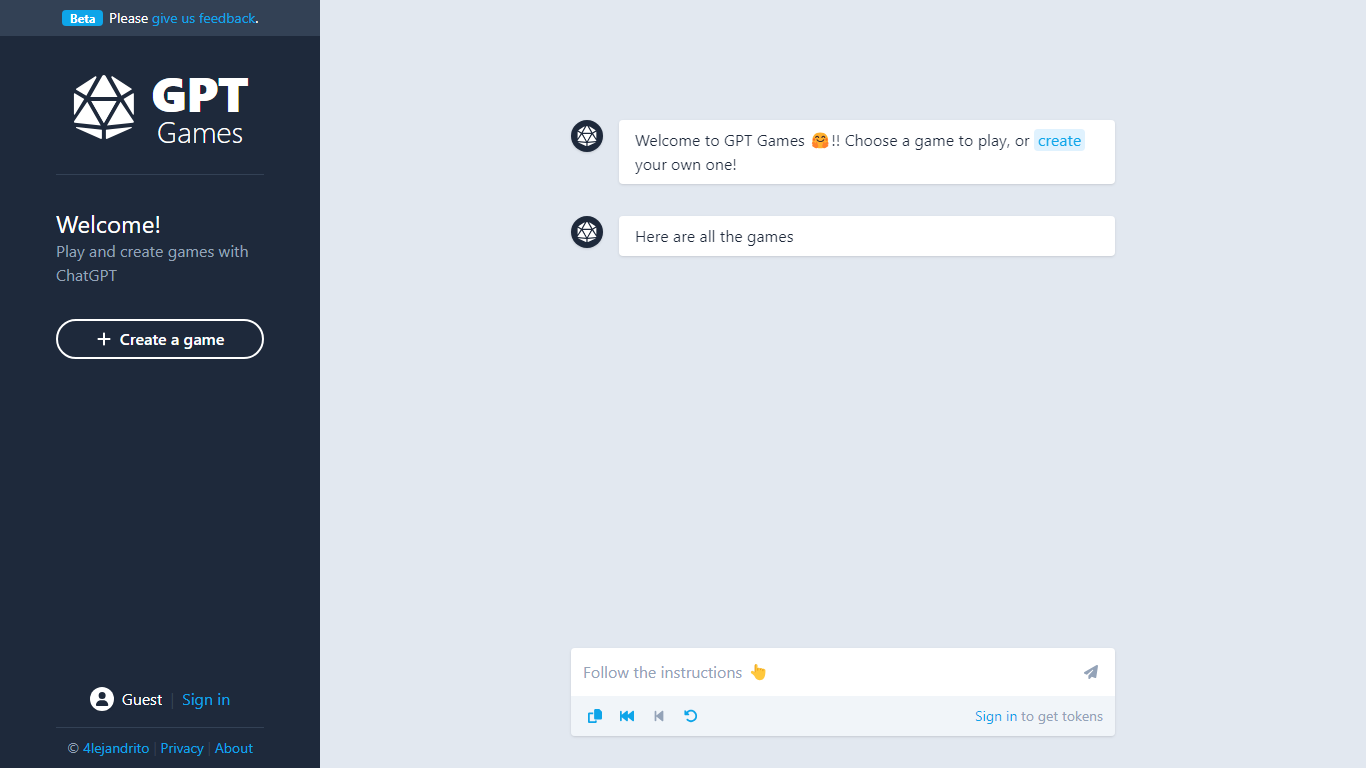
GPT Games is a browser gaming site where you play and build text-driven games through a ChatGPT chat window. The homepage drops you into a conversation that runs the game, and the Create flow collects a name, description, and prompt before you publish. The product still carries a Beta badge and routes feedback through a dedicated /feedback page.
Unlike general chat wrappers or full game engines, GPT Games keeps everything inside a single-threaded text exchange. The create form tells you to write prompts with "you" for GPT and "the player" for the human, a constraint most generic AI chat sites never spell out. That narrow focus makes it a quick sandbox for branching stories and puzzle ideas, not a place to ship graphics, multiplayer, or persistent saves.
Hobby writers, teachers, and ChatGPT experimenters can spin up a playable sketch in minutes. The main chat exposes undo, reset, and regenerate controls when a narrative drifts. Reach the maintainer at [email protected] through the About or Privacy pages if you need a direct contact.
Scenario
What is Scenario?
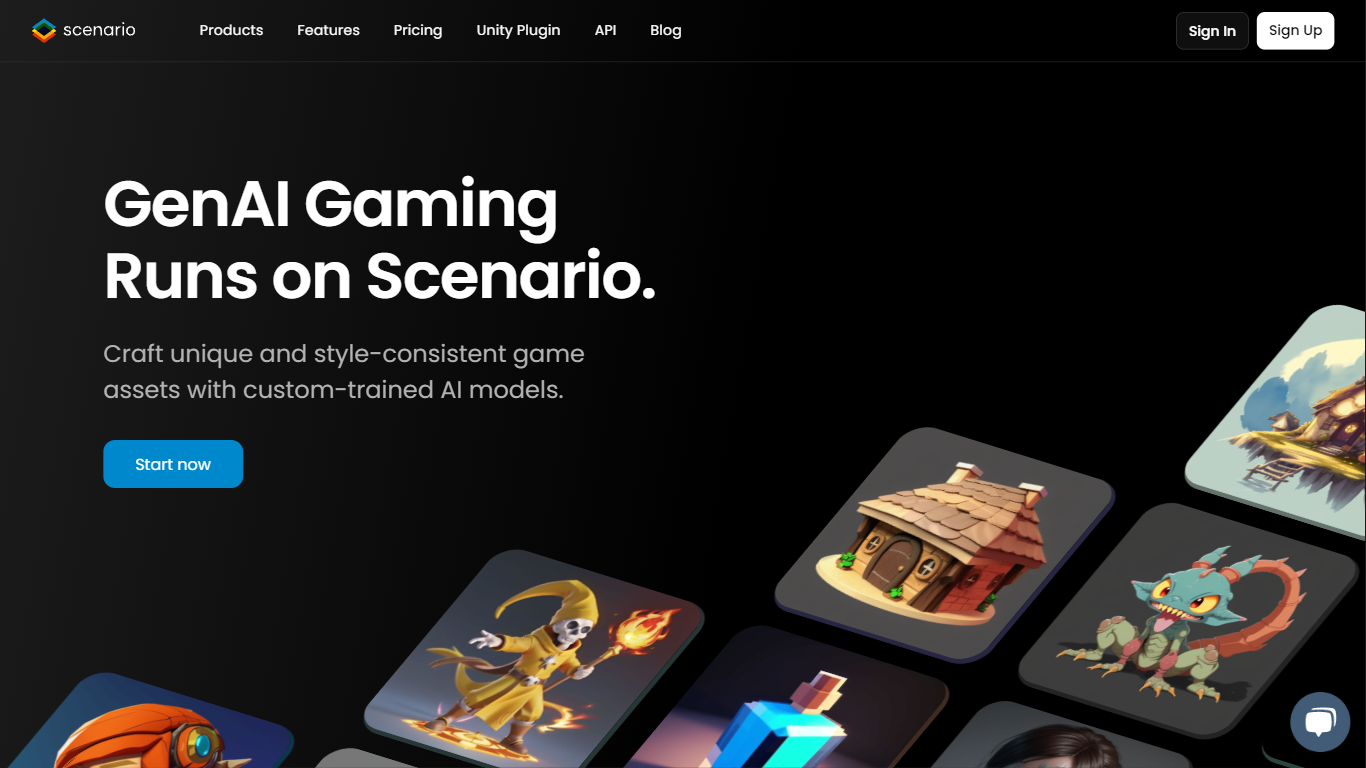
Scenario gives game studios and creative teams a single workspace to generate and edit images, video, audio, and 3D assets trained on their own art style. Upload reference images to train custom models, or pick from 65+ foundation models covering Flux, GPT, Seedway, and Runway pipelines. The Genie assistant lets you describe a workflow in plain language instead of wiring nodes by hand.
Generic image generators produce one-off art that never matches your game's look. Scenario's pitch is custom model training on your assets, so characters, environments, and props stay visually consistent across thousands of outputs. It also ships an API, Unity and Unreal integrations, and an MCP server for agent-driven generation, which matters when you need batch asset production rather than a single hero image.
Indie developers, mid-size game studios, and creative agencies use Scenario for concept art, in-game asset pipelines, and user-generated content systems. Paid plans start at $15 per month with 1,500 credits. A free tier offers 50 daily credits with no credit card required. Enterprise adds SSO, SOC 2 compliance, and dedicated support for teams of 10 or more.
GPT Games Upvotes
Scenario Upvotes
GPT Games Top Features
Create form collects a name, description, and prompt with "you" for GPT and "the player" for the human
Homepage chat includes undo, reset, and regenerate controls for the last GPT reply
Beta site routes feedback through a dedicated /feedback page titled "Help us make GPT Games better"
Built with Next.js and Tailwind CSS, served from gptgames.io
Contact email [email protected] is published on the About and Privacy pages
Scenario Top Features
65+ foundation AI models plus 30+ advanced models on Pro plans
Custom model training from 10 to 30 reference images for style consistency
Generates 2D images, video, audio, and 3D meshes (GLB, OBJ, FBX) with PBR textures
Starter plan: $15 per month with 1,500 credits and 50 GB storage
Max plan supports workspaces for up to 25 users with 1 TB storage
API-first platform with Unity, Unreal, and MCP integrations for pipeline automation
SOC 2 Type II certified with private generations and commercial licensing on paid plans
GPT Games Category
- Gaming
Scenario Category
- Gaming
GPT Games Pricing Type
- Free
Scenario Pricing Type
- Freemium