Gradio vs TimeComplexity.ai
Compare Gradio vs TimeComplexity.ai and see which AI Developer tool is better when we compare features, reviews, pricing, alternatives, upvotes, etc.
Which one is better? Gradio or TimeComplexity.ai?
When we compare Gradio with TimeComplexity.ai, which are both AI-powered developer tools, There's no clear winner in terms of upvotes, as both tools have received the same number. You can help us determine the winner by casting your vote and tipping the scales in favor of one of the tools.
You don't agree with the result? Cast your vote to help us decide!
Gradio
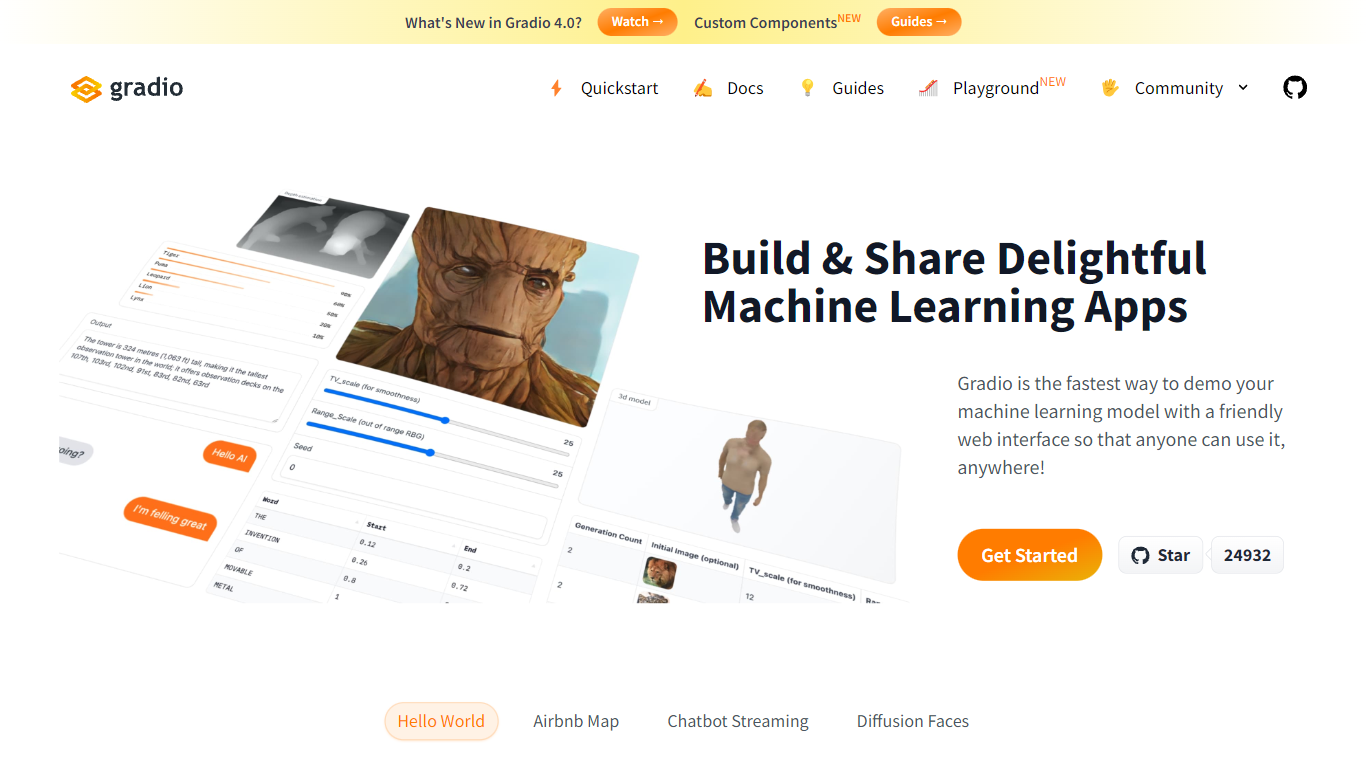

What is Gradio?
Gradio lets you wrap any Python function or ML model in a web demo with a few lines of code. This open-source Python library ships 40-plus UI components for images, audio, video, chat, dataframes, and JSON, then serves the interface locally or deploys it permanently to Hugging Face Spaces. Run pip install gradio, define your function, and call demo.launch() to get a browser UI at localhost:7860.
Streamlit and Dash also build Python web apps, but Gradio is built specifically for model demos: gr.Interface wraps a single prediction function, gr.ChatInterface handles chatbots, and gr.Blocks supports multi-step layouts like the Automatic1111 Stable Diffusion UI. The share=True flag creates a temporary public URL in seconds, which is hard to replicate without setting up your own hosting.
ML engineers, researchers, and hobbyists use Gradio to prototype interfaces before production. It requires Python 3.10 or higher, needs no JavaScript or CSS knowledge, and is free and open source with optional free hosting on Hugging Face Spaces.
TimeComplexity.ai
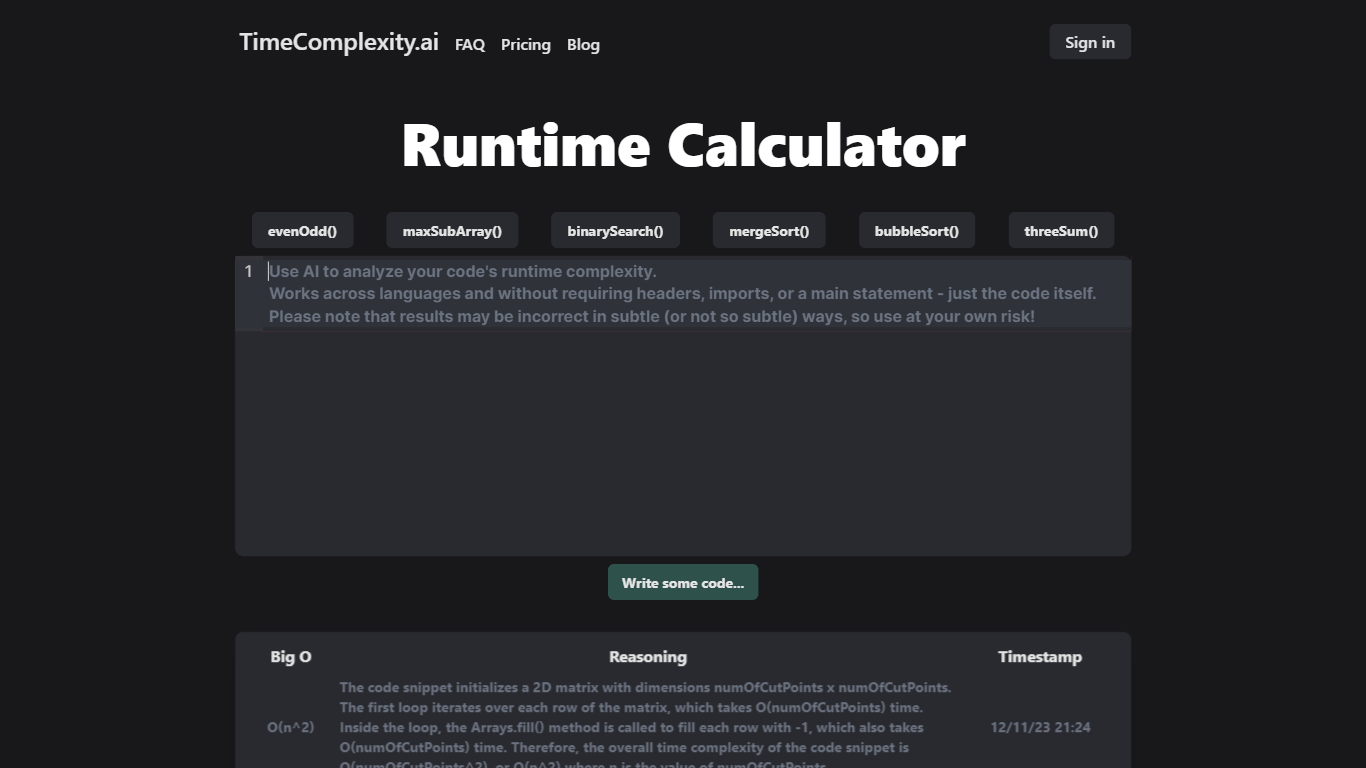
What is TimeComplexity.ai?
Paste a function into TimeComplexity.ai and it returns Big O runtime complexity with plain-language reasoning. You drop in an algorithm snippet, and the site responds with notation like O(n log n) plus an explanation of why that bound fits the loops and recursion it sees.
Static analyzers usually need a full file with imports and a main block. TimeComplexity.ai accepts partial snippets in Python, JavaScript, Java, C++, Go, and other languages without headers or setup code. That makes it useful for interview prep and quick checks on isolated functions pulled from a larger codebase.
Developers, CS students, and interview candidates use TimeComplexity.ai to sanity-check algorithm bounds before submitting homework or reviewing pull requests. Anonymous users get 20 queries per day, signed-in users get 50, and the $5 per month Pro plan removes the daily cap.
Gradio Upvotes
TimeComplexity.ai Upvotes
Gradio Top Features
Build a working demo with
gr.Interface(fn, inputs, outputs)in under 10 lines of Python40-plus built-in components for images, audio, video, 3D, chat, plots, and dataframes
Free permanent hosting on Hugging Face Spaces with auto-scaling and a shareable URL
demo.launch(share=True)creates a temporary public link like https://xxxxx.gradio.live in secondsGradio 6 adds MCP support, vibe mode for natural-language app editing, and hot reload via
gradio app.py43,000-plus GitHub stars with clients for querying any Gradio app from Python or JavaScript
TimeComplexity.ai Top Features
Returns Big O notation plus written reasoning for each pasted code snippet
Accepts partial code without headers, imports, or a main function across common languages
Uses GPT-3.5 Turbo with a formatted prompt, per the site FAQ
Anonymous users receive 20 queries per day; signed-in users receive 50 free queries daily
Pro plan at $5 per month unlocks unlimited queries with query history and deletion
Each analysis gets a shareable ID so you can link results with teammates
Gradio Category
- Developer
TimeComplexity.ai Category
- Developer
Gradio Pricing Type
- Free
TimeComplexity.ai Pricing Type
- Freemium