GuestLab vs Connected Papers
Compare GuestLab vs Connected Papers and see which AI Research tool is better when we compare features, reviews, pricing, alternatives, upvotes, etc.
Which one is better? GuestLab or Connected Papers?
When we compare GuestLab with Connected Papers, which are both AI-powered research tools, Neither tool takes the lead, as they both have the same upvote count. Since other aitools.fyi users could decide the winner, the ball is in your court now to cast your vote and help us determine the winner.
Disagree with the result? Upvote your favorite tool and help it win!
GuestLab
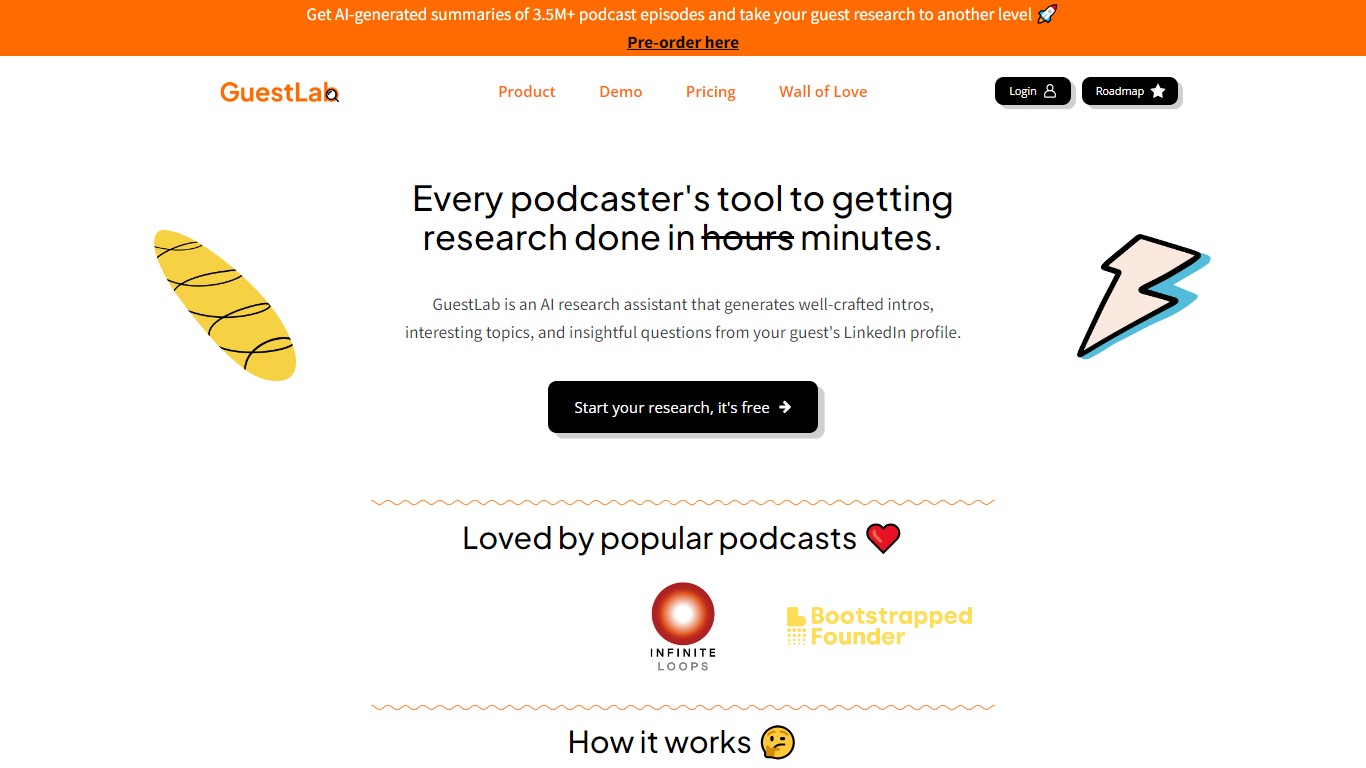

What is GuestLab?
GuestLab is a cutting-edge AI-driven research assistant designed to transform the way podcast hosts prepare for their episodes. It provides a seamless and efficient research experience, generating AI-crafted summaries from over 3.5 million podcast episodes. With GuestLab, podcast hosts can leverage AI to create engaging intros, uncover interesting topics, and formulate insightful questions based on a guest's LinkedIn profile.
Say goodbye to the lengthy research process, as GuestLab can significantly shorten the time spent on preparation, allowing hosts to focus on delivering compelling interviews.
The tool is a valuable asset for both novice and professional podcasters, offering tiered subscription plans suitable for individuals and agencies. Guests' online presence is transformed into valuable conversation starters, ensuring every episode is enriched with deep and thought-provoking content.
Connected Papers

What is Connected Papers?
Connected Papers helps researchers explore academic literature through visual similarity graphs instead of citation trees. Enter a paper DOI, arXiv link, PubMed URL, or title and the site builds a force-directed map of closely related work. Each graph analyzes about 50,000 papers and surfaces the few dozen with the strongest bibliographic connections to your origin paper.
Unlike citation indexes that only link direct references, Connected Papers clusters papers by co-citation and bibliographic coupling, so related studies can sit side by side even when they never cite each other. The layout pushes dissimilar work away and highlights the shortest similarity path back to your seed paper. That visual approach makes it easier to spot seminal papers and emerging trends than scrolling flat result lists.
Grad students, thesis writers, and applied scientists use it to skim new fields, catch papers they missed, and build bibliographies from a shortlist of must-include references. The free tier covers casual exploration, while premium plans remove the monthly graph cap for heavy literature reviews.
GuestLab Upvotes
Connected Papers Upvotes
GuestLab Top Features
AI-Driven Research: Quickly generates intros, topics, and questions using guest's LinkedIn profiles.
Time-Saving: Accelerates guest research, allowing hosts to focus more on interviewing.
Deep Insights: Uncovers hidden topics and angles about the guest for a richer interview.
Thought-Provoking Questions: Transforms insights into engaging questions for lively podcast episodes.
Flexible Subscription Plans: Offers different levels of service to fit the needs of both new and professional podcasters.
Connected Papers Top Features
Each graph analyzes about 50,000 papers and selects the strongest matches to your origin paper
Build graphs from a DOI, arXiv URL, PubMed link, or paper title search
Similarity ranking uses co-citation and bibliographic coupling, not just direct citations
Free plan includes 5 graphs per month with multi-origin graphs, saved papers, and graph history
Premium Academic plan is $6 per month billed at $72 annually for unlimited graphs
Paper data comes from the Semantic Scholar corpus covering hundreds of millions of publications
GuestLab Category
- Research
Connected Papers Category
- Research
GuestLab Pricing Type
- Freemium
Connected Papers Pricing Type
- Freemium