HuggingChat vs Warp.dev
In the contest of HuggingChat vs Warp.dev, which AI Code Assistant tool is the champion? We evaluate pricing, alternatives, upvotes, features, reviews, and more.
If you had to choose between HuggingChat and Warp.dev, which one would you go for?
When we examine HuggingChat and Warp.dev, both of which are AI-enabled code assistant tools, what unique characteristics do we discover? The community has spoken, Warp.dev leads with more upvotes. Warp.dev has 7 upvotes, and HuggingChat has 6 upvotes.
Disagree with the result? Upvote your favorite tool and help it win!
HuggingChat
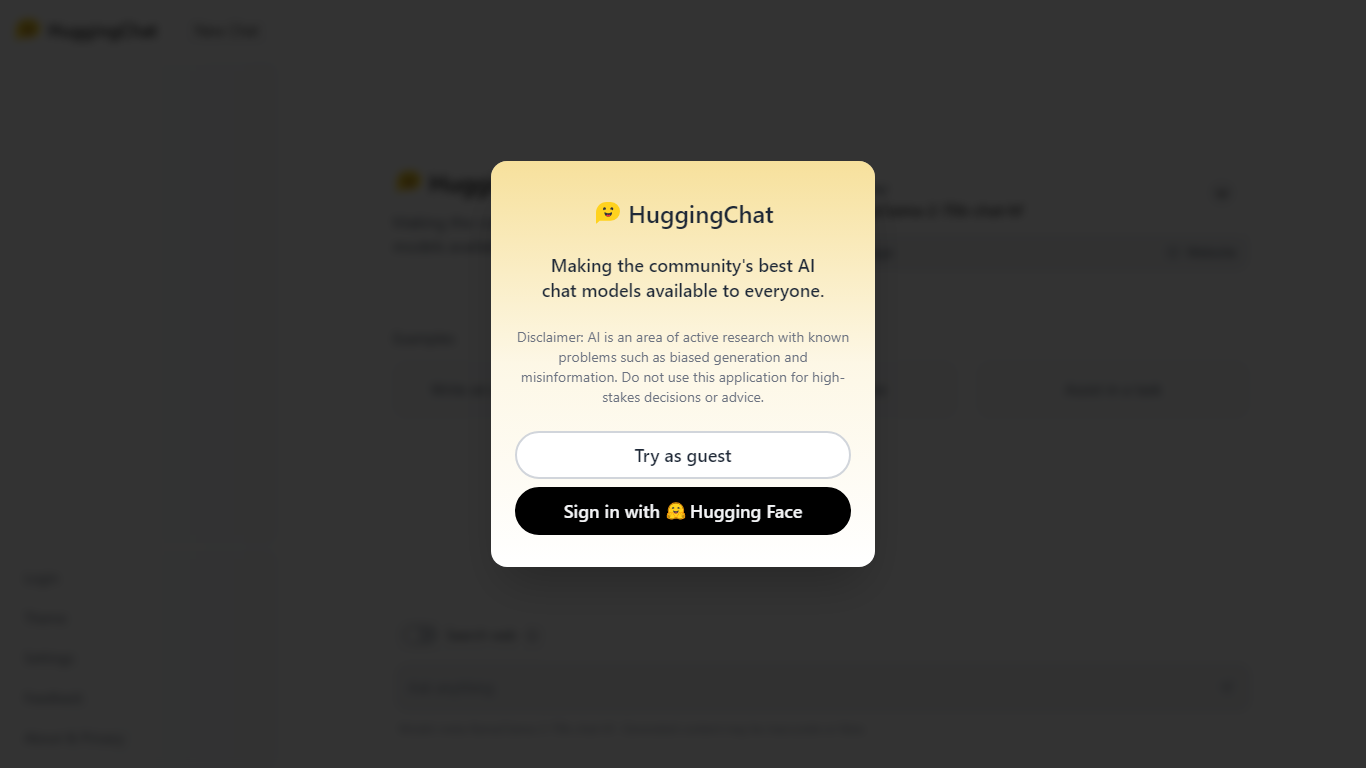

What is HuggingChat?
HuggingChat is a free chat assistant that runs open source AI models from the Hugging Face community. Pick a model directly or let Omni route your prompt to the best available option. The interface supports image generation, web tasks, dataset search, and MCP tool connections alongside standard text chat.
Closed chatbots lock you into one vendor model. HuggingChat exposes 137 open source models you can switch between mid-conversation, including newcomers like DeepSeek V4 Flash with a 1M-token context window. The trade-off is variable quality across models and a Hugging Face account requirement to save chats.
Developers, researchers, and curious users reach for it to test Llama, DeepSeek, and other community models without API keys or local GPU setup. Hugging Face positions it as making the community's best chat models available to everyone.
Warp.dev
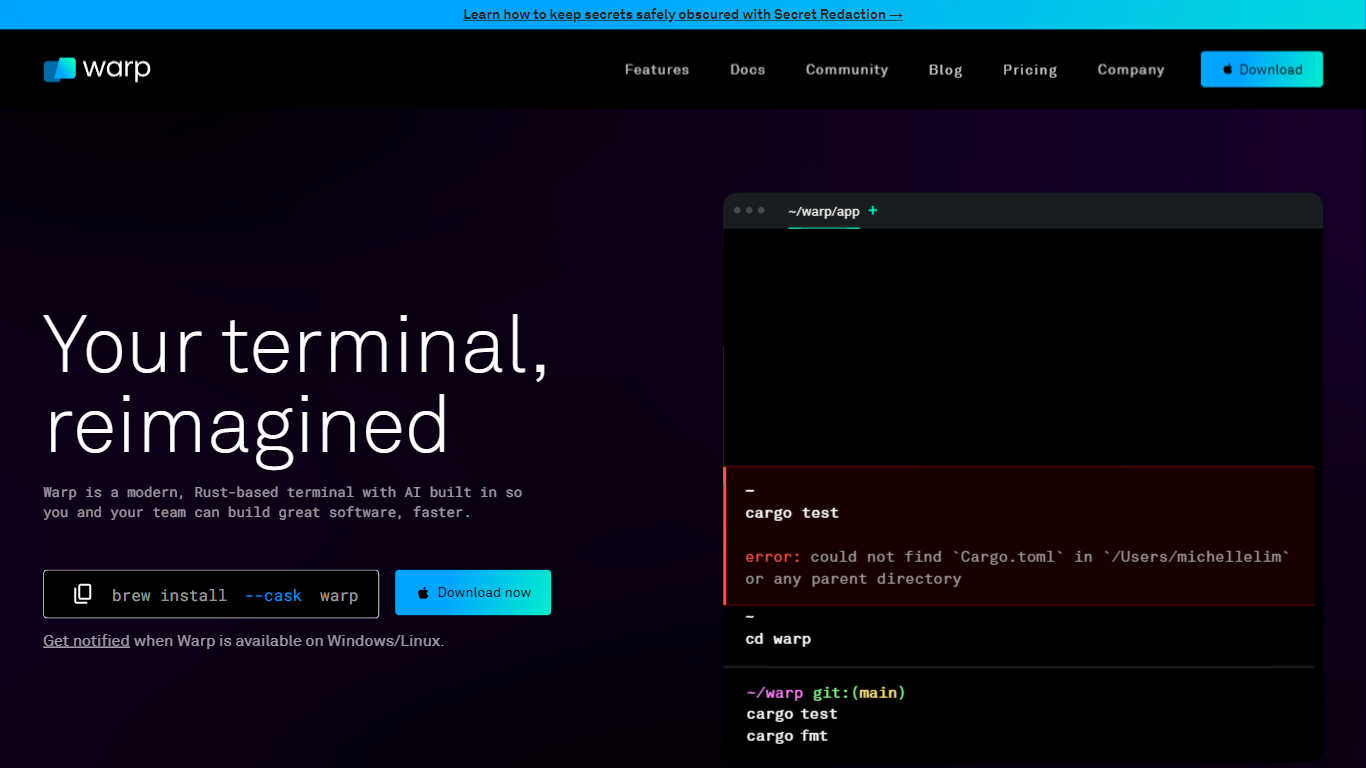
What is Warp.dev?
Warp.dev is a modern terminal and agent platform for developers who want to run coding agents from a single interface on Mac, Linux, and Windows. The Warp Terminal wraps shells with blocks, autocomplete, and agent harnesses for Warp Agent, Claude Code, Codex, OpenCode, and Gemini. Oz, its cloud orchestration layer, launches agents into the cloud from the terminal, SDK, or CLI.
Unlike a plain shell or a single-model chat sidebar, Warp combines a Rust-based terminal with multi-agent orchestration, model routing across OpenAI, Anthropic, z.ai, and open models, and optional bring-your-own inference. Teams get Warp Drive collaboration, codebase indexing, and credit-based agent usage with spend caps rather than a fixed per-seat AI license.
Backend engineers, platform teams, and security-conscious orgs use Warp for local agent coding, cloud bug investigation, and Slack or GitHub integrations where @Warp can open PRs without leaving chat. It fits teams that want terminal-native agent workflows with SOC 2 compliance and zero data retention on contracted LLM providers.
HuggingChat Upvotes
Warp.dev Upvotes
HuggingChat Top Features
Choose from 137 open source chat models or let Omni auto-select the best fit
DeepSeek V4 Flash offers a 1M-token context window and adjustable thinking modes
MCP (Model Context Protocol) connections extend chat with external tools
Built-in prompts cover image generation, website building, and dataset search
Free to use with a Hugging Face account for chat history and settings
New Chat shortcut and per-model settings pages for application and Omni routing
Powered by Hugging Face with DR 91 on the parent domain
Warp.dev Top Features
Warp Terminal is open source and runs on Mac, Linux, and Windows with brew, winget, and package installs
Build plan includes 1,500 credits ($20 of agent usage) and full Warp Agent access to frontier models
Supports Warp Agent, Claude Code, Codex, OpenCode, and Gemini harnesses in one terminal
Business plan starts at $50 per user per month for up to 25 seats with SAML SSO and team metrics
Integrates with Slack, Linear, and GitHub so @Warp can investigate bugs and open PRs in chat
SOC 2 compliant with zero data retention policies on contracted LLM providers
HuggingChat Category
- Code Assistant
Warp.dev Category
- Code Assistant
HuggingChat Pricing Type
- Free
Warp.dev Pricing Type
- Freemium