InstaGraph vs Atmo AI
In the face-off between InstaGraph vs Atmo AI, which AI Data Science tool takes the crown? We scrutinize features, alternatives, upvotes, reviews, pricing, and more.
In a face-off between InstaGraph and Atmo AI, which one takes the crown?
If we were to analyze InstaGraph and Atmo AI, both of which are AI-powered data science tools, what would we find? Both tools have received the same number of upvotes from aitools.fyi users. Join the aitools.fyi users in deciding the winner by casting your vote.
You don't agree with the result? Cast your vote to help us decide!
InstaGraph

What is InstaGraph?
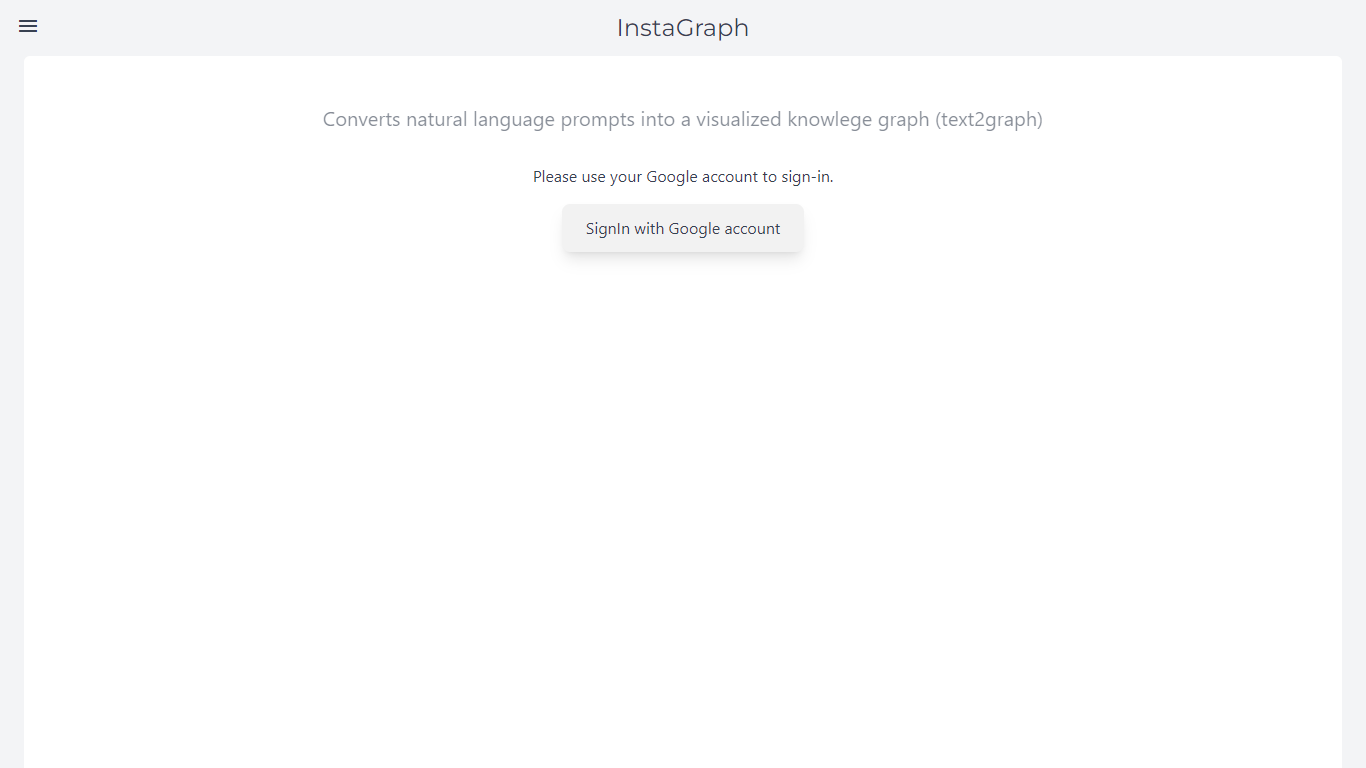
InstaGraph turns text prompts or URLs into interactive knowledge graphs. Type a topic like "Solar System" or paste a link, and the service maps entities and how they connect in a visual graph you can browse and share.
The hosted web app grew out of Yohei Nakajima's open source InstaGraph project, from the same creator behind BabyAGI. GPT generates the nodes and relationships from your input, and finished graphs can appear in a public gallery for others to explore.
Students, researchers, and analysts use it when they want to see how concepts link together instead of reading a wall of text. Google sign-in is required to create graphs.
Atmo AI
What is Atmo AI?
Atmo AI builds deep learning weather forecasting systems for governments, militaries, and large enterprises that need sharper predictions than legacy numerical models deliver. The company ingests real-time data from satellites, ground stations, radars, and ocean buoys, then runs neural network models that cover nowcasts out to 14-day medium-range outlooks. It sits in the data science stack for organizations where a missed storm or wind shift has operational consequences, not just a ruined picnic.
Where traditional numerical weather prediction leans on supercomputers and fixed grid resolutions, Atmo claims forecasts up to 40,000 times faster and up to 50% more accurate on major variables, with grids as fine as 1 km by 1 km for microclimate detail. That resolution gap matters for launch sites, island nations, and defense bases where a county-level forecast hides the local wind shear. The trade-off is access: Atmo sells custom deployments, not a consumer app you open for tomorrow's rain.
National weather agencies, defense commands, and enterprise risk teams use Atmo when they need site-specific forecasts backed by live production contracts. Deployments cited on Atmo's site include the U.S. Air Force, U.S. Navy, the Philippines national government, Cape Canaveral launch operations, and Tuvalu's national forecasting rollout.
InstaGraph Upvotes
Atmo AI Upvotes
InstaGraph Top Features
Type a natural language prompt and get a full knowledge graph back
Paste a URL and InstaGraph pulls entities into a visual map
Browse community graphs on the public gallery before you sign in
Explore nodes and edges instead of scrolling dense paragraphs
Report bugs or request features through the GitHub support repo
Atmo AI Top Features
Pulls real-time weather data from satellites, ground stations, radars, and ocean buoys worldwide
Delivers forecasts up to 40,000 times faster than traditional numerical weather models
Reports up to 50% higher accuracy on major variables from 24-hour nowcasts to 14-day outlooks
Resolves microclimates with grid detail down to 1 km by 1 km
Runs live production deployments for the U.S. Air Force, Navy, and Philippines national government
InstaGraph Category
- Data Science
Atmo AI Category
- Data Science
InstaGraph Pricing Type
- Free
Atmo AI Pricing Type
- Paid