Legasite vs Coderbuds
In the contest of Legasite vs Coderbuds, which AI Developer tool is the champion? We evaluate pricing, alternatives, upvotes, features, reviews, and more.
If you had to choose between Legasite and Coderbuds, which one would you go for?
When we examine Legasite and Coderbuds, both of which are AI-enabled developer tools, what unique characteristics do we discover? Both tools have received the same number of upvotes from aitools.fyi users. Your vote matters! Help us decide the winner among aitools.fyi users by casting your vote.
Does the result make you go "hmm"? Cast your vote and turn that frown upside down!
Legasite

What is Legasite?
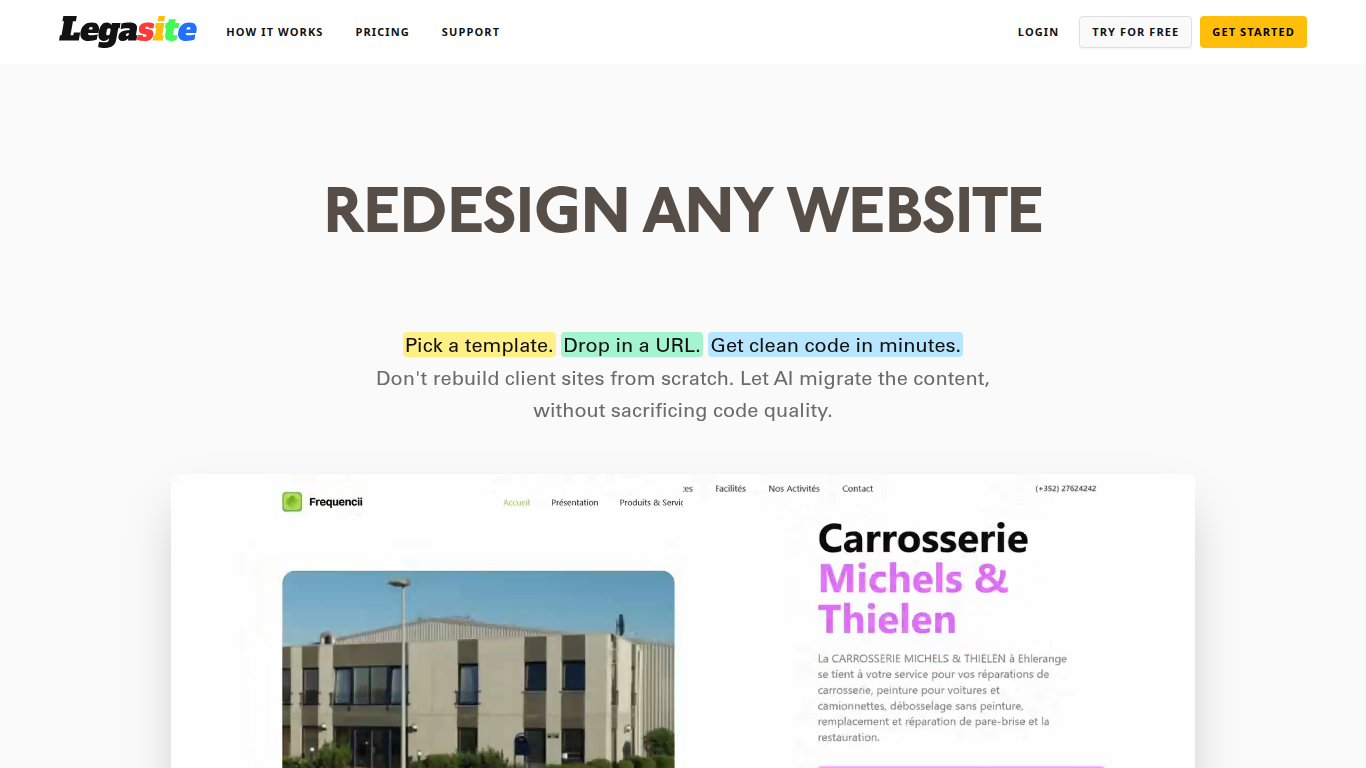
Legasite moves legacy websites into modern React and Next.js templates without rebuilding from scratch. You pick a template, drop in an existing site URL, and the platform extracts content, maps it to the layout, and generates downloadable source code in about 10 to 20 minutes.
The workflow centers on automated content extraction rather than manual copy-paste. Legasite pulls text, structure, and images from the source site, then populates a human-written template so the output follows component-based patterns with Tailwind CSS styling. You get a ZIP of real code you can deploy to Vercel, Netlify, or your own server.
It targets web agencies, freelance developers, and in-house dev teams handling client redesigns or internal UI modernization. The pitch is cutting migration grunt work so you spend time on customization and features instead of transferring content page by page.
Coderbuds
What is Coderbuds?
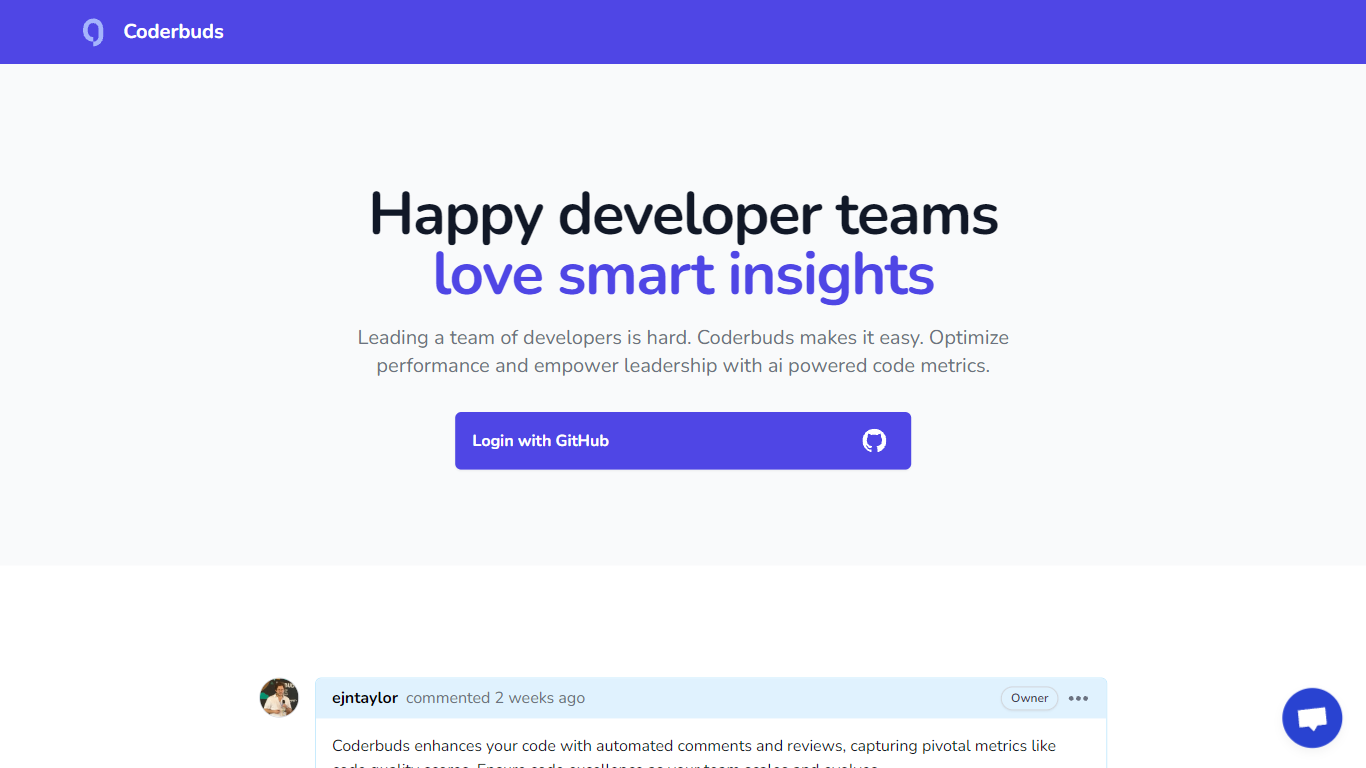
Coderbuds reads pull requests, reviews, and deployments from GitHub or Bitbucket, then surfaces delivery, collaboration, and team-health metrics for engineering leaders. It connects Jira, Linear, Slack, and Microsoft Teams so managers can see lead time, review delays, and DORA-style performance without building a data warehouse. Engineers get the same insights pushed into coding agents through MCP.
Most DORA dashboards stop at reporting what already happened. Coderbuds also feeds team conventions, org maps, and playbooks into Claude Code, Cursor, Codex, and Copilot before code reaches review, so standards show up in the prompt instead of a comment thread two days later. The Patchstack case study on the site cites lead time dropping from about four days to one day over six months.
Engineering managers use it to spot bottlenecks and walk into leadership meetings with numbers. Individual engineers see coaching on their own PR patterns first, and satisfaction surveys stay anonymous at the team level. Source code never leaves your repository; Coderbuds stores only PR metadata like titles, timestamps, and line counts.
Legasite Upvotes
Coderbuds Upvotes
Legasite Top Features
Drop in a URL and get React or Next.js code in 10 to 20 minutes
Content, structure, and images pulled automatically from the old site
Download a full ZIP you can deploy anywhere with no platform lock-in
Free plan includes 3 demo credits for single-page previews on signup
Basic plan at $20 per month supports about 20 pages with downloadable code
Agency plan at $100 per month supports about 200 pages per month
Tokens reset monthly with roughly 500K tokens consumed per generated page
Coderbuds Top Features
DORA and SPACE dashboards with six months of history included
$12 per active developer per month on annual billing, with a free start and no credit card
Connects GitHub, Bitbucket, Jira, Linear, Slack, and Microsoft Teams
MCP server pushes team conventions into Cursor, Claude Code, Codex, and Copilot
Pre-flight checks flag PR size and convention fit before review starts
10,000+ pull requests analyzed across customer workspaces
Legasite Category
- Developer
Coderbuds Category
- Developer
Legasite Pricing Type
- Freemium
Coderbuds Pricing Type
- Freemium