LiteLLM vs Claude 3 \ Anthropic
In the battle of LiteLLM vs Claude 3 \ Anthropic, which AI Large Language Model (LLM) tool comes out on top? We compare reviews, pricing, alternatives, upvotes, features, and more.
Between LiteLLM and Claude 3 \ Anthropic, which one is superior?
Upon comparing LiteLLM with Claude 3 \ Anthropic, which are both AI-powered large language model (llm) tools, The upvote count shows a clear preference for Claude 3 \ Anthropic. Claude 3 \ Anthropic has received 8 upvotes from aitools.fyi users, while LiteLLM has received 6 upvotes.
Don't agree with the result? Cast your vote and be a part of the decision-making process!
LiteLLM
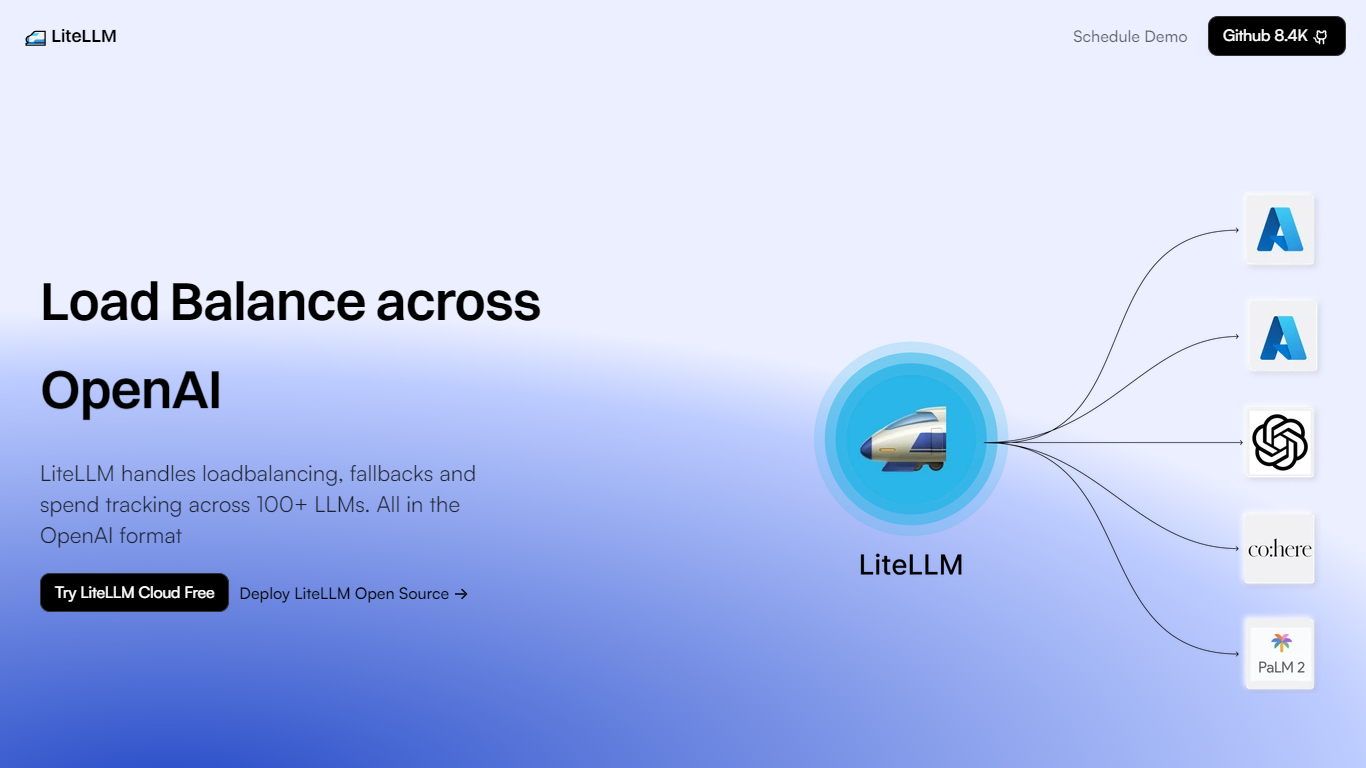

What is LiteLLM?
LiteLLM is a self-hosted AI gateway and LLM proxy that sits between your apps and model providers. You point clients at one OpenAI-compatible endpoint, and the gateway handles routing, logging, and spend controls across 140+ backends. Teams at Netflix, NVIDIA, and Okta use it to standardize model access without rebuilding every service when a provider changes.
Where hosted proxies bill per token and keep keys on their cloud, LiteLLM runs in your VPC or an air-gapped cluster under an MIT license. Budgets and RPM/TPM caps are hard stops, not alerts, so a leaked key or runaway job cannot keep spending after it hits the limit.
Platform and ML infrastructure teams reach for it when they need one front door for humans, agents, and batch jobs. The same gateway covers LLM calls, MCP servers, and agent workflows, with enterprise SSO, audit logs, and SLAs when rollout goes company-wide.
Claude 3 \ Anthropic
What is Claude 3 \ Anthropic?
Claude 3 is Anthropic's third-generation large language model family, released in March 2024. It includes three tiers: Haiku for speed and cost, Sonnet for balanced performance, and Opus for the highest reasoning depth. Each model targets a different tradeoff between intelligence, latency, and price.
The family handles text, code, analysis, and vision tasks. Claude 3 models process photos, charts, graphs, and technical diagrams. They support a 200K token context window at launch, with inputs exceeding 1 million tokens available to select customers. Opus and Sonnet launched on claude.ai and the Claude API in 159 countries, with Haiku following shortly after.
Anthropic built Claude 3 with Constitutional AI safety methods and Responsible Scaling Policy guardrails. The models are available through the Claude API, Amazon Bedrock, and Google Cloud Vertex AI. Sonnet powers the free tier on claude.ai, while Opus is available to Claude Pro subscribers.
LiteLLM Upvotes
Claude 3 \ Anthropic Upvotes
LiteLLM Top Features
One OpenAI-compatible API routes requests to 140+ providers and 1,892 models
Hard budgets plus RPM and TPM limits per key, team, and org stop traffic at the cap
MIT-licensed self-hosted gateway with 240M+ Docker pulls and air-gapped deployment support
Rust AI Gateway adds 0.66 ms p99 latency at 2,800+ requests per second in published benchmarks
Built-in guardrails cover PII masking and prompt-injection checks via Presidio and Lakera
Virtual keys, spend tracking, and Prometheus metrics ship in the free open-source tier
Claude 3 \ Anthropic Top Features
Three model tiers (Haiku, Sonnet, Opus) let you pick the right balance of speed, cost, and reasoning depth
200K token context window at launch, with 1M+ token inputs available to select enterprise customers
Vision support for photos, charts, graphs, PDFs, and technical diagrams
Haiku reads a ~10k token research paper with charts in under three seconds for live chat workloads
Available on claude.ai, the Claude API, Amazon Bedrock, and Google Cloud Vertex AI
LiteLLM Category
- Large Language Model (LLM)
Claude 3 \ Anthropic Category
- Large Language Model (LLM)
LiteLLM Pricing Type
- Freemium
Claude 3 \ Anthropic Pricing Type
- Freemium