LiteLLM vs Stellaris AI
Explore the showdown between LiteLLM vs Stellaris AI and find out which AI Large Language Model (LLM) tool wins. We analyze upvotes, features, reviews, pricing, alternatives, and more.
When comparing LiteLLM and Stellaris AI, which one rises above the other?
When we contrast LiteLLM with Stellaris AI, both of which are exceptional AI-operated large language model (llm) tools, and place them side by side, we can spot several crucial similarities and divergences. Interestingly, both tools have managed to secure the same number of upvotes. You can help us determine the winner by casting your vote and tipping the scales in favor of one of the tools.
Disagree with the result? Upvote your favorite tool and help it win!
LiteLLM
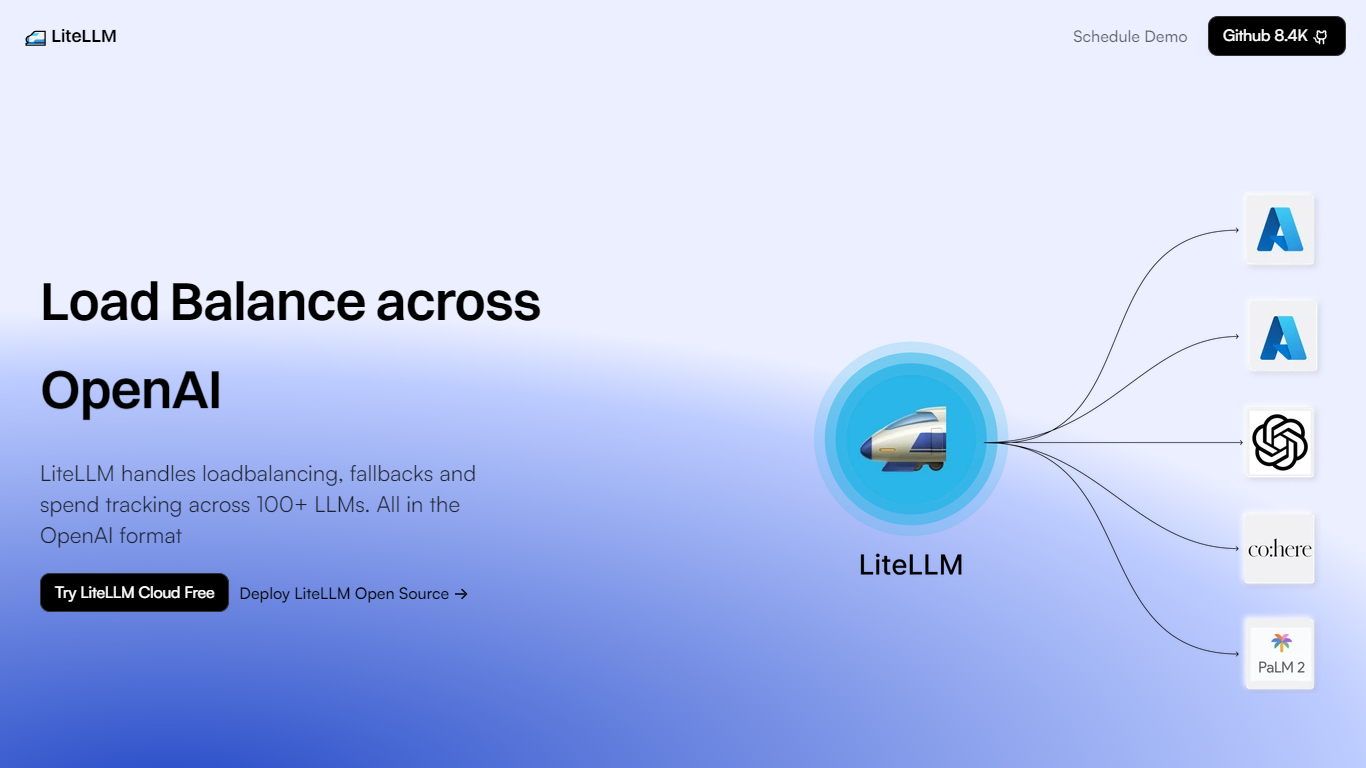

What is LiteLLM?
LiteLLM is a self-hosted AI gateway and LLM proxy that sits between your apps and model providers. You point clients at one OpenAI-compatible endpoint, and the gateway handles routing, logging, and spend controls across 140+ backends. Teams at Netflix, NVIDIA, and Okta use it to standardize model access without rebuilding every service when a provider changes.
Where hosted proxies bill per token and keep keys on their cloud, LiteLLM runs in your VPC or an air-gapped cluster under an MIT license. Budgets and RPM/TPM caps are hard stops, not alerts, so a leaked key or runaway job cannot keep spending after it hits the limit.
Platform and ML infrastructure teams reach for it when they need one front door for humans, agents, and batch jobs. The same gateway covers LLM calls, MCP servers, and agent workflows, with enterprise SSO, audit logs, and SLAs when rollout goes company-wide.
Stellaris AI
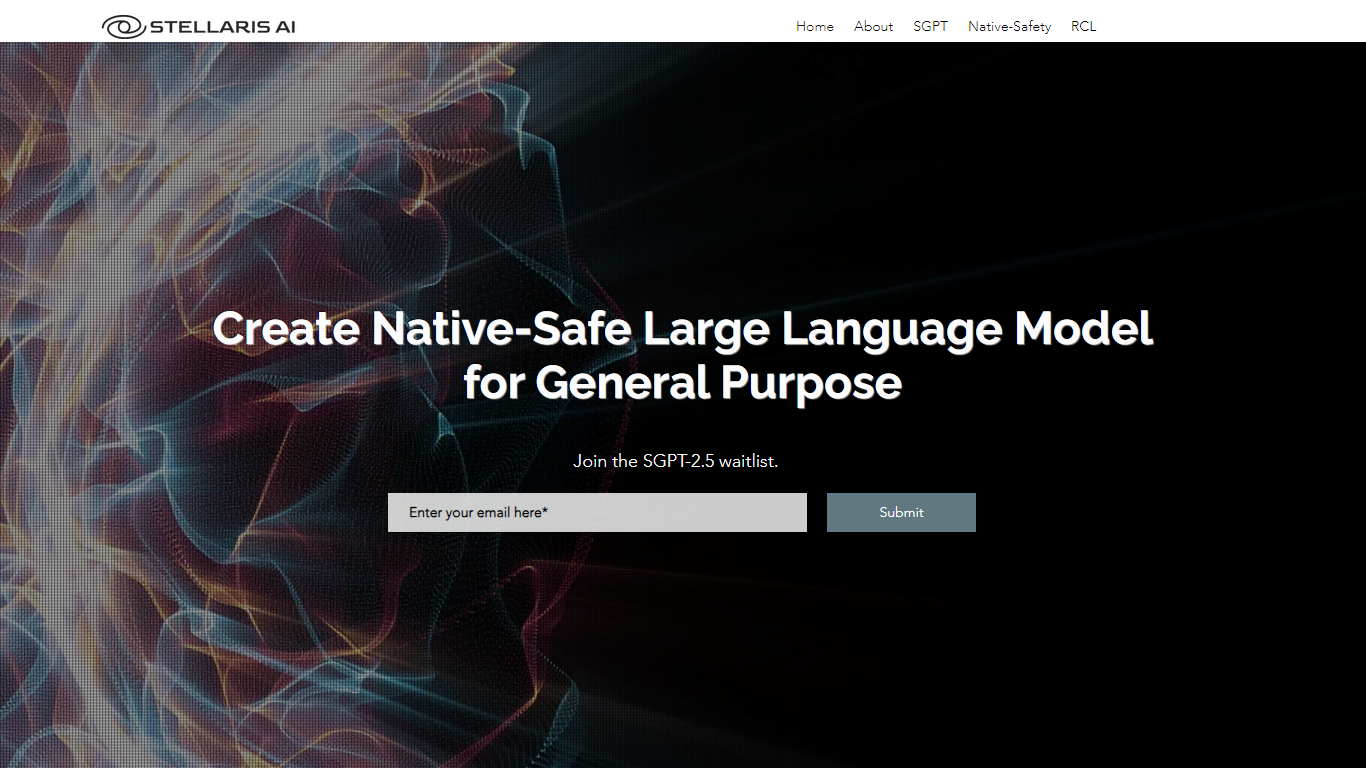
What is Stellaris AI?
Stellaris AI builds large language models marketed around native safety and human-like reasoning for real-world tasks. Its flagship SGPT line targets text and code generation, knowledge Q&A, logical reasoning, and analytics at a scale the company describes as hundreds of billions of parameters. The public site centers on a waitlist for SGPT-4.5 rather than a self-serve chat product you can open today.
Where many LLM labs bolt safety filters on after training, Stellaris AI frames safety as part of the model stack through strict source referencing and harm minimization in the architecture. It also highlights Real-time Context Learning (RCL) for adapting answers with live knowledge, a combination aimed at teams that want cited outputs instead of unchecked generation.
Researchers, enterprise AI teams, and early adopters join the SGPT-4.5 waitlist for first access. The company cites 10+ years of research and three core product pillars: Stellaris GPT, Native Safety, and RCL.
LiteLLM Upvotes
Stellaris AI Upvotes
LiteLLM Top Features
One OpenAI-compatible API routes requests to 140+ providers and 1,892 models
Hard budgets plus RPM and TPM limits per key, team, and org stop traffic at the cap
MIT-licensed self-hosted gateway with 240M+ Docker pulls and air-gapped deployment support
Rust AI Gateway adds 0.66 ms p99 latency at 2,800+ requests per second in published benchmarks
Built-in guardrails cover PII masking and prompt-injection checks via Presidio and Lakera
Virtual keys, spend tracking, and Prometheus metrics ship in the free open-source tier
Stellaris AI Top Features
SGPT models described at 100B+ parameters for text, code, and reasoning tasks
Native Safety framework with strict source referencing and harm minimization
Real-time Context Learning (RCL) for live knowledge integration
Three product pillars: Stellaris GPT, Native Safety, and RCL
SGPT-4.5 waitlist open for early access signups on the homepage
LiteLLM Category
- Large Language Model (LLM)
Stellaris AI Category
- Large Language Model (LLM)
LiteLLM Pricing Type
- Freemium
Stellaris AI Pricing Type
- Freemium