Lyzr vs Stellaris AI
Explore the showdown between Lyzr vs Stellaris AI and find out which AI Large Language Model (LLM) tool wins. We analyze upvotes, features, reviews, pricing, alternatives, and more.
When comparing Lyzr and Stellaris AI, which one rises above the other?
When we contrast Lyzr with Stellaris AI, both of which are exceptional AI-operated large language model (llm) tools, and place them side by side, we can spot several crucial similarities and divergences. Both tools are equally favored, as indicated by the identical upvote count. The power is in your hands! Cast your vote and have a say in deciding the winner.
Don't agree with the result? Cast your vote and be a part of the decision-making process!
Lyzr
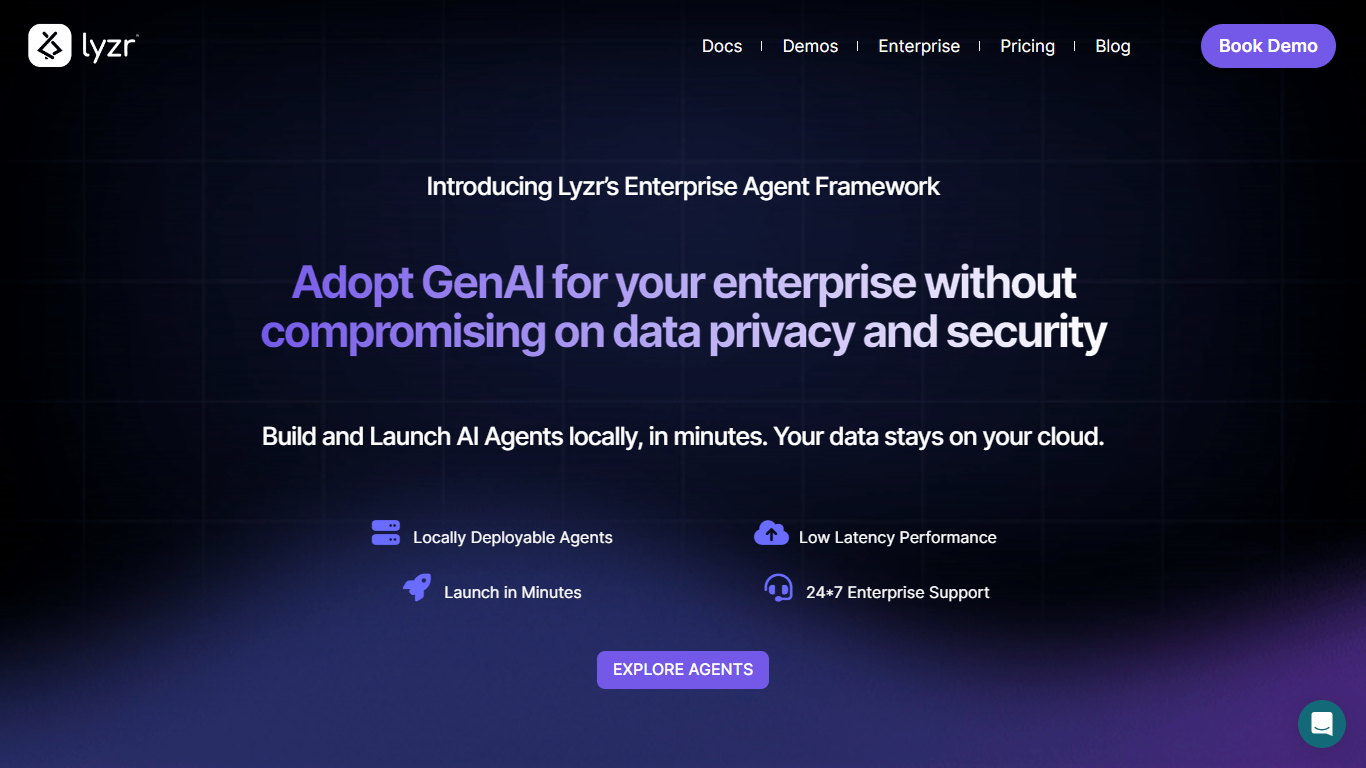

What is Lyzr ?
Lyzr takes AI agents from prototype to governed production on top of large language models. Agent Studio gives teams a visual workspace to design and deploy agents, while the Control Plane connects agents built on LangChain, Agentforce, AWS Bedrock, or custom stacks without forcing a migration. The stack covers design, build, simulation, deployment, observability, and compliance in one place.
Where most LLM agent builders stop at the prototype, Lyzr focuses on the production gap. Its Control Plane sits above whatever framework you already run, adding simulation, hallucination guards, PII masking, RBAC, and immutable audit logs in one layer. Lyzr claims 85% of agent projects reach production, versus an industry average it cites as under 30%, because simulation and governance are built in rather than bolted on later.
Enterprise teams in banking, insurance, healthcare, and HR use Lyzr to move agents from demo to governed production in weeks. Forward-deployed engineers can co-build the first agents, and 200+ pre-built agents across BFSI, sales, and operations give regulated teams a faster starting point. Customers include Accenture, Willis Towers Watson, Hitachi, and AirAsia Move.
Stellaris AI
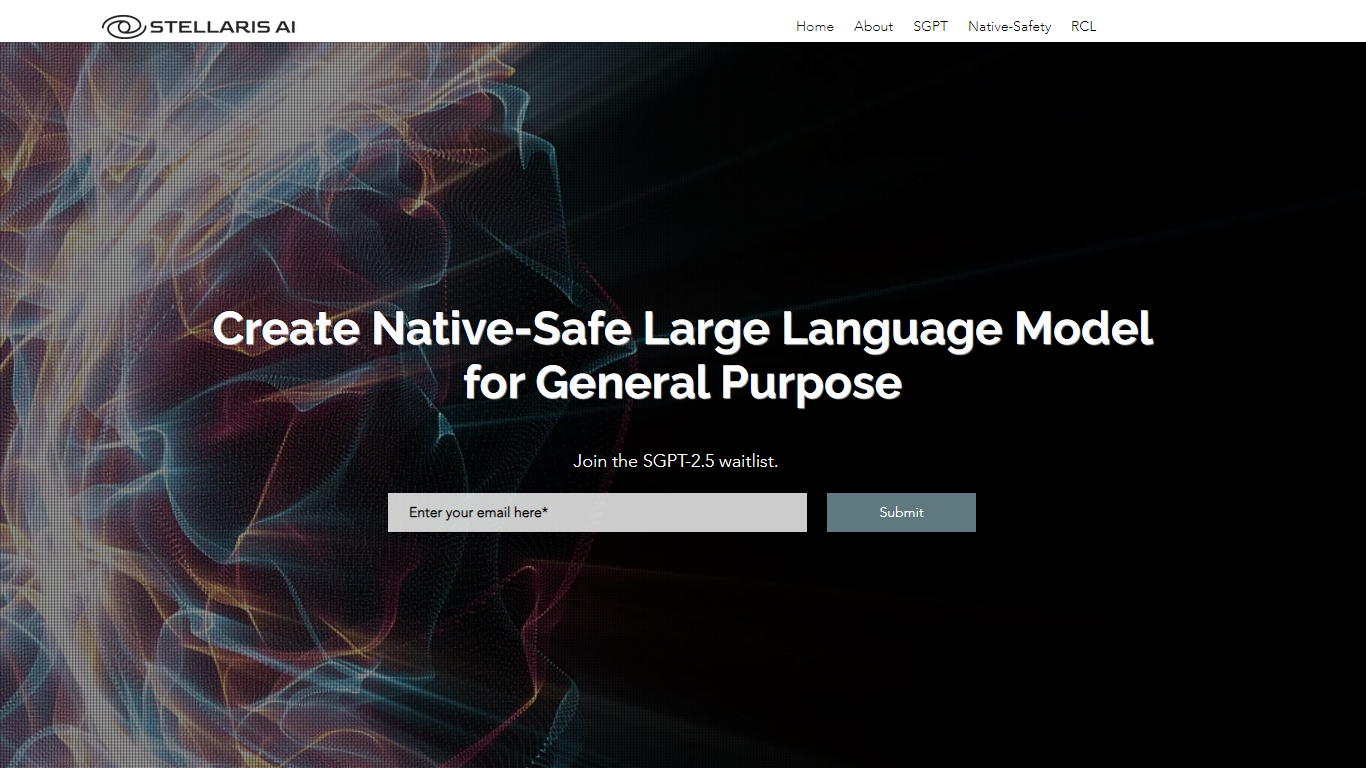
What is Stellaris AI?
Stellaris AI builds large language models marketed around native safety and human-like reasoning for real-world tasks. Its flagship SGPT line targets text and code generation, knowledge Q&A, logical reasoning, and analytics at a scale the company describes as hundreds of billions of parameters. The public site centers on a waitlist for SGPT-4.5 rather than a self-serve chat product you can open today.
Where many LLM labs bolt safety filters on after training, Stellaris AI frames safety as part of the model stack through strict source referencing and harm minimization in the architecture. It also highlights Real-time Context Learning (RCL) for adapting answers with live knowledge, a combination aimed at teams that want cited outputs instead of unchecked generation.
Researchers, enterprise AI teams, and early adopters join the SGPT-4.5 waitlist for first access. The company cites 10+ years of research and three core product pillars: Stellaris GPT, Native Safety, and RCL.
Lyzr Upvotes
Stellaris AI Upvotes
Lyzr Top Features
Control Plane governs agents from LangChain, Agentforce, Bedrock, and custom stacks without migration
Usage pricing at $0.08 per agent run on Lyzr Cloud or $0.03 per run in your own VPC
Simulation Engine runs thousands of adversarial and domain-specific scenarios before deployment
Supports GPT-4o, Claude, Gemini, Llama, and Mistral with single-config model swaps
SOC 2 Type II, GDPR, HIPAA, and ISO 27001 compliance with SSO, RBAC, and immutable audit logs
200+ pre-built enterprise agents across banking, HR, sales, and customer support
Stellaris AI Top Features
SGPT models described at 100B+ parameters for text, code, and reasoning tasks
Native Safety framework with strict source referencing and harm minimization
Real-time Context Learning (RCL) for live knowledge integration
Three product pillars: Stellaris GPT, Native Safety, and RCL
SGPT-4.5 waitlist open for early access signups on the homepage
Lyzr Category
- Large Language Model (LLM)
Stellaris AI Category
- Large Language Model (LLM)
Lyzr Pricing Type
- Paid
Stellaris AI Pricing Type
- Freemium