MakePose vs DreamFusion
Dive into the comparison of MakePose vs DreamFusion and discover which AI 3D Generation tool stands out. We examine alternatives, upvotes, features, reviews, pricing, and beyond.
In a comparison between MakePose and DreamFusion, which one comes out on top?
When we compare MakePose and DreamFusion, two exceptional 3d generation tools powered by artificial intelligence, and place them side by side, several key similarities and differences come to light. Both tools have received the same number of upvotes from aitools.fyi users. Be a part of the decision-making process. Your vote could determine the winner.
Don't agree with the result? Cast your vote and be a part of the decision-making process!
MakePose

What is MakePose?
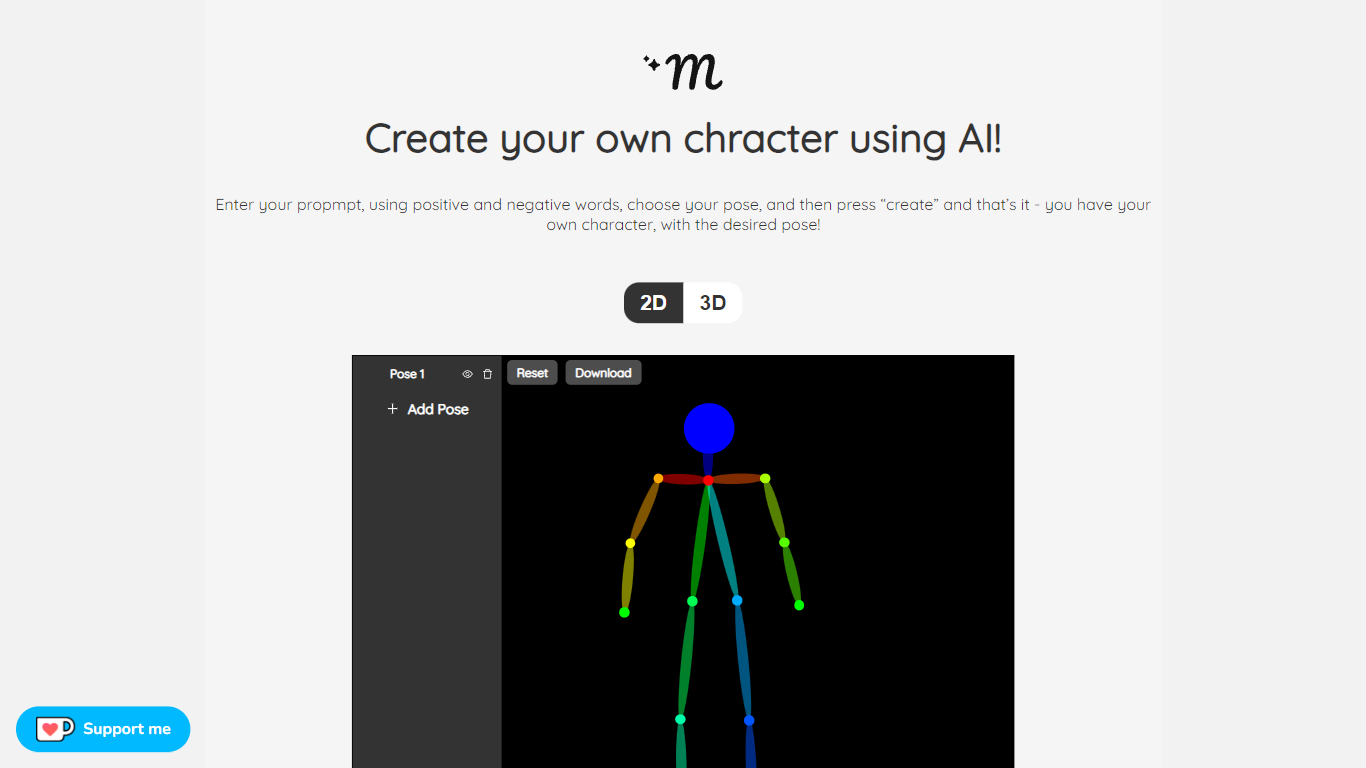
MakePose is an innovative online platform that enables users to create unique characters using advanced AI technology. With the simple click of a button, you can generate a personalized character by entering specific attributes through positive and negative prompts. You have the versatility to choose between 2D and 3D representations, add custom poses, and layer various elements to craft the perfect avatar. Once you are satisfied with your creation, MakePose allows you to easily download your character. Whether for gaming, storytelling, or digital art, MakePose offers a user-friendly interface that caters to both beginners and professionals. The service is always evolving, and user feedback is highly welcomed to enhance the experience further.
DreamFusion
What is DreamFusion?
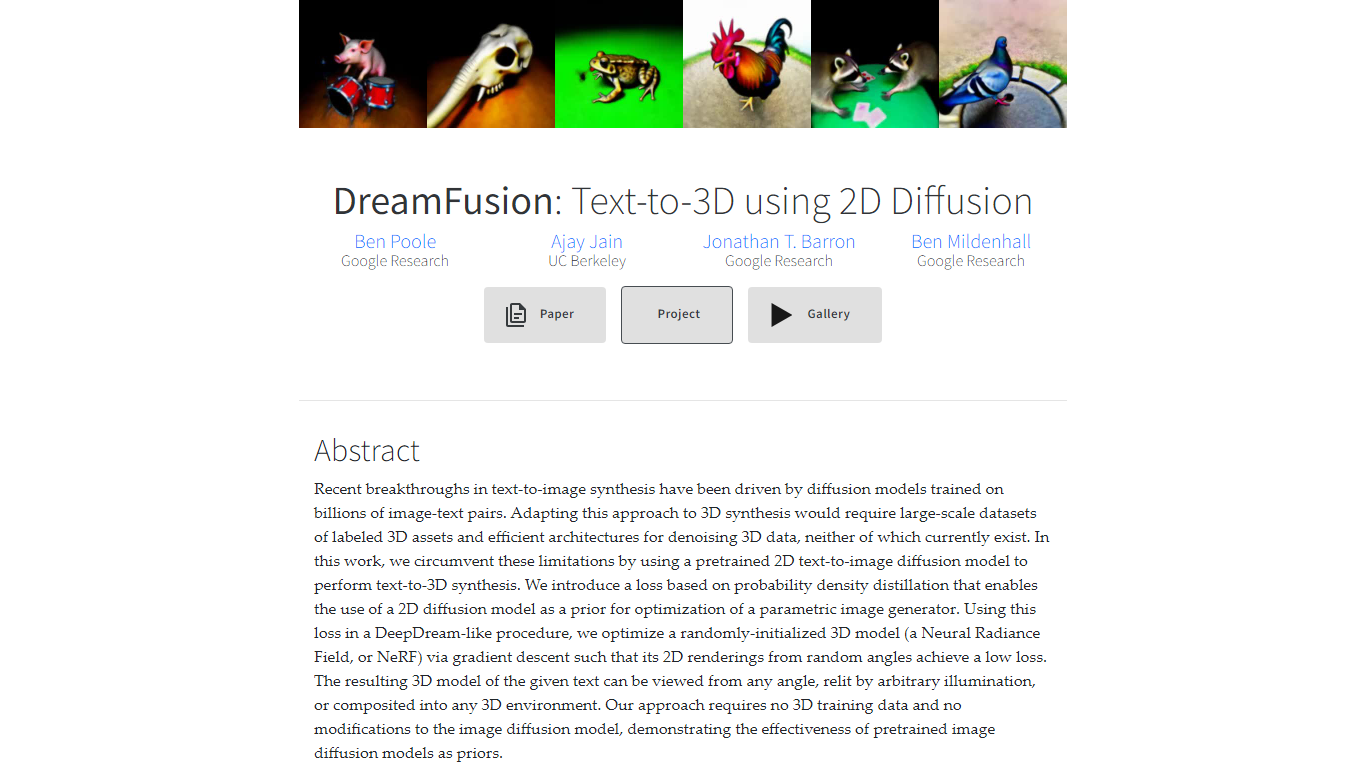
DreamFusion generates 3D objects from text captions using a pretrained 2D text-to-image diffusion model instead of 3D training data. It optimizes a Neural Radiance Field (NeRF) so random-angle 2D renderings match what Imagen expects from your prompt. The result is a relightable 3D asset you can view from any angle, export as a mesh, or place in a scene.
Unlike pipelines that need large labeled 3D datasets, DreamFusion uses Score Distillation Sampling to turn a 2D diffusion prior into a 3D optimizer. That sidesteps the missing infrastructure for 3D denoising at scale. SDS alone gives reasonable appearance; DreamFusion adds regularizers for cleaner normals, depth, and surface geometry under Lambertian shading.
Researchers, 3D artists exploring generative workflows, and ML engineers studying text-to-3D use DreamFusion as the reference implementation from Google Research and UC Berkeley. The project page hosts a searchable gallery of hundreds of generated assets and cites the 2022 arXiv paper.
MakePose Upvotes
DreamFusion Upvotes
MakePose Top Features
Custom Character Generation: Utilize AI to create distinctive characters based on input prompts.
Positive and Negative Prompt System: Fine-tune your character's attributes with positive and negative keywords.
2D and 3D Options: Choose between two-dimensional or three-dimensional character representations.
Pose Customization: Adjust and add custom poses to bring your character to life.
Downloadable Creations: Conveniently download your AI-generated character for various uses.
DreamFusion Top Features
Generates relightable 3D NeRF models from text captions via Imagen
Score Distillation Sampling optimizes 3D scenes without 3D training data
Exports trained NeRFs to meshes with the marching cubes algorithm
Supports arbitrary viewing angles, relighting, and scene composition
Gallery hosts hundreds of searchable text-generated 3D assets
Adds geometry regularizers beyond SDS for improved normals and depth
MakePose Category
- 3D Generation
DreamFusion Category
- 3D Generation
MakePose Pricing Type
- Freemium
DreamFusion Pricing Type
- Free