Mito vs DataRobot
In the clash of Mito vs DataRobot, which AI Data Science tool emerges victorious? We assess reviews, pricing, alternatives, features, upvotes, and more.
When we put Mito and DataRobot head to head, which one emerges as the victor?
Let's take a closer look at Mito and DataRobot, both of which are AI-driven data science tools, and see what sets them apart. With more upvotes, DataRobot is the preferred choice. The number of upvotes for DataRobot stands at 7, and for Mito it's 6.
Disagree with the result? Upvote your favorite tool and help it win!
Mito

What is Mito?
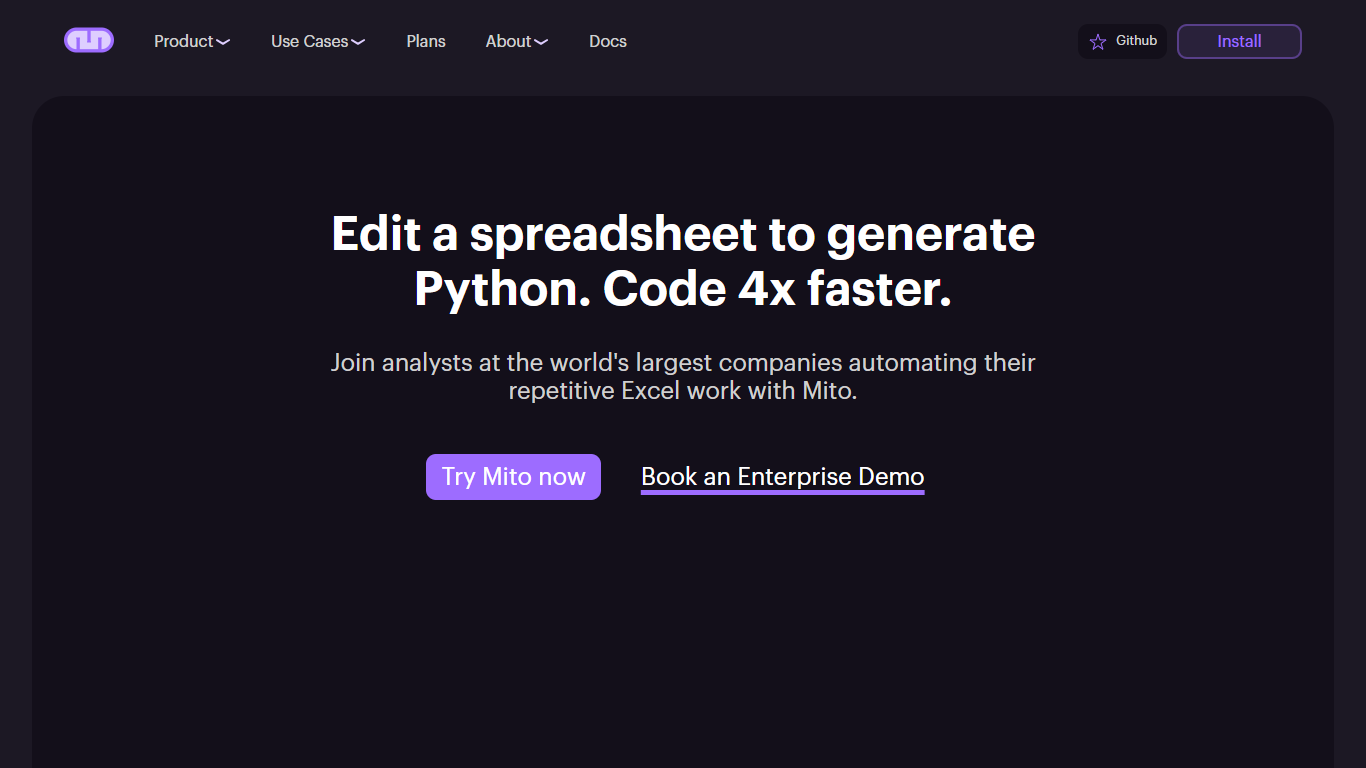
Mito is an AI Jupyter Notebook platform for database connections, Excel automations, and data workflows. It runs as a Jupyter extension inside JupyterLab, JupyterHub, SageMaker, and other notebook environments, and also ships as a standalone Mito Desktop app for macOS, Windows, and Linux.
The core idea is simple: edit data in a familiar spreadsheet interface, and Mito writes the Python code for you. Every filter, pivot, formula, or formatting change becomes reusable production code. Mito AI adds chat, agent, and autocomplete features that understand your notebook cells, dataframe structure, and recent edits.
For enterprise teams, Mito runs entirely on your own infrastructure. You can bring your own LLM API keys through Azure, AWS, LiteLLM, or other providers so sensitive data never leaves your environment. The open source project lives on GitHub with active community contributions.
Mito is used by analysts automating Excel reports, data scientists doing exploratory analysis, and ML engineers building models faster. The site lists Fortune 500 customers across financial services and life sciences.
DataRobot
What is DataRobot?
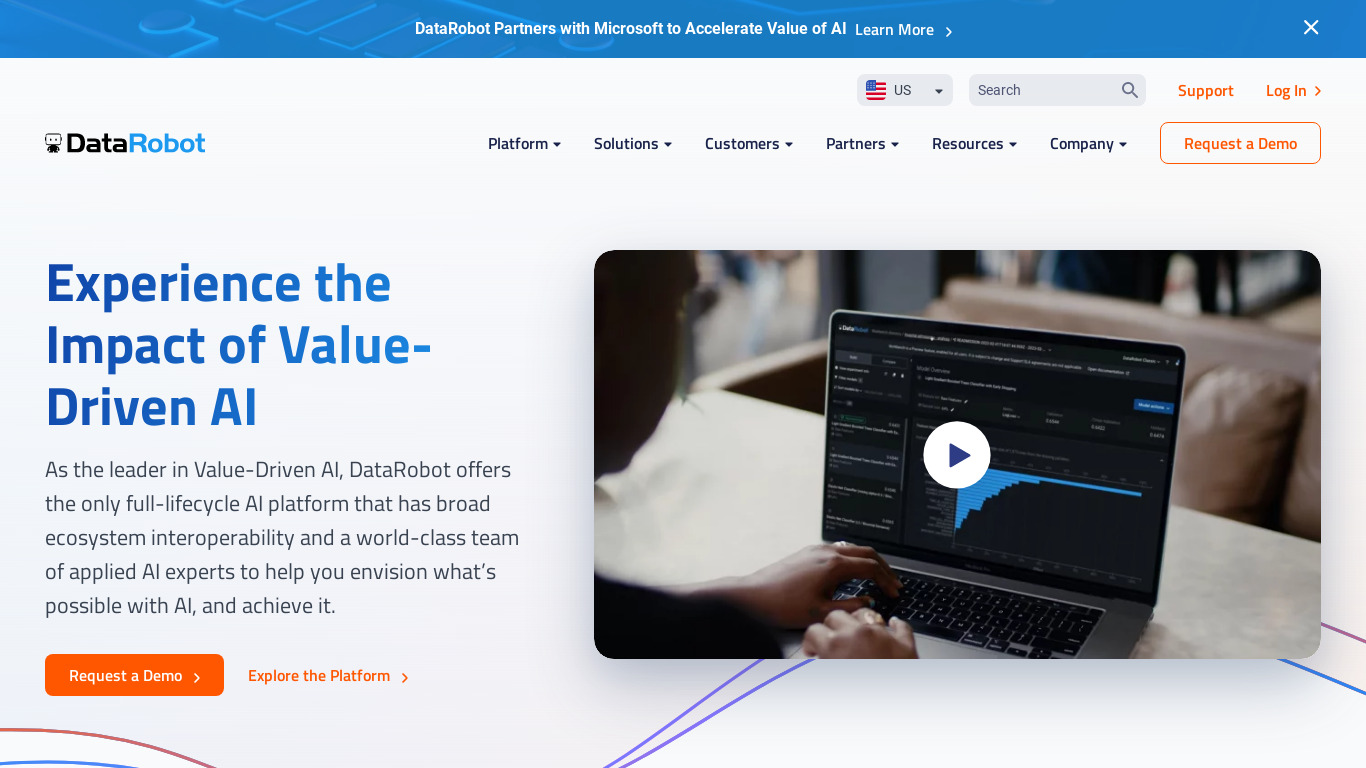
DataRobot offers the only full-lifecycle AI platform that has broad ecosystem interoperability and a world-class team of applied AI experts to help you envision what’s possible with AI, and achieve it.
DataRobot is an AI cloud-based platform that allows users to build and deploy machine learning models. It provides a platform for data scientists of all skill levels to build and deploy accurate predictive models in a fraction of the time it used to take. The technology addresses the critical shortage of data scientists by changing the speed and economics of predictive analytics.
Mito Upvotes
DataRobot Upvotes
Mito Top Features
Every spreadsheet edit generates reusable Python code behind the scenes
Jupyter Agent, chat, and autocomplete that read your notebook and dataframe context
Low-code SQL editor with Snowflake query builder and database connections
Runs on your infrastructure with bring-your-own LLM keys for Azure, AWS, or LiteLLM
Mito Desktop for macOS, Windows, and Linux, plus pip install for existing Python setups
Connects to BigQuery, Snowflake, PostgreSQL, Excel, S3, Google Drive, and more
DataRobot Top Features
Collaborative Experimentation Experience
Value at Production Scale
Assured Governance and Compliance
Mito Category
- Data Science
DataRobot Category
- Data Science
Mito Pricing Type
- Freemium
DataRobot Pricing Type
- Freemium