Moshi AI vs Altered Studio
In the contest of Moshi AI vs Altered Studio, which AI Audio Generation tool is the champion? We evaluate pricing, alternatives, upvotes, features, reviews, and more.
If you had to choose between Moshi AI and Altered Studio, which one would you go for?
When we examine Moshi AI and Altered Studio, both of which are AI-enabled audio generation tools, what unique characteristics do we discover? Both tools are equally favored, as indicated by the identical upvote count. Be a part of the decision-making process. Your vote could determine the winner.
Feeling rebellious? Cast your vote and shake things up!
Moshi AI
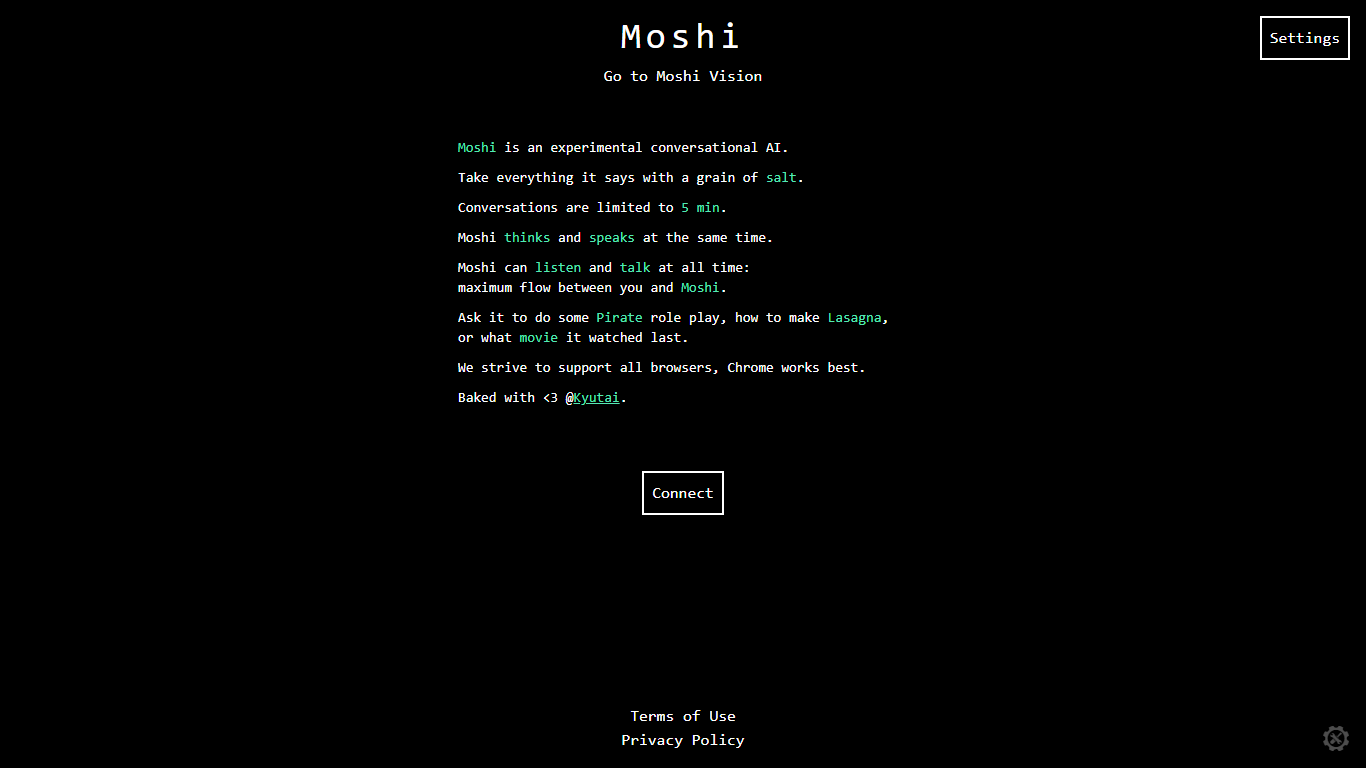

What is Moshi AI?
Moshi AI is a speech-native conversational model from Kyutai, a Paris-based open-science research lab. Instead of chaining speech recognition, text generation, and text-to-speech, Moshi processes audio directly and holds full-duplex voice conversations with minimal latency.
Its multi-stream design runs separate channels for the user, Moshi's spoken output, and an Inner Monologue text stream that improves coherence. That setup lets Moshi listen and talk at the same time, handle overlaps, interruptions, and backchanneling like a real conversation rather than rigid speaker turns.
Moshi is built on Helium, a 7B language model, and Mimi, Kyutai's neural audio codec. Weights and inference code ship for PyTorch, Rust, and MLX, and you can try it in the browser at moshi-chat.kyutai.org. Researchers, voice AI developers, and anyone building real-time spoken interfaces will find the most value here.
Altered Studio
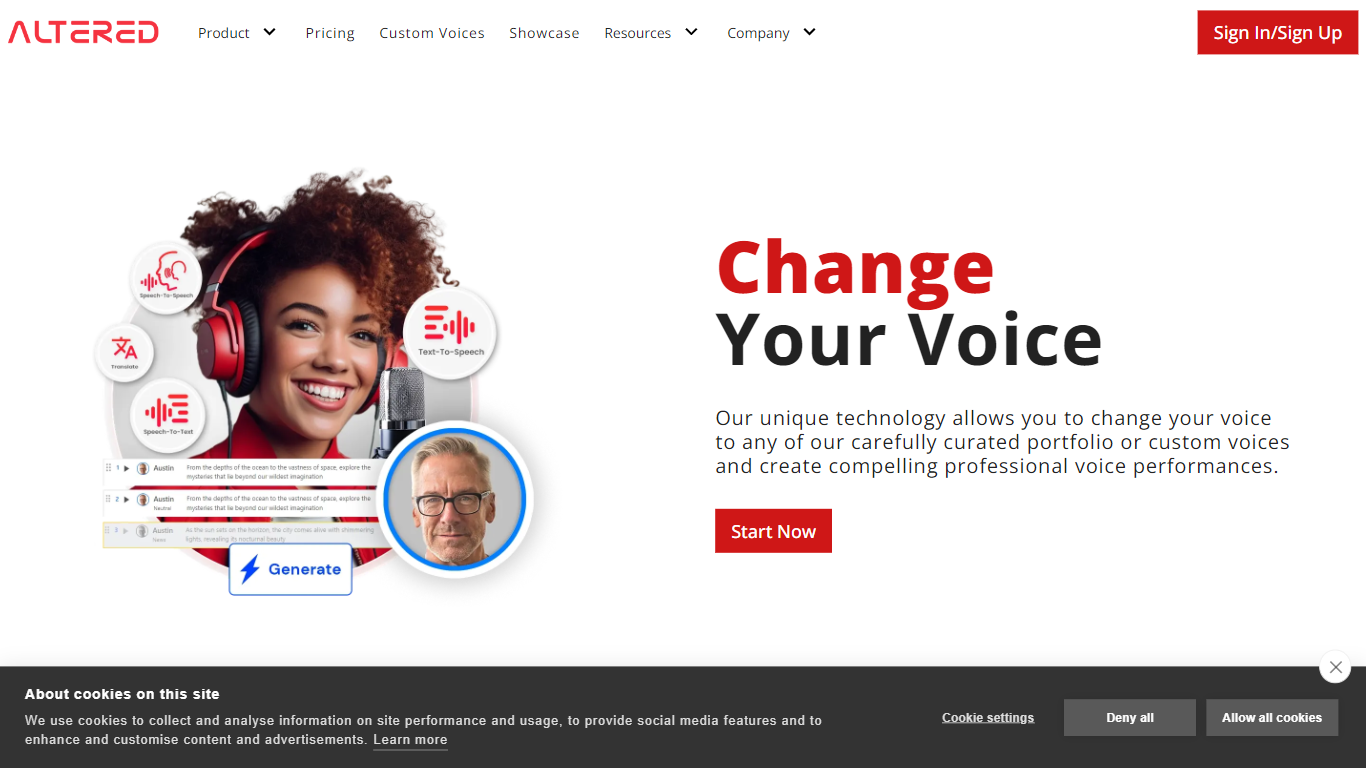
What is Altered Studio?
Altered Studio morphs recorded or live speech into curated or custom voices for media production and real-time calls. Its speech-to-speech engine runs in the browser or locally on Windows and Mac, with a separate Real-Time Pro app for gaming, call centers, and voice restoration during video calls.
Most voice changers trade quality for latency or the reverse. Altered splits the stack: media production morphing targets recording quality on GPUs with post-edit refinements, while Real-Time Pro uses 1 to 4 CPU cores for low-latency skins, accent translation, and Euphonia support for dysphonia and disfluencies.
Podcasters, game studios, and call-center teams use it to dub multi-character scenes, swap accents on live calls, and clean noisy dialogue. The Studio page offers transcription in 75+ languages, translation, and text-to-speech voice-over in 70+ languages from major providers in one editor.
Moshi AI Upvotes
Altered Studio Upvotes
Moshi AI Top Features
Processes speech directly without a text pipeline in the middle
Listens and talks simultaneously with overlap and interruption support
Inner Monologue text stream improves speech quality and reasoning
Runs real-time on an L4 GPU or M3 MacBook Pro via the Mimi codec
Open weights on Hugging Face with PyTorch, Rust, and MLX inference code
Altered Studio Top Features
Speech-to-speech voice morphing with performance-to-performance control in Altered Studio
Real-Time Pro Call Center plan at $12 per month with unlimited morphing and accent translation
Transcription in 75+ languages and text-to-speech voice-over in 70+ languages
Voice cloning from a few seconds of sample audio inside the Studio editor
Euphonia tier at $12 per month supports dysphonia and voice disfluency on live calls
Runs online or locally on Windows and Mac with optional cloud compute regions in US, EU, and India
Moshi AI Category
- Audio Generation
Altered Studio Category
- Audio Generation
Moshi AI Pricing Type
- Free
Altered Studio Pricing Type
- Freemium