Moshi AI vs AnthemScore
Dive into the comparison of Moshi AI vs AnthemScore and discover which AI Audio Generation tool stands out. We examine alternatives, upvotes, features, reviews, pricing, and beyond.
When comparing Moshi AI and AnthemScore, which one rises above the other?
When we compare Moshi AI and AnthemScore, two exceptional audio generation tools powered by artificial intelligence, and place them side by side, several key similarities and differences come to light. The upvote count is neck and neck for both Moshi AI and AnthemScore. Be a part of the decision-making process. Your vote could determine the winner.
Does the result make you go "hmm"? Cast your vote and turn that frown upside down!
Moshi AI

What is Moshi AI?
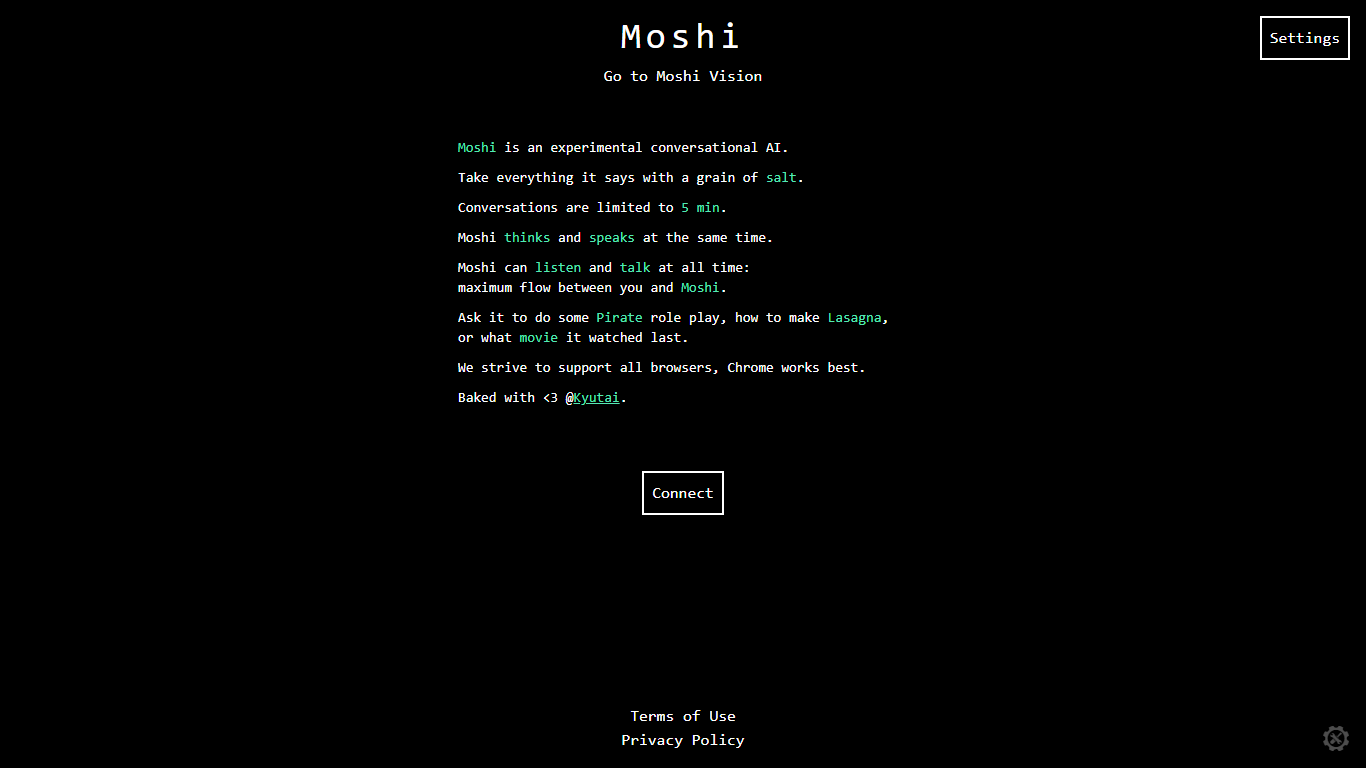
Moshi AI is a speech-native conversational model from Kyutai, a Paris-based open-science research lab. Instead of chaining speech recognition, text generation, and text-to-speech, Moshi processes audio directly and holds full-duplex voice conversations with minimal latency.
Its multi-stream design runs separate channels for the user, Moshi's spoken output, and an Inner Monologue text stream that improves coherence. That setup lets Moshi listen and talk at the same time, handle overlaps, interruptions, and backchanneling like a real conversation rather than rigid speaker turns.
Moshi is built on Helium, a 7B language model, and Mimi, Kyutai's neural audio codec. Weights and inference code ship for PyTorch, Rust, and MLX, and you can try it in the browser at moshi-chat.kyutai.org. Researchers, voice AI developers, and anyone building real-time spoken interfaces will find the most value here.
AnthemScore
What is AnthemScore?
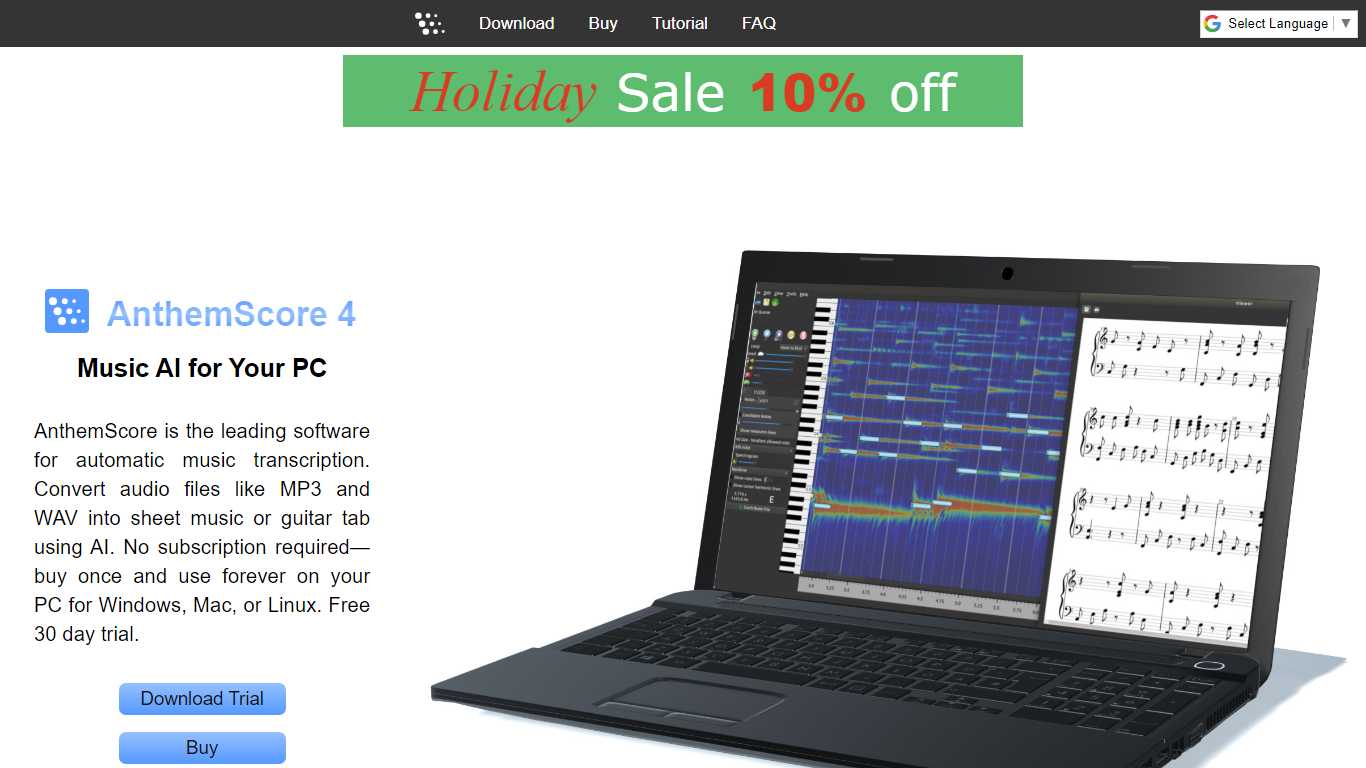
AnthemScore is desktop music transcription software that turns recorded audio into editable sheet music. You load an MP3, WAV, or similar file and the program detects notes, percussion, beats, and instruments, then lays them out as a score you can correct, export, and print. It runs on Windows, Mac, and Linux as a one-time purchase with no subscription on the desktop app.
Most cloud transcription tools charge monthly and upload your audio to a server. AnthemScore processes files locally on your machine, which matters if you work with unreleased recordings or long sessions. The trade-off is you need a 64-bit laptop or desktop with about 4 GB of free RAM, and phones or tablets are not supported.
Musicians, teachers, and hobby transcribers use it to learn parts by ear, create lead sheets from recordings, and export PDF, MIDI, or musicXML for further editing in MuseScore or similar notation apps. Guitarists can switch staves to tablature with custom fret counts and tunings.
Moshi AI Upvotes
AnthemScore Upvotes
Moshi AI Top Features
Processes speech directly without a text pipeline in the middle
Listens and talks simultaneously with overlap and interruption support
Inner Monologue text stream improves speech quality and reasoning
Runs real-time on an L4 GPU or M3 MacBook Pro via the Mimi codec
Open weights on Hugging Face with PyTorch, Rust, and MLX inference code
AnthemScore Top Features
Opens MP3, WAV, FLAC, OGG, WavPack, and MusePack files and detects notes, percussion, beats, and instruments automatically
Desktop Lite edition costs $29 one-time for unlimited full-song transcriptions; Professional is $44 with MIDI and musicXML export
Free trial transcribes unlimited 30-second clips with a cap of 100 total transcriptions before you enter an activation key
Professional and Studio editions export finished scores as PDF, musicXML, MIDI, or ASDT files
Studio edition at $110 adds batch processing across multiple audio files plus lifetime free software updates
Runs on Windows 10/11, macOS 11+, and Ubuntu 20.04+ as a local desktop app with no ongoing subscription
Moshi AI Category
- Audio Generation
AnthemScore Category
- Audio Generation
Moshi AI Pricing Type
- Free
AnthemScore Pricing Type
- Freemium