Moshi AI vs AssemblyAI
In the battle of Moshi AI vs AssemblyAI, which AI Audio Generation tool comes out on top? We compare reviews, pricing, alternatives, upvotes, features, and more.
Which one is better? Moshi AI or AssemblyAI?
Upon comparing Moshi AI with AssemblyAI, which are both AI-powered audio generation tools, Both tools have received the same number of upvotes from aitools.fyi users. Join the aitools.fyi users in deciding the winner by casting your vote.
Don't agree with the result? Cast your vote and be a part of the decision-making process!
Moshi AI
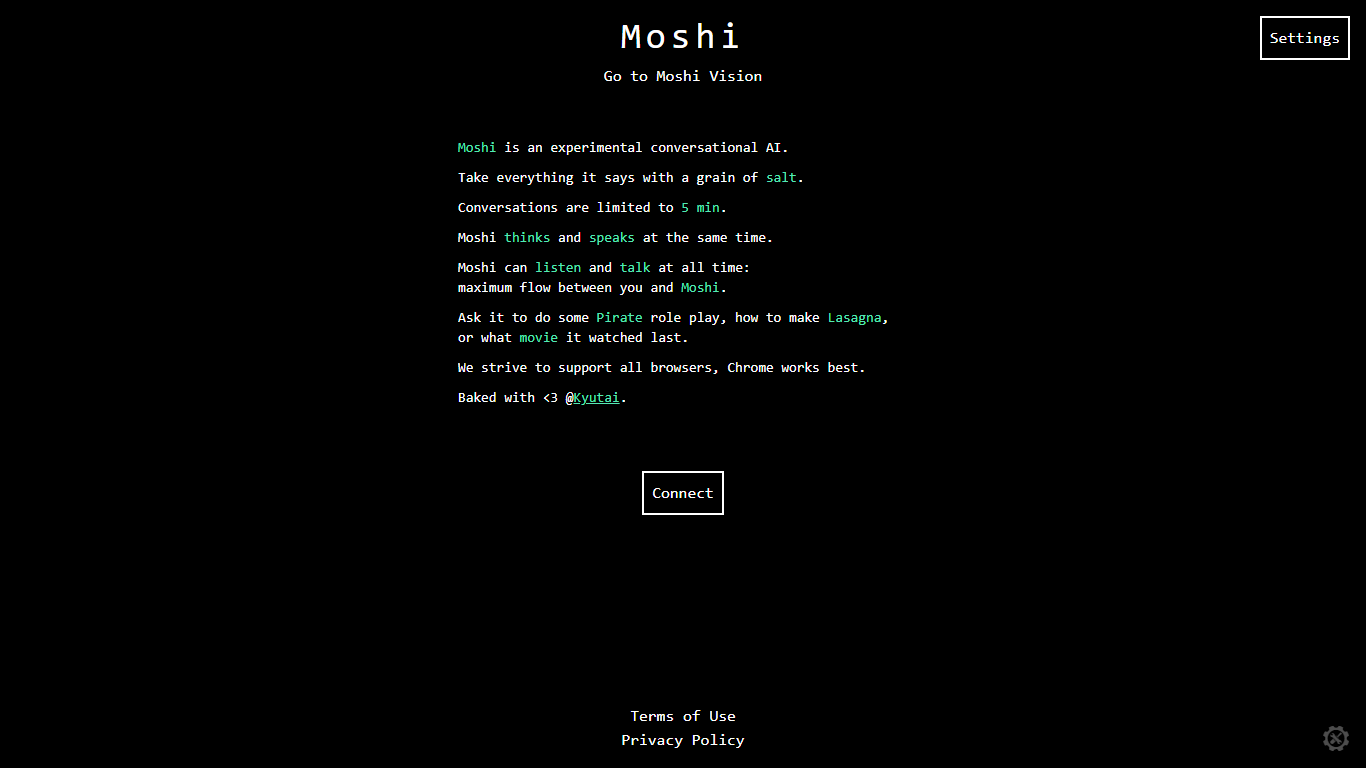

What is Moshi AI?
Moshi AI is a speech-native conversational model from Kyutai, a Paris-based open-science research lab. Instead of chaining speech recognition, text generation, and text-to-speech, Moshi processes audio directly and holds full-duplex voice conversations with minimal latency.
Its multi-stream design runs separate channels for the user, Moshi's spoken output, and an Inner Monologue text stream that improves coherence. That setup lets Moshi listen and talk at the same time, handle overlaps, interruptions, and backchanneling like a real conversation rather than rigid speaker turns.
Moshi is built on Helium, a 7B language model, and Mimi, Kyutai's neural audio codec. Weights and inference code ship for PyTorch, Rust, and MLX, and you can try it in the browser at moshi-chat.kyutai.org. Researchers, voice AI developers, and anyone building real-time spoken interfaces will find the most value here.
AssemblyAI
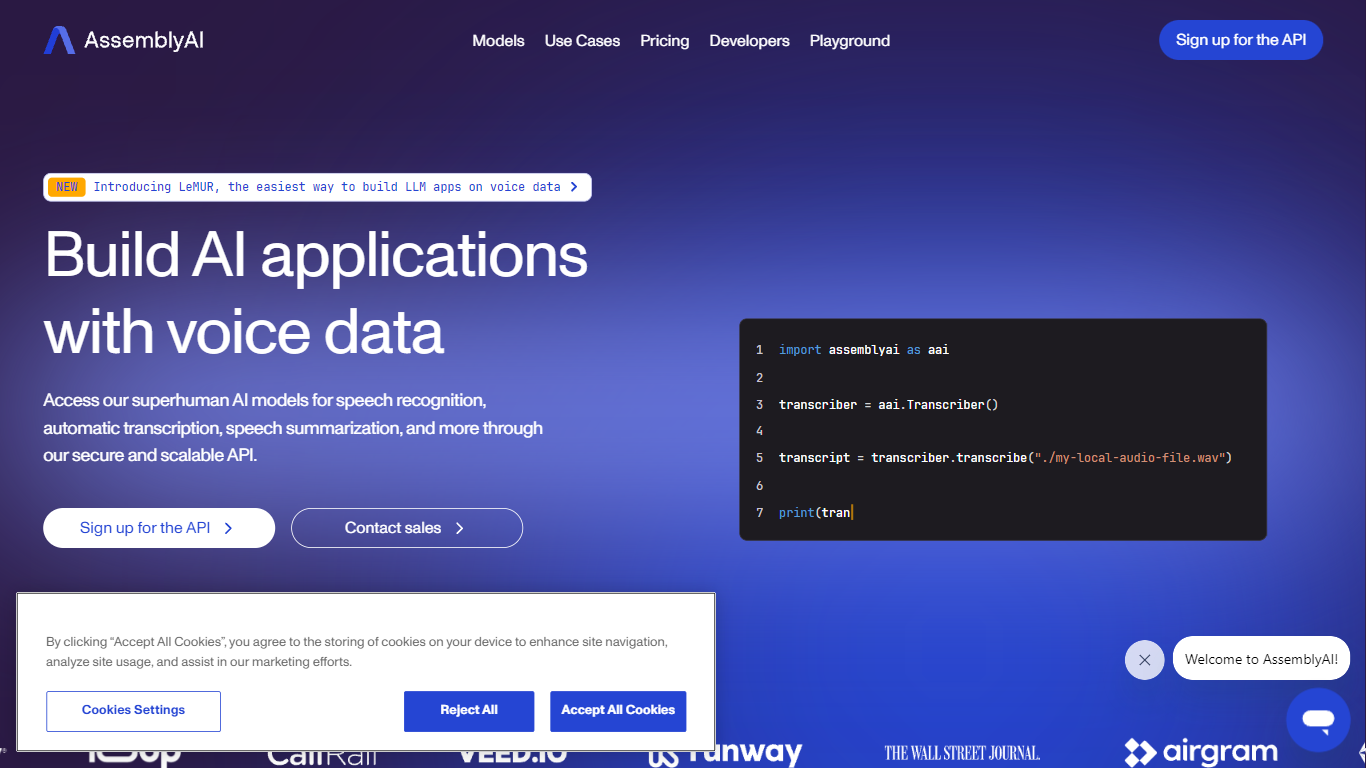
What is AssemblyAI?
AssemblyAI gives developers APIs to transcribe, understand, and act on speech in production apps. The platform covers pre-recorded speech-to-text, real-time streaming transcription, a Voice Agent API over WebSocket, Speech Understanding add-ons, Guardrails, and an LLM Gateway for voice workflows. Teams wire it into call centers, voice agents, meeting tools, and media pipelines without hosting their own models.
General-purpose cloud speech APIs spread features across separate services. AssemblyAI stacks diarization, sentiment, entity detection, PII redaction, and topic tagging on the same transcription request with per-hour add-on pricing. That matters when you want speaker labels and moderation in one pass instead of chaining three vendors after the transcript lands.
Engineering teams building voice agents, compliance-heavy transcription, or multilingual products fit AssemblyAI best. Pricing is usage-based with $50 in free credits and no credit card required, but streaming bills per open WebSocket session rather than audio minutes alone. If you only need a simple one-off file transcript, a lighter consumer tool may be cheaper.
Moshi AI Upvotes
AssemblyAI Upvotes
Moshi AI Top Features
Processes speech directly without a text pipeline in the middle
Listens and talks simultaneously with overlap and interruption support
Inner Monologue text stream improves speech quality and reasoning
Runs real-time on an L4 GPU or M3 MacBook Pro via the Mimi codec
Open weights on Hugging Face with PyTorch, Rust, and MLX inference code
AssemblyAI Top Features
Universal-3.5 Pro async transcription is priced at $0.21 per hour of submitted audio
Real-time Universal-3.5 Pro streaming runs at $0.45 per hour of open WebSocket session time
Voice Agent API bills $4.50 per hour ($0.075 per minute) for speech-to-speech agents
Speech Understanding add-ons include diarization, sentiment, entity detection, and translation on one request
Platform reports 800M+ API calls processed monthly with coverage across 99 languages
Moshi AI Category
- Audio Generation
AssemblyAI Category
- Audio Generation
Moshi AI Pricing Type
- Free
AssemblyAI Pricing Type
- Freemium