Moshi AI vs Stable Audio
Compare Moshi AI vs Stable Audio and see which AI Audio Generation tool is better when we compare features, reviews, pricing, alternatives, upvotes, etc.
Which one is better? Moshi AI or Stable Audio ?
When we compare Moshi AI with Stable Audio , which are both AI-powered audio generation tools, The community has spoken, Stable Audio leads with more upvotes. The number of upvotes for Stable Audio stands at 7, and for Moshi AI it's 6.
Want to flip the script? Upvote your favorite tool and change the game!
Moshi AI
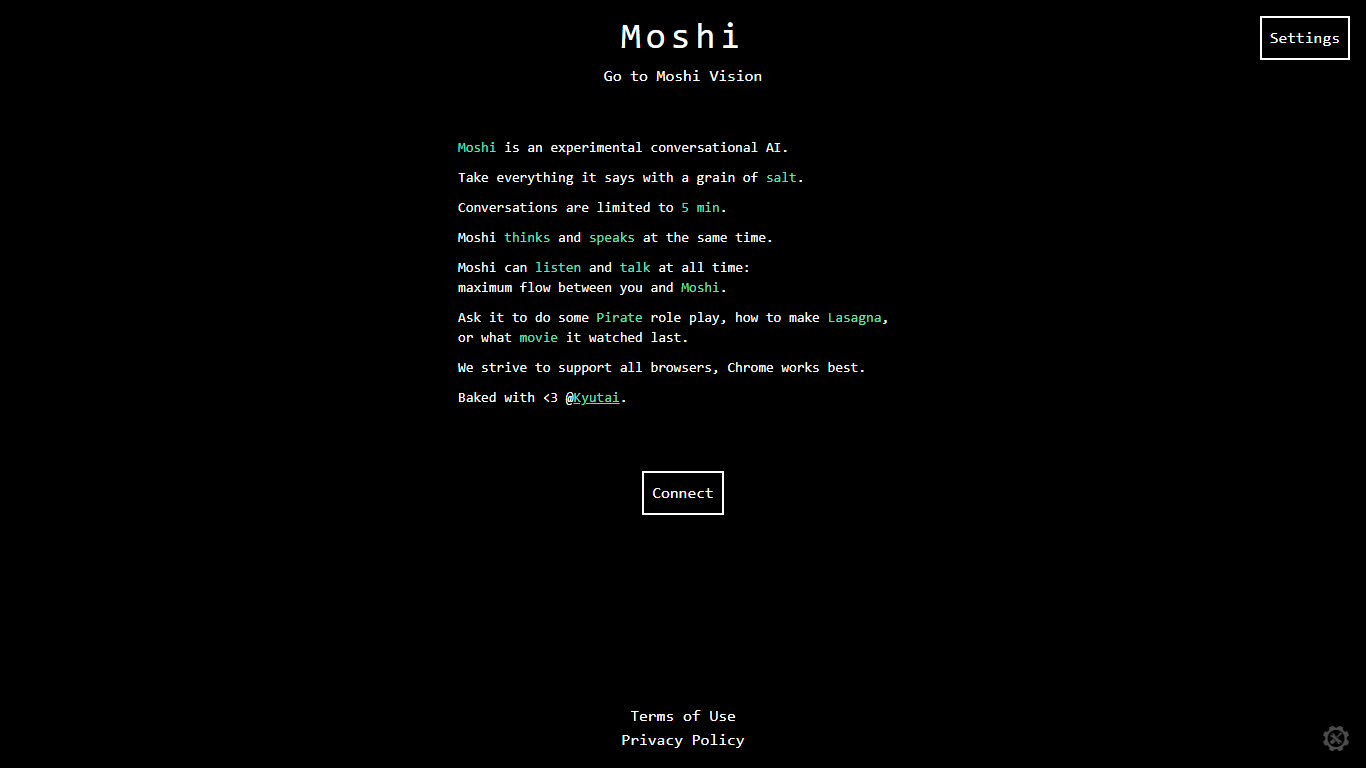

What is Moshi AI?
Moshi AI is a speech-native conversational model from Kyutai, a Paris-based open-science research lab. Instead of chaining speech recognition, text generation, and text-to-speech, Moshi processes audio directly and holds full-duplex voice conversations with minimal latency.
Its multi-stream design runs separate channels for the user, Moshi's spoken output, and an Inner Monologue text stream that improves coherence. That setup lets Moshi listen and talk at the same time, handle overlaps, interruptions, and backchanneling like a real conversation rather than rigid speaker turns.
Moshi is built on Helium, a 7B language model, and Mimi, Kyutai's neural audio codec. Weights and inference code ship for PyTorch, Rust, and MLX, and you can try it in the browser at moshi-chat.kyutai.org. Researchers, voice AI developers, and anyone building real-time spoken interfaces will find the most value here.
Stable Audio

What is Stable Audio ?
Stable Audio turns text descriptions into full music tracks, individual stems, and sound effects through a browser-based studio from Stability AI. You type a prompt covering genre, mood, instruments, and BPM, and the model returns downloadable audio up to six minutes long at 44.1 kHz stereo. The same workspace handles audio-to-audio generation, where an uploaded clip, recording, or vocal melody guides how the output develops.
Where tools like Suno optimize for finished songs from a single lyric prompt, Stable Audio leans toward producer workflows: style transfer on existing audio, stem-level generation, and SFX from short text cues like "car passing by" or "explosion." You can dial input audio strength and prompt strength separately, which makes it practical for iterating on samples rather than replacing a whole composition pipeline.
Producers, video editors, and game developers use it for beds, transitions, and licensed background audio. The free Personal plan caps you at ten generations a month for non-commercial work, while Pro, Studio, and Max subscriptions add commercial Creator licensing and monthly generation counts from 250 up to 2,500 tracks.
Moshi AI Upvotes
Stable Audio Upvotes
Moshi AI Top Features
Processes speech directly without a text pipeline in the middle
Listens and talks simultaneously with overlap and interruption support
Inner Monologue text stream improves speech quality and reasoning
Runs real-time on an L4 GPU or M3 MacBook Pro via the Mimi codec
Open weights on Hugging Face with PyTorch, Rust, and MLX inference code
Stable Audio Top Features
Generate music up to 6 minutes long at 44.1 kHz stereo
Free plan includes 10 track generations per month with Stable Audio 2.5
Audio-to-audio accepts MP3, WAV, MP4, and AIFF uploads for style transfer
Pro plan at $11.99 per month unlocks 250 generations and commercial Creator licensing
Text prompts support genre, BPM, mood, and instrument details for targeted output
Vocal input beta turns humming or singing into full backing tracks
Moshi AI Category
- Audio Generation
Stable Audio Category
- Audio Generation
Moshi AI Pricing Type
- Free
Stable Audio Pricing Type
- Freemium