Nadi vs TimeComplexity.ai
In the contest of Nadi vs TimeComplexity.ai, which AI Developer tool is the champion? We evaluate pricing, alternatives, upvotes, features, reviews, and more.
If you had to choose between Nadi and TimeComplexity.ai, which one would you go for?
When we examine Nadi and TimeComplexity.ai, both of which are AI-enabled developer tools, what unique characteristics do we discover? Both tools are equally favored, as indicated by the identical upvote count. Join the aitools.fyi users in deciding the winner by casting your vote.
Does the result make you go "hmm"? Cast your vote and turn that frown upside down!
Nadi

What is Nadi ?
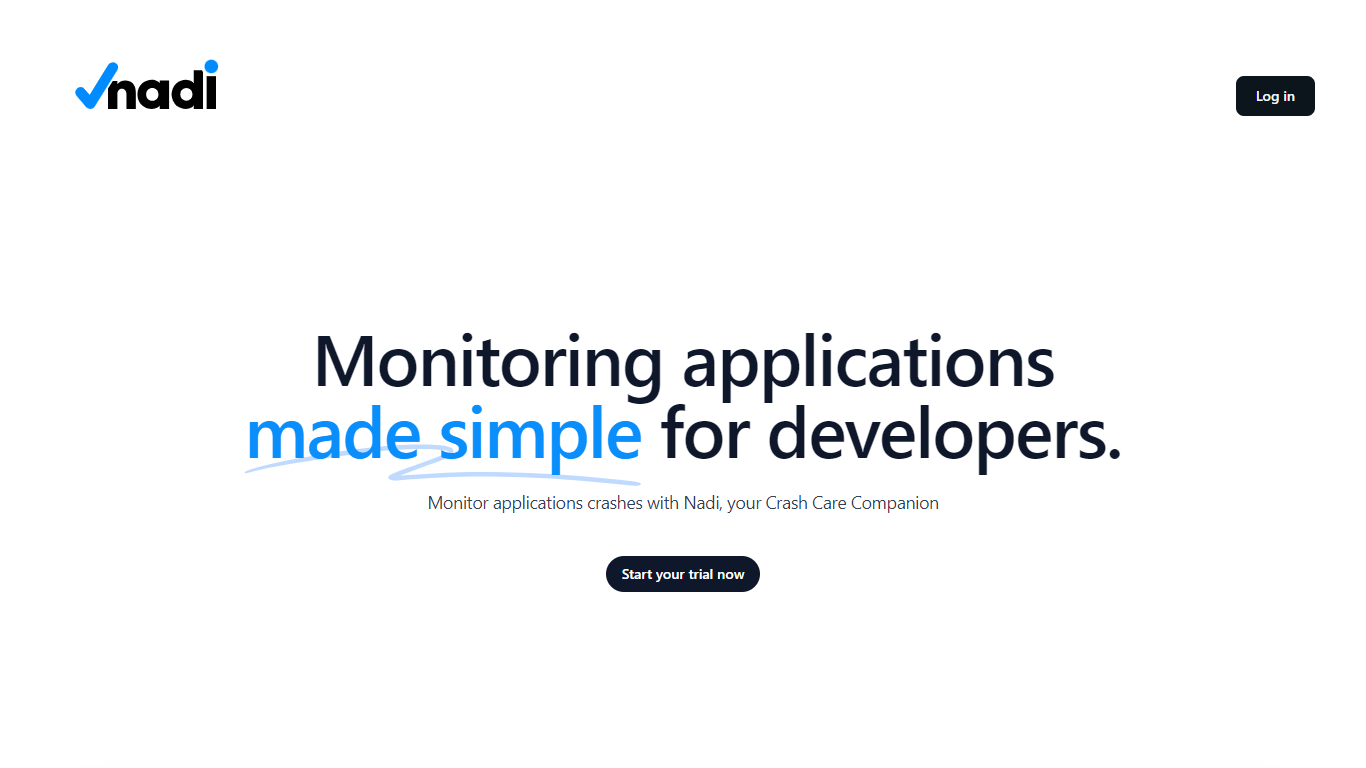
Nadi is a crash care companion for developers who need real-time visibility into application errors and performance. It combines backend error tracking for PHP applications with browser real user monitoring, alerting, and team management in one dashboard. The platform positions itself as the nervous system for your app, capturing exceptions, slow queries, failed jobs, and other issue types with full stack traces and user impact data.
Setup is built around Laravel and PHP first. You install the Nadi Laravel package via Composer, run a single artisan installer command, and add API credentials to your environment. The JavaScript RUM SDK handles Core Web Vitals, session tracking, JavaScript errors, rage click detection, and source map deobfuscation on the frontend. Supported integrations include Laravel, WordPress, and browser JavaScript, with Node.js, Python, and Go SDKs listed as coming soon.
Alerting routes issues to Slack, Microsoft Teams, Telegram, email, and webhooks through configurable rules. Organizations get multi-tenant data isolation, team roles, project grouping, invitations, and audit logs. Nadi offers a free tier for side projects, a Pro plan for growing teams, and custom Enterprise pricing with SSO and SLA options.
TimeComplexity.ai
What is TimeComplexity.ai?
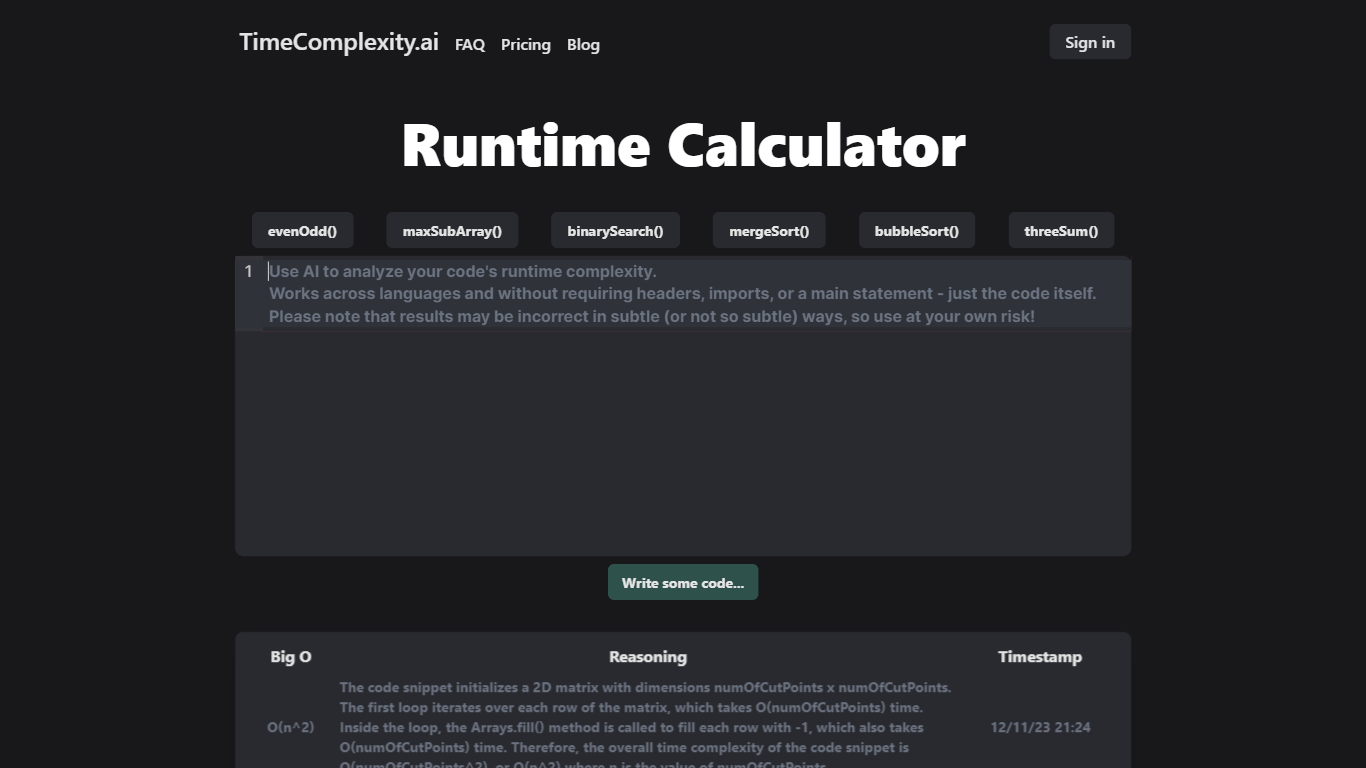
Paste a function into TimeComplexity.ai and it returns Big O runtime complexity with plain-language reasoning. You drop in an algorithm snippet, and the site responds with notation like O(n log n) plus an explanation of why that bound fits the loops and recursion it sees.
Static analyzers usually need a full file with imports and a main block. TimeComplexity.ai accepts partial snippets in Python, JavaScript, Java, C++, Go, and other languages without headers or setup code. That makes it useful for interview prep and quick checks on isolated functions pulled from a larger codebase.
Developers, CS students, and interview candidates use TimeComplexity.ai to sanity-check algorithm bounds before submitting homework or reviewing pull requests. Anonymous users get 20 queries per day, signed-in users get 50, and the $5 per month Pro plan removes the daily cap.
Nadi Upvotes
TimeComplexity.ai Upvotes
Nadi Top Features
Captures 10 backend issue types including exceptions, slow queries, queue failures, and HTTP errors with stack traces
JavaScript RUM SDK tracks Core Web Vitals, sessions, browser errors, rage clicks, and page load performance
Alert rules route notifications to Slack, Teams, Telegram, email, and webhooks with acknowledge and resolve workflows
Laravel package installs via Composer and auto-discovers with a two-minute setup path
Multi-organization workspaces with team roles, project grouping, invitations, and audit trails
TimeComplexity.ai Top Features
Returns Big O notation plus written reasoning for each pasted code snippet
Accepts partial code without headers, imports, or a main function across common languages
Uses GPT-3.5 Turbo with a formatted prompt, per the site FAQ
Anonymous users receive 20 queries per day; signed-in users receive 50 free queries daily
Pro plan at $5 per month unlocks unlimited queries with query history and deletion
Each analysis gets a shareable ID so you can link results with teammates
Nadi Category
- Developer
TimeComplexity.ai Category
- Developer
Nadi Pricing Type
- Freemium
TimeComplexity.ai Pricing Type
- Freemium