OneOver vs Stellaris AI
In the face-off between OneOver vs Stellaris AI, which AI Large Language Model (LLM) tool takes the crown? We scrutinize features, alternatives, upvotes, reviews, pricing, and more.
In a face-off between OneOver and Stellaris AI, which one takes the crown?
If we were to analyze OneOver and Stellaris AI, both of which are AI-powered large language model (llm) tools, what would we find? Both tools have received the same number of upvotes from aitools.fyi users. Join the aitools.fyi users in deciding the winner by casting your vote.
Feeling rebellious? Cast your vote and shake things up!
OneOver

What is OneOver?
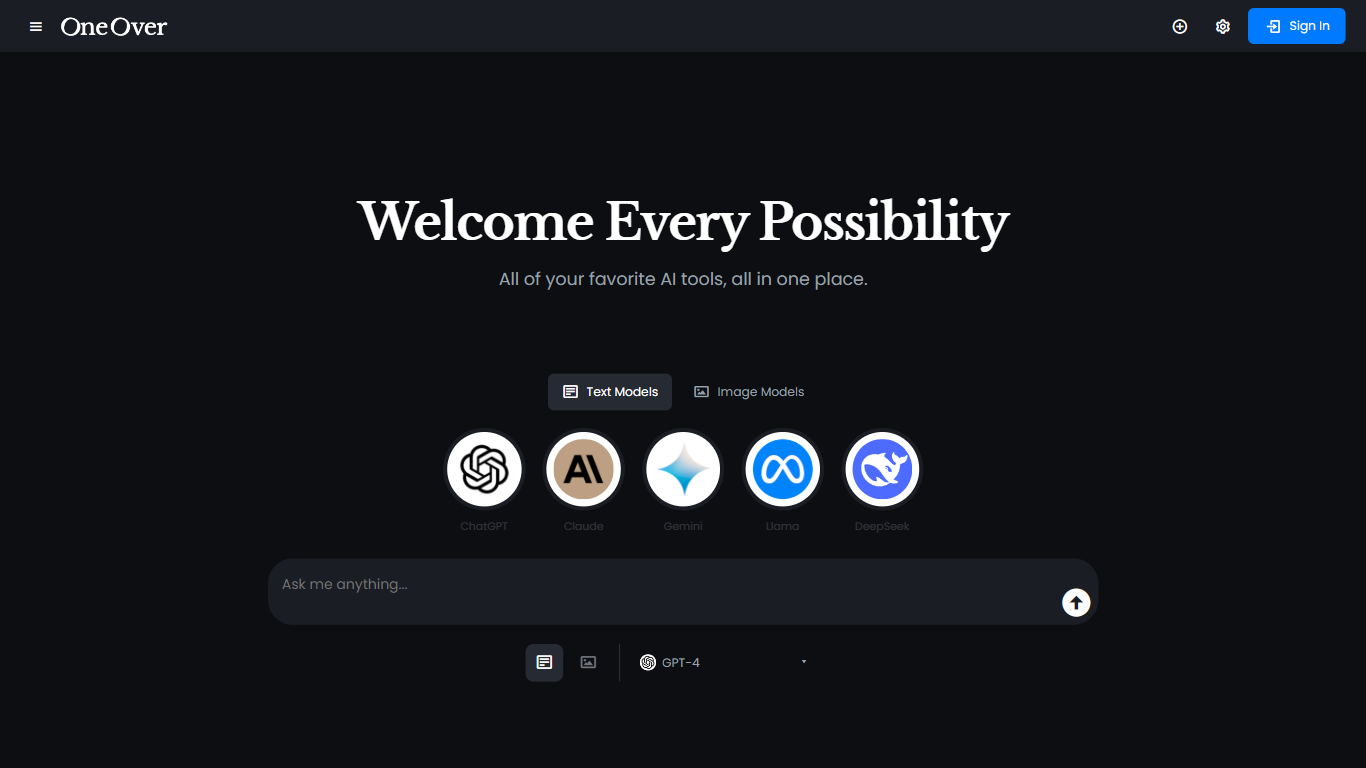
OneOver is a creative studio that puts multi-model chat, image generation, video, voice, and music in one browser workspace. You can run GPT, Claude, Gemini, Grok, and dozens of other models in a single thread, attach PDFs and images, flip on web search, and swap models without losing context. Guests get five chat messages before signup, and new accounts receive 50 one-time starter credits.
Where most tools make you pick one provider and buy separate subscriptions for images or video, OneOver routes everything through one shared credit balance. Subscription refills, plan bonuses, and pay-as-you-go packs all spend across chat, diffusion, video, speech, music, and playground mini apps. Switching from GPT-5.4 Nano to Claude Opus 5 is a dropdown change in the same conversation, not a copy-paste hop between sites.
Creators and marketers use OneOver to draft copy, iterate visuals, and turn prompts or photos into short clips from one library. Developers can hit the same model routes through a REST API with streaming support. Pro and Studio also ship seat-based team plans that pool monthly credits with member soft limits and one invoice.
Stellaris AI
What is Stellaris AI?
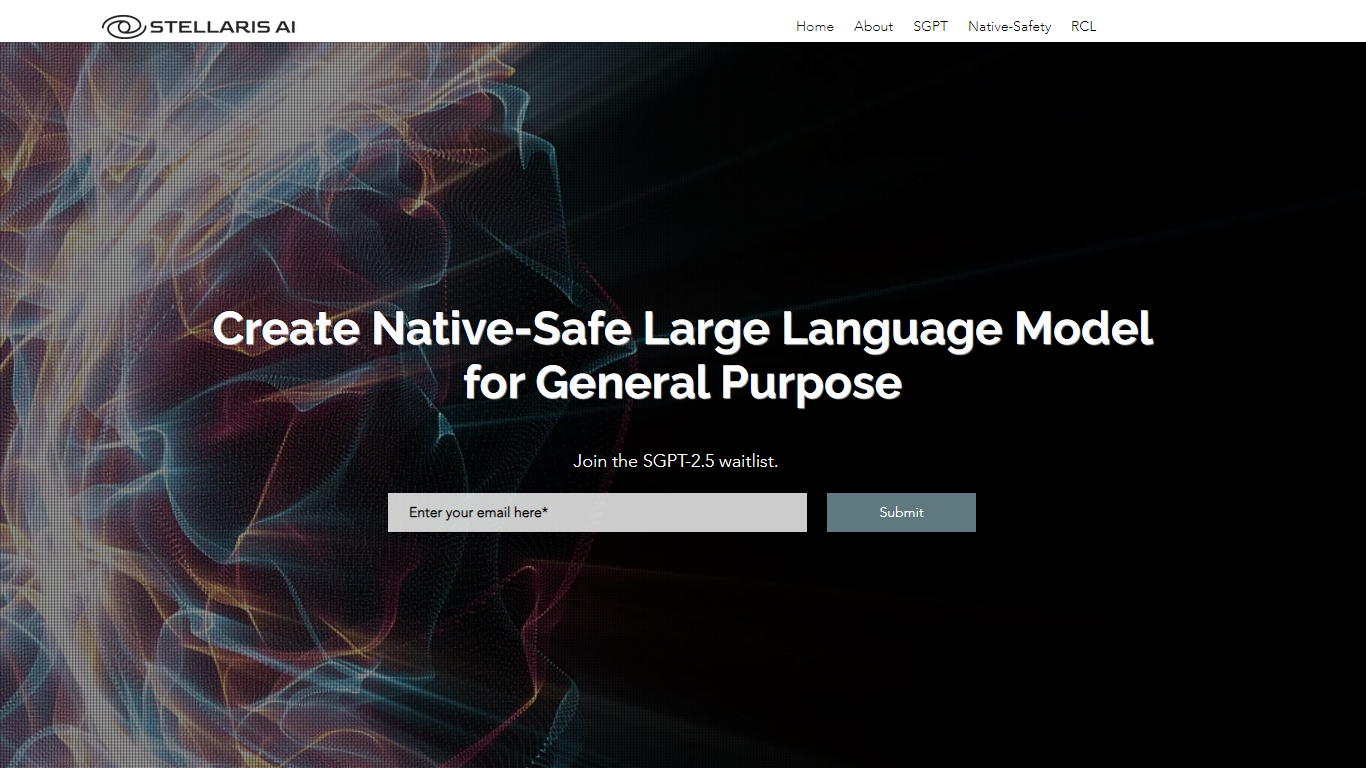
Stellaris AI builds large language models marketed around native safety and human-like reasoning for real-world tasks. Its flagship SGPT line targets text and code generation, knowledge Q&A, logical reasoning, and analytics at a scale the company describes as hundreds of billions of parameters. The public site centers on a waitlist for SGPT-4.5 rather than a self-serve chat product you can open today.
Where many LLM labs bolt safety filters on after training, Stellaris AI frames safety as part of the model stack through strict source referencing and harm minimization in the architecture. It also highlights Real-time Context Learning (RCL) for adapting answers with live knowledge, a combination aimed at teams that want cited outputs instead of unchecked generation.
Researchers, enterprise AI teams, and early adopters join the SGPT-4.5 waitlist for first access. The company cites 10+ years of research and three core product pillars: Stellaris GPT, Native Safety, and RCL.
OneOver Upvotes
Stellaris AI Upvotes
OneOver Top Features
Switch between GPT-5.6 Sol, Claude Opus 5, Gemini 3.6 Flash, and Grok 4.6 in one thread without losing context
Pro includes 1,400 credits per month (1,000 base plus 400 bonus) for chat, images, and short video work
Text-to-speech and text-to-music generators sit beside image and video studios in the same credit pool
Pay-as-you-go packs start at $5 for 500 credits that never expire and stack with subscription balances
REST API covers chat, image generation, and usage metering with streaming and one-field model swaps
Ten playground mini apps include Meme Generator, Upscaler, and Homework Helper with costs from 1 credit
Stellaris AI Top Features
SGPT models described at 100B+ parameters for text, code, and reasoning tasks
Native Safety framework with strict source referencing and harm minimization
Real-time Context Learning (RCL) for live knowledge integration
Three product pillars: Stellaris GPT, Native Safety, and RCL
SGPT-4.5 waitlist open for early access signups on the homepage
OneOver Category
- Large Language Model (LLM)
Stellaris AI Category
- Large Language Model (LLM)
OneOver Pricing Type
- Freemium
Stellaris AI Pricing Type
- Freemium