OpenChatKit vs ChatGPT Plugins
In the face-off between OpenChatKit vs ChatGPT Plugins, which AI Large Language Model (LLM) tool takes the crown? We scrutinize features, alternatives, upvotes, reviews, pricing, and more.
When we put OpenChatKit and ChatGPT Plugins head to head, which one emerges as the victor?
If we were to analyze OpenChatKit and ChatGPT Plugins, both of which are AI-powered large language model (llm) tools, what would we find? The users have made their preference clear, ChatGPT Plugins leads in upvotes. ChatGPT Plugins has 13 upvotes, and OpenChatKit has 6 upvotes.
Feeling rebellious? Cast your vote and shake things up!
OpenChatKit
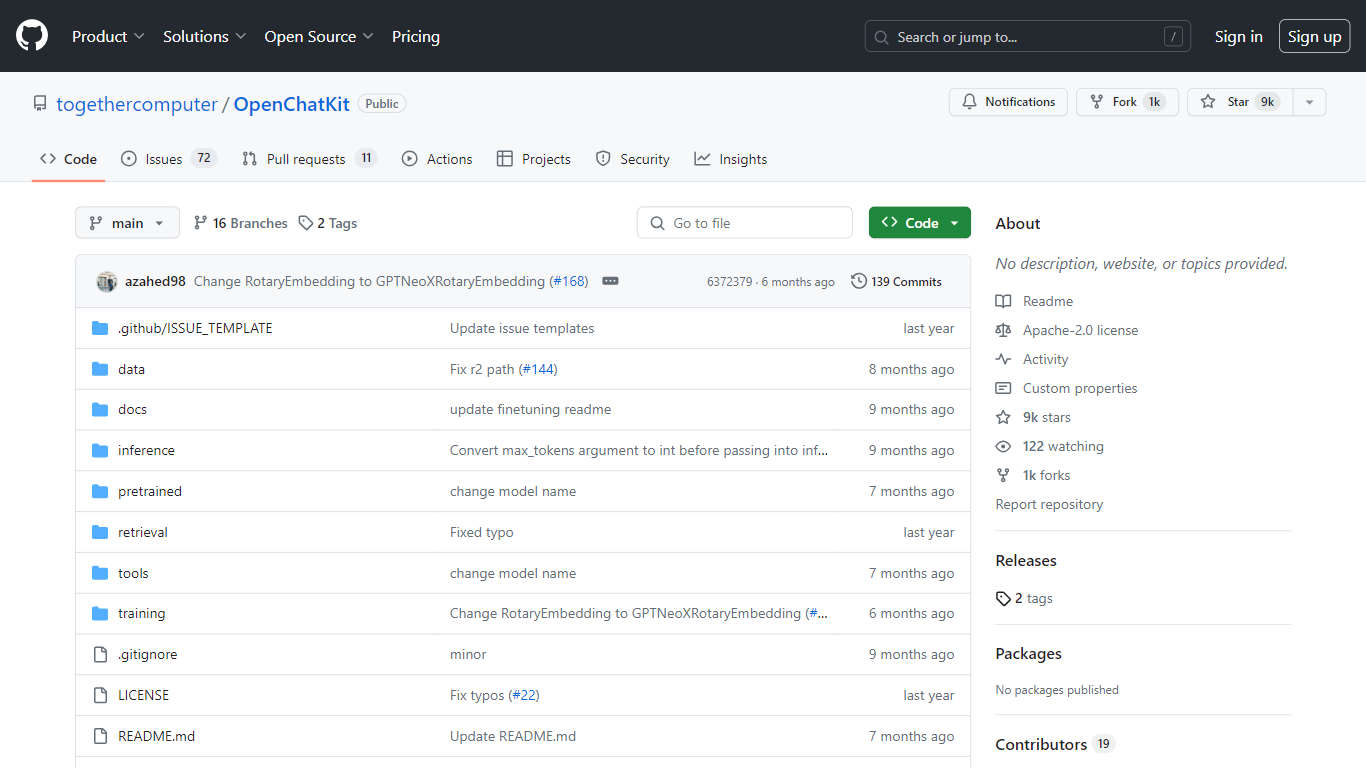

What is OpenChatKit?
OpenChatKit provides tools and models for building conversational AI applications that can understand and respond to user instructions. It offers instruction-tuned language models, a moderation system to filter unsafe content, and a retrieval system that enables the AI to access external data for up-to-date answers.
What distinguishes OpenChatKit is its combination of large-scale pre-trained models like GPT-NeoXT-Chat-Base-20B and fine-tuning support for models such as Llama-2-7B-32K-beta. It also integrates a flexible retrieval mechanism to augment responses with relevant external information, which is not common in many open-source alternatives.
The toolkit supports training, fine-tuning, and inference workflows, with monitoring options through tools like Weights & Biases. It is designed for developers and researchers who want customizable conversational AI solutions with transparent, open-source code and collaborative development.
OpenChatKit includes detailed documentation and environment setup instructions to facilitate use. Its models are trained on the OIG-43M dataset, created through collaboration between Together, LAION, and Ontocord.ai, ensuring a robust foundation for dialogue applications.
Overall, OpenChatKit enables the creation of specialized or general-purpose chatbots with safety features and the ability to incorporate real-time data through retrieval-augmented generation techniques.
ChatGPT Plugins
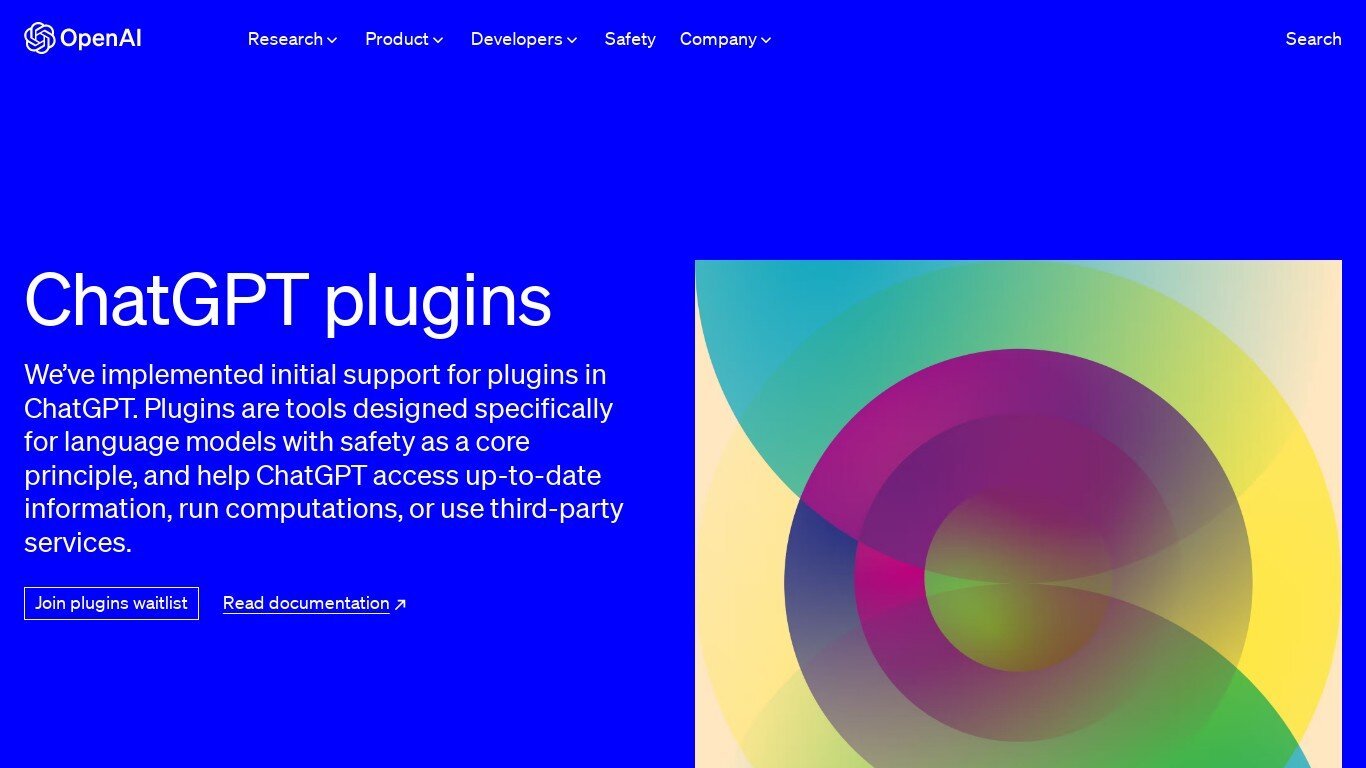
What is ChatGPT Plugins?
ChatGPT Plugins was OpenAI's 2023 extension system that let ChatGPT call third-party APIs for live data, calculations, and external services. Plugins appeared as tools the model could invoke during a conversation after users enabled them in ChatGPT. OpenAI's March 2023 announcement listed launch partners including Expedia, Instacart, KAYAK, Klarna, OpenTable, Shopify, Slack, Wolfram, and Zapier.
The beta also shipped OpenAI-built plugins for web browsing via Bing, a sandboxed Python code interpreter, and an open-source retrieval plugin for private document search. Developers published plugins through a manifest file and OpenAPI spec, and ChatGPT Plus subscribers were the first users to enable them in chat.
OpenAI deprecated the plugin beta in favor of custom GPTs. The official blog page now states plugins have been deprecated, and OpenAI ended new plugin conversations on March 19, 2024, with full shutdown on April 9, 2024. GPTs with custom actions replaced the integration model for developers and ChatGPT users.
OpenChatKit Upvotes
ChatGPT Plugins Upvotes
OpenChatKit Top Features
Instruction-Tuned Models: Includes models like Pythia-Chat-Base-7B and GPT-NeoXT-Chat-Base-20B trained on the OIG-43M dataset.
Moderation Model: Filters inappropriate content to maintain safe conversations.
Retrieval System: Supports integration with external data sources such as a Wikipedia Faiss index for up-to-date responses.
Fine-Tuning Support: Provides scripts for fine-tuning models like Llama-2-7B-32K-beta on custom datasets.
Monitoring Integrations: Compatible with Weights & Biases and Loguru for training monitoring and logging.
ChatGPT Plugins Top Features
Third-party plugins from 12 launch partners including Shopify, Slack, and Wolfram
OpenAI web browsing plugin using the Bing search API with source citations
Sandboxed Python code interpreter for math, data analysis, and file conversion
Open-source retrieval plugin supporting vector databases like Pinecone and Milvus
Plugin manifest plus OpenAPI spec defined each integration for the language model
Users chose which enabled plugins appeared in each ChatGPT conversation
OpenChatKit Category
- Large Language Model (LLM)
ChatGPT Plugins Category
- Large Language Model (LLM)
OpenChatKit Pricing Type
- Freemium
ChatGPT Plugins Pricing Type
- Paid