OpenRead vs scite.ai
In the contest of OpenRead vs scite.ai, which AI Research tool is the champion? We evaluate pricing, alternatives, upvotes, features, reviews, and more.
If you had to choose between OpenRead and scite.ai, which one would you go for?
When we examine OpenRead and scite.ai, both of which are AI-enabled research tools, what unique characteristics do we discover? OpenRead stands out as the clear frontrunner in terms of upvotes. OpenRead has been upvoted 8 times by aitools.fyi users, and scite.ai has been upvoted 6 times.
Think we got it wrong? Cast your vote and show us who's boss!
OpenRead

What is OpenRead?
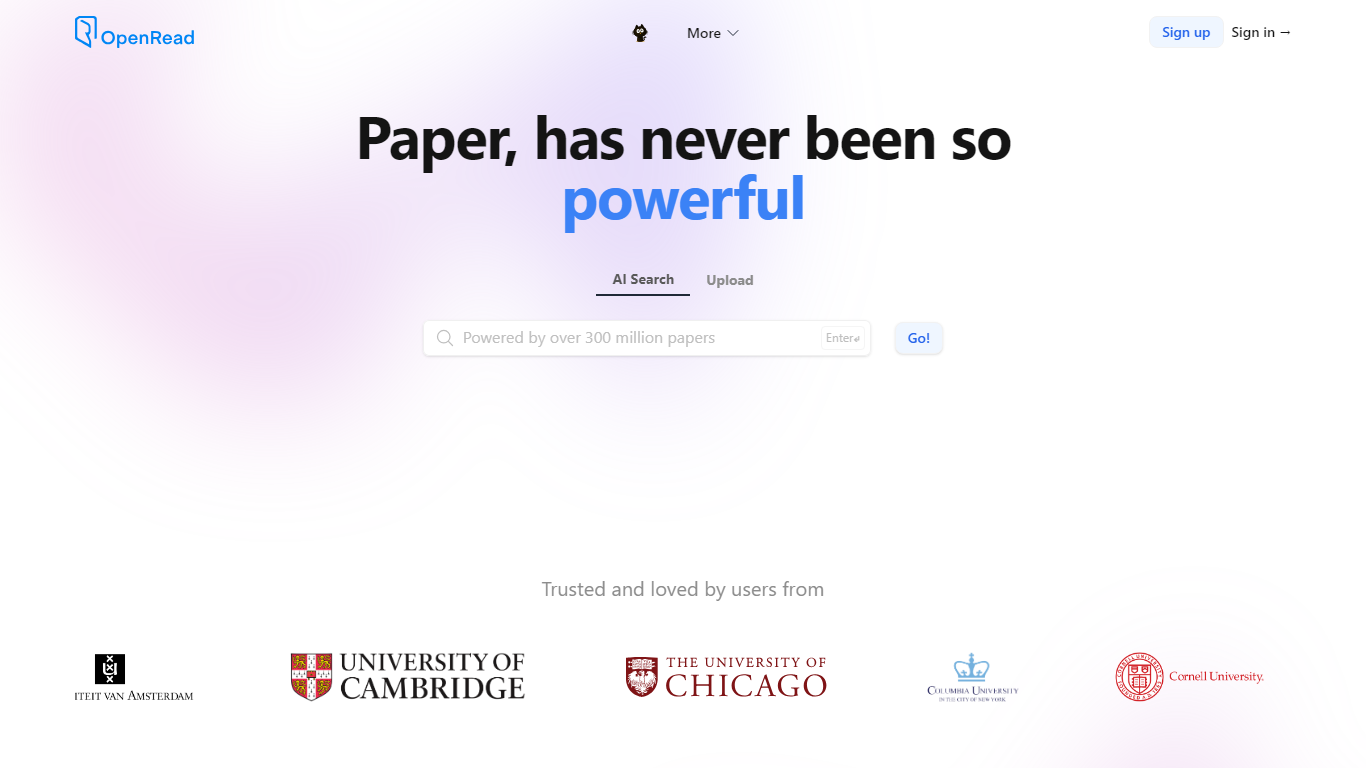
OpenRead helps you search, read, and annotate academic papers with AI tools built for research workflows. Type a natural language question and the platform matches meaning across more than 300 million papers, then layers Paper Espresso summaries, Paper Q&A deep dives, and a related-paper graph on top of the PDF you are reading.
Generic literature search stops at keyword hits. OpenRead pairs semantic paper and web search with in-document tools like Paper Compare for up to five papers at once, unlimited PDF parsing on paid tiers, and Oat, its research assistant that routes tasks across multiple frontier models. Premium subscribers get unlimited Paper Espresso and Paper Q&A usage plus 10 million monthly credits for premium-model chats inside Oat.
Universities can buy seat licenses at $200 per seat annually with SSO, admin dashboards, and training-data opt-outs. The free plan still includes unlimited PDF uploads up to 2MB per file, which is unusual for academic AI readers that gate parsing behind paid walls.
scite.ai
What is scite.ai?
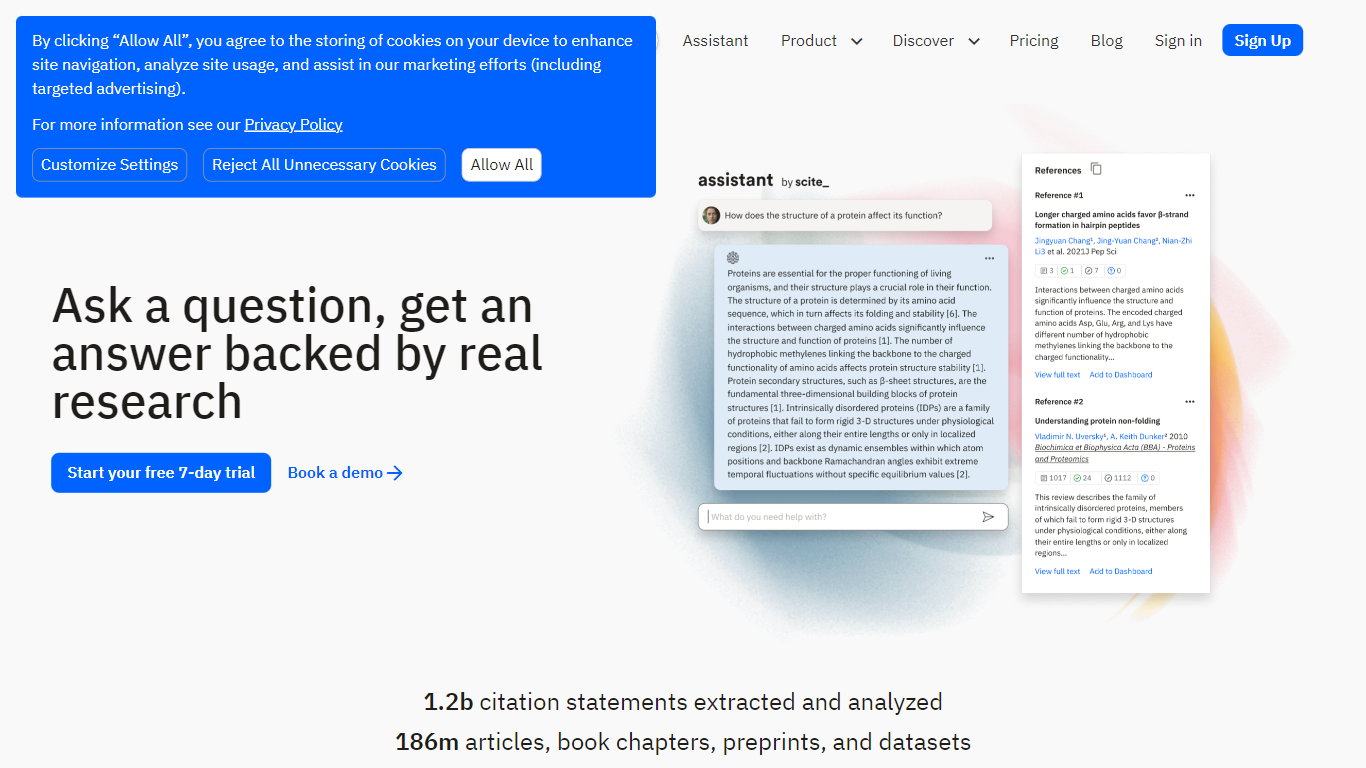
Scite helps research teams ask literature questions and get answers tied to full-text papers, not abstract snippets alone. Its Assistant searches across 280M+ full-text scholarly articles, and Smart Citations show whether later work supported, contradicted, or mentioned a finding.
General research chatbots guess when paywalls block the PDF. Scite licenses content from Wiley, SAGE, and 40+ other publishers, so it reads inside the paper and links each claim to a specific sentence you can verify in one click. That evidence-first design targets literature reviews where you need to know if a result still holds, not just that it exists.
Grad students run disputed-or-affirmed checks before citing a paper. R&D teams trace grants, clinical trials, and patents in one search. Pro users get API access, 2,500 MCP credits per month, and collections up to 10,000 papers. Scite also plugs into Claude, ChatGPT, and Zotero so answers show up inside existing workflows.
OpenRead Upvotes
scite.ai Upvotes
OpenRead Top Features
Semantic search matches natural language queries across 300 million academic papers
Paper Espresso condenses papers into quick relevance reads before you commit time
Paper Q&A answers targeted questions inside a single uploaded PDF
Paper Compare lines up up to 5 papers to spot contradictions across studies
Free plan includes 5 Paper Espresso and 5 Paper Q&A runs per month plus unlimited PDF parsing up to 2MB
Premium at $20 per month unlocks unlimited Paper Espresso, Paper Q&A, and Oat chat with image upload
Oat assistant routes chats to Gemini, Claude, GPT, and Grok models with 10 million monthly premium credits
scite.ai Top Features
Search across 280M+ full-text scholarly articles plus patents, trials, grants, and preprints
Smart Citations classify later papers as supporting, contrasting, or mentioning a source
Basic plan includes 250 MCP credits per month and ChatGPT and Claude integrations
Pro plan adds API access, 2,500 MCP credits per month, and collections up to 10,000 papers
Publisher agreements with Wiley, SAGE, and 40+ partners for licensed full-text access
7-day free trial on paid plans before subscription billing begins
Database cites 1.6B+ citations indexed across 300M+ scholarly sources
OpenRead Category
- Research
scite.ai Category
- Research
OpenRead Pricing Type
- Freemium
scite.ai Pricing Type
- Freemium